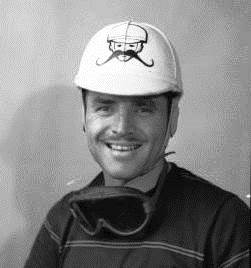
Showing posts with label Mauri Rose. Show all posts

Tuesday, January 5, 2021

The early history of lap prizes for the Indianapolis 500-mile race Part Three


The early history of lap prizes for the Indianapolis 500-mile race

Part three 

1931


Solicitation for the Indianapolis Motor Speedway International 500-mile race lap prize fund in 1931 must have been daunting, given the deepening economic depression that gripped the United States. Bowman Elder, son-in-law of multi-millionaire entrepreneur William Fortune took over as committee chairman. The committee met on May 1 and announced that they expected to close the books on the fund on May 20.

The fund fell well short with a total of $11,150 collected. The distribution as described in the Indianapolis Star, included payment from lap one to 17 inclusive. Thereafter every odd numbered lap paid through lap 81, then laps 82, 84 and 85 each paid $100, while lap 83 only paid $50. The fund paid $100 for every odd numbered lap from 87 to lap 200.  

Rookie Paul Bost started from the outside of the front row in the Empire State Special and led the first two laps and banked $200. Bill Cummings took the point for four laps, then Richard “Billy” Arnold and his riding mechanic William “Spider” Matlock took the point until they crashed out and were injured on lap 162, and Arnold collected $8,550 in lap money. 

After Arnold’s crash, Indianapolis native Louis Schneider in the hometown sponsored ‘Bowes Seal Fast Special’ inherited the lead, led the rest of the way and won.  Although Schneider led 39 laps, because of the odd distribution of the fund, he only added $2,000 in lap money to his $27,500 in prize and accessory winnings.  

1932

Bowman Elder served as the lap prize fund committee chairman for the second consecutive year, but due to the economic depression, the lap prize fund again did not reach its goal despite Henry and Edsel Ford each giving $2500.  The final fund distribution was very confusing, with no lap prizes were earned until lap four then the even-numbered laps paid out until the fund total was exhausted.  It is unclear who was behind the new provision which stated that the prize money for laps run under the yellow flag had to be reallocated to “competitive laps.”    

The fund presented $10,700 to the drivers at the victory dinner held at the Indianapolis Athletic Club which Elder chaired with toastmaster Paul Richey. Six drivers shared in lap prizes. Winner Fred Frame in the Harry Hartz-owned car won $3,800, while his teammates Arnold and Matlock injured in a crash for the second consecutive year won $2,800 for leading 59 laps.

Hoosier rookie driver Bob Carey took home $1,800 in lap money while fellow Legion Ascot Speedway star Ernie Triplett earned $700 for leading 14 laps.  Ira Hall, the former prizefighter from Terre Haute Indiana who claimed to have survived 43 accidents, led six laps and received $200, while Wilbur Shaw collected $1400 after he led 27 laps, the first laps led in his august career at Indianapolis.  

1933

With the nation in a terrible economic depression with nearly 25% unemployment, there was no mention in the press about the make-up of the committee or details of the solicitation for the lap prize fund. The race itself became a very low-key event – instead of a dinner, prizes for the 21st annual International 500-mile Sweepstakes were handed out the afternoon following the race by “Pop” Myer on the sidewalk in front of the Indianapolis Motor Speedway office at 444 North Capitol Avenue. ‘500’ winner Louis Meyer collected just $18,000 and the keys to a new Ford sedan for his second 500-mile race victory

The lap prize fund totaled just $3,150, with Meyer the big lap prize winner with $850 for leading 71 laps. “Babe” Stapp who led 60 laps before his Boyle Special ran out of fuel on lap 156 earned $800, while Bill Cummings got the same amount for leading 32 laps. Even more confusing is the case of defending champion Fred Frame who received $700 for leading 37 laps. 

1934

The economic situation of the nation continued to serious affected automobile racing as the American Automobile Association (AAA) National Championship included just four races in 1934 – the Indianapolis Motor Speedway, the mile dirt track at the Illinois State Fairgrounds in Springfield, the dirt ‘Moody Mile’ in Syracuse New York and the December road course race at Mines Field in Los Angeles.

On May 23rd, the Indianapolis Motor Speedway announced that all the lap prize money would be paid after the halfway point of the race “as a means of preventing the drivers of fast cars from burning up their mounts in the early stages.”  This made some sense, since $100 in 1934 is equivalent to nearly $2000 today, but pushing it past the half-way mark also meant the lap prize fund need not be as well-funded.

The 1934 lap prize fund totaled $4,225, and only four drivers led during the 1934 International 500-mile Sweepstakes – Cavino “Kelly” Petillo, the pole position winner, led the first six laps which paid him nothing. The race then settled into a three-way battle between Mauri Rose, Frank Brisko in the Miller-built Four Wheel Drive Special and Bill Cummings in the Boyle Miller.

The manner of the distribution of the 1934 fund remains unknown, but Brisko, who led four laps after the halfway point, banked a reported $1,300, while runner-up Rose who led 46 laps after the 250-mile mark received a check for $1,300, while the race winner Cummings who led 50 laps late in the race, including the final 26 laps, got a check for $1,625.

1935

Automotive industry pioneer Joseph McDuffee, the President of the Prest-O-Lite Storage Battery Company, served as the chairman of the 1935 “Appreciation Lap Prize Fund” committee. A report from an Indianapolis Real Estate Board luncheon published in the May 24 1935 edition of the Indianapolis Star shows how badly the Lap Prize Fund suffered during the great Depression.

In his address to the realtors gathered at the Hotel Washington, Indianapolis Motor Speedway General Manager Ted “Pop” Myers reported that of the 40-1/2 laps funded, only 8-1/2 laps came from Indianapolis contributors. Myers suggested that “a local live committee of representatives” be formed to create city support. 

The eight local supporters include the Wheeler’s Lunch restaurant chain (their donation in the form of 1,095 meals), the L. Strauss and L. S. Ayres department store chains, Indiana Bell Telephone, the Prest-O-Lite company, the Claypool Hotel, the Allen A.  Wilkinson Lumber Company, and the Vonnegut Hardware Company founded by the great-grandfather of the author.     

In his speech to the Realtors luncheon, the 1925 500-mile race winner, Peter DePaolo, predicted that within two or three years “stock cars” (meaning semi-stock entries) would dominate the race. DePaolo’s crystal ball proved bit hazy, as the “Junk Formula” ear ended after the 1937 race.  

Donors included Bendix Aviation for three laps, while the Ethyl Gasoline Corporation and the Champion Spark Plug Company paid for two laps each. The Norge Appliance Company of Detroit posted $200 for the leader of lap ten plus the race winner received a Norge Refrigerator.  While this might seem like an odd sponsorship, in 1915 as a young man, Norge’s President Howard Blood worked with Louis Chevrolet on the ground-breaking Cornelian racing car that featured monocoque construction and 4-wheel independent suspension

The 1935 ‘500’ lap prizes were assigned randomly throughout the race. In addition to Norge’s sponsorship of the tenth lap, the American Automobile Association (AAA) sponsored lap 12, while the Ford Motor Company sponsored five laps – laps 40, 60, 105, 100 and 180.

“Pop’s” advice to the Realtors went unheeded and the 1935 Appreciation lap prize fund topped out at $4,250 with the proceeds divided among four drivers at the Indianapolis Citizen’s Committee Appreciation Dinner held at the Indianapolis Athletic Club. In addition to the drivers, the dinner featured among its honored guests, aviatrix Amelia Earhart, who served as the race referee, movie stars Monroe Owsley and James Dunn, boat racer Gar Wood, and Elmer Baumgarten, secretary of the American Bowling Congress.   

Race winner Kelly Petillo in his own ‘Gilmore Speedway Special’ won $2,050 in lap prizes, while Rex Mays led 89 laps in the first half of the race before a steering knuckle broke on the ‘Gilmore Special’ on lap 123, earned $2,000 in lap prizes. “Babe” Stapp raced the Marks-Miller entry out front on lap 140 and collected $100 from the Plymouth Motor Company, while Wilbur Shaw, runner-up race finisher for the second time in three years, led lap 65 and collected the $100 posted by the Ethyl Gasoline Corporation.

1936

On May 12th 1936 the officials of the Chamber of Commerce announced the new high-powered members of the Appreciation Lap Prize Fund committee, led by A. L. Block of the L. Strauss Company, Fred Ayres represented his family’s department store chain, along with P. R Mallory, of the eponymous battery and switch company, Roy Adams of the J. D. Adams Road Grader manufacturing company, and A. E Sinclair of the Kingan meat-packing company.  

Automotive industry members included McDuffee of Prest-O-Lite repeating as the committee chairman, joined by Jesse Vincent of Packard,  Jeffery DeWiitt of Champion Spark Plug and Louis Schwitzer. 

According the Indianapolis Star, expectations were high for larger fund than previous years.  Herman Deupree, a local public relations representative and secretary for the committee, reported that the fund already contained $2,000, according to an article published in the following day’s Star newspaper.  Alas, the May 29th Indianapolis Star carried the news that the fund topped out at $5,500.

The AAA sponsored lap five, the first paid lap.  Locally, the downtown seven-story Marott Shoe store on Massachusetts Avenue donated $100 for lap 110, while the medical supply firm, the Akron Surgical Supply House, sponsored lap 185. The automotive industry strongly supported the appreciation fund as the Ford Motor Company paid for five laps, while Chrysler, Dodge, DeSoto and Plymouth each bought a single lap sponsorship, as did Charles “Boss” Kettering.  

The fund distribution spread out over the race with $1400 paid over the first hundred miles, followed by another $1400 in the second hundred miles, while the laps during the third hundred mile segment paid $1200. The leaders of laps during the fourth hundred miles collected prizes that totaled $800, with $500 paid out over the last hundred miles. While there was no prize posted for leading the race’s final lap, this race began the tradition of the race winner being presented the Pace Car, in this case the 1936 Packard 120.

The 500-mile race’s first three-time winner, Louis Meyer, won $1,900 in lap prizes with Wilbur Shaw close behind with $1,800. “Babe” Stapp collected $1,100 in lap money before his entry retired on lap 89, while second place finisher Ted Horn banked $400 and Rex Mays whose car ran out of fuel with less than ten laps to go, earned $300 in lap prizes.     

In our next installment of the early lap prize story we will examine the final years under the Speedway ownership of Eddie Rickenbacker.

Wednesday, May 1, 2019


Pennzoil history at the Indianapolis ‘500’

Author photo


The Shell Oil Company’s outdoor display at the 2018 SEMA (Specialty Equipment Market Association) show in Las Vegas featured the #3 Pennzoil-sponsored Dallara IR-12 with the UAK (Universal Aero Kit) IndyCar as driven by Helio Castroneves in the 2018 Indianapolis 500-mile race.

Pennzoil, a division of Shell Oil since 2002, has a long history of involvement at the Indianapolis Motor Speedway and IndyCar racing. The company claims to have sponsored the machines of Russell Snowberger and Wilbur Shaw during the nineteen thirties, but the earliest Pennzoil sponsorship the author is aware of at the Indianapolis ‘500’ dates back to 1951, when Pennzoil sponsored the Emil Deidt built front-wheel drive car owned by Howard Keck.

This well-funded effort owned by the Southern California oilman was considered a “super team” at the time as it combined a proven winning car design, a superstar driver, three-time Indianapolis ‘500’ race winner Mauri Rose, and superstar mechanics, the “Whiz Kids” Frank Coon and Jim Travers. The Deidt-built front-drive machine was a later version of the design which Rose had driven earlier for car owner Lou Moore. Moore’s twin Blue Crown Spark Plug front-drive machines dominated the 500-mile race between 1947 and 1950, with three victories and two sweeps of both first and second place.

After Rose’s Blue Crown Special broke a magneto strap and dropped out of the 1949 race with just eight laps to go, he angrily quit Moore’s team and was entered for the 1950 ‘500’ as the driver of Keck’s shiny black unsponsored machine replacing the 1948 and 1949 pilot Jimmy Jackson. Rose started the 1950 ‘500’ on the outside of the front row for the start, led the first nine laps, then led again on two occasions but ultimately finished in third place behind winner Johnnie Parsons and Bill Holland in a Blue Crown Spark Plug Special.


Mauri Rose poses with a can of Pennzoil in 1951
Photo courtesy of the IUPUI University Library
Center for Digital Studies
Indianapolis Motor Speedway Collection


In 1951, Rose who was 45 years on race day with over 5,000 miles of competition at the Speedway to his credit, was entered as the driver of the same sleek black machine but with addition of Pennzoil as the sponsor. Rose was the first driver out for 1951-time trials and wound up fifth fastest to start his fifteenth ‘500,’ but during the 1951 Memorial Day Classic, the car’s right rear wire wheel collapsed on his 126th lap as Rose entered the fourth turn and the #16 Pennzoil Special slid into the infield, rolled over and came to rest in a drainage ditch.

Pennzoil returned to the Indianapolis Motor Speedway in 1979 as the sponsor of the Jim Hall-owned Chaparral 2K designed by John Barnard which made use of the new “ground effects” technology that used the underside of the car to create downforce to hold the machine onto the racing surface.  In 1979 driver Al Unser, the defending champion battled his brother Bobby for the race lead during the first half of the race before the car retired with a broken transmission seal on lap 104.

Johnny Rutherford and his crew pose after qualifying for the 1980 Indy 500
JR's wife Betty (the team's scorer) on the sidepod and car owner Jim Hall in cowboy hat
Photo courtesy of the IUPUI University Library
Center for Digital Studies
Indianapolis Motor Speedway Collection


The updated Pennzoil Chaparral 2K-02 retuned to the Indianapolis Motor Speedway in 1980 with a new driver, two-time Indianapolis champion Johnny Rutherford. Rutherford and the machine dubbed the “Yellow Submarine” won the pole position and dominated the race, as Johnny led seven times for a total of 118 laps, which included the final 21 laps. Rutherford would score four other victories during the controversial 1980 co-sanctioned season and was crowned the 1980 CART (Championship Auto Racing Teams) series champion. Rutherford continued to drive the Pennzoil Chaparral in 1981, but in 1982 the Hall team turned to a March 82C chassis.

Rick Mears enroute to victory in the 1988 Indianapolis 500 mile race
Photo courtesy of the IUPUI University Library
Center for Digital Studies
Indianapolis Motor Speedway Collection


Chaparral car owner Jim Hall at the end of the 1982 CART season so for 1983, the Pennzoil sponsorship moved to Penske Racing. Pennzoil was the primary sponsor of the car of Rick Mears the 1979 Indianapolis 500-mile race winner, a pairing which lasted through the 1990 season. The combination resulted in seven CART (Championship Auto Racing Teams) wins and two Indianapolis ‘500’ victories in 1984 and 1988.  In 1984, Rick started third, led a race-high 119 laps, which included the final 56 circuits. In 1988, Mears started from the pole position, after he set new one and four lap records and led the final 77 laps to capture his third ‘500’ title.
Teo Fabi 1993 Indianapolis 500 qualifying photo
Author's personal collection


In late 1990, Jim Hall returned to racing from retirement and Pennzoil moved its sponsorship to the new partnership known as Hall/VDS Racing.  From 1991 to 1993, the Pennzoil machine was driven by John Andretti who won his debut race for Hall/VDS. In 1993 Andretti was replaced by Teo Fabi at Hall/VDS Racing, and beginning with the 1994 season the team was known as Hall Racing as team partner brewery heir Count Rudy Van Der Straten, the VDS part of the team had died in late 1992.  Teo Fabi remained as the team’s driver through the 1994 season but in two seasons, Teo was unable to find the winner’s circle.  In 1995 and 1996, Brazilian Gil DeFerran carried the Pennzoil colors in CART for Jim Hall Racing and scored one race win each season.

With the cataclysmic 1996 split of American open-wheel racing, Pennzoil joined forces with Pagan Racing for partial sponsorship at the Indianapolis 500-mile race. After Jim Hall retired again at the end of the 1996 season, Pennzoil came on board for the full 1997 Indy Racing League (IRL) season with the team owned by Texas oilman Jack Pagan and his son Allan.   

At the end of the 1997 season, Pagan Racing crew chief John Barnes left to form his own team, with five partners, football player Jim Harbuagh, television producer Terry Lingner, Indianapolis car dealer Gary Pedigo, radio personality Mike Griffin, and Indianapolis politician Doug Boles.

The Pennzoil sponsorship followed Barnes to the new team known as Panther Racing, although the entries driven by Scott Goodyear in the 1998, 1999, and 2000 IRL seasons used a non-traditional yellow and black livery.  When Goodyear’s planned teammate for the 1999 Indianapolis ‘500,’ sprint car driver David Steele, was unable to compete due to lingering injuries, Pennzoil provided partial sponsorship to the already-qualified car driven by Tyce Carlson.

Sam Hornish Jr. at Indianapolis 2003
Author's personal collection


Although Goodyear respectively scored three victories in his three seasons with Panther/Pennzoil before he retired, it was his replacement, Sam Hornish Jr. that brought the Panther/Pennzoil team its greatest successes. Hornish won in his debut race with the team at Phoenix International Raceway in 2001, and notched a total of eleven IRL races wins and two IRL driver championship titles in his three seasons in the Pennzoil colors from 2001 to 2003. 

When Hornish moved to Penske Racing for the 2004 season, his seat in the Pennzoil Panther was taken over by 24-year old South African Tomas Scheckter. Over his two seasons with Panther/Pennzoil, Tomas, the son of 1979 Formula One world champion Jody Scheckter was often fast in qualifying but only scored one race win at Texas Motor Speedway where he out-dueled Hornish for the win by .0534 seconds.

Pennzoil remained on the sidelines of IndyCar race team sponsorship from 2006 to 2011, but returned in 2012 with Penske Racing and three-time Indianapolis ‘500’ champion Helio Castroneves as part of the Penske line-up of rotating sponsors. Castroneves carried the Pennzoil colors at the Indianapolis Motor Speedway for the ‘500’ in 2012, 2014, 2016 and 2018.    
Author photo


The #3 Dallara IR-12 seen at the 2018 SEMA show is powered by a DOHC Chevrolet Ilmor twin-turbocharged V-6 engine that displaces just 134 cubic inches, but produces up to 700 horsepower at the highest boost level for qualifying for the Indianapolis 500-mile race with Pennzoil Ultra Platinum motor oil in its dry sump oil tank.


Saturday, November 26, 2016

Two works by the master - Emil Diedt

color photos by the author
black & white photos appear courtesy of the Indianapolis Motor Speedway Collection in the IUPUI University Library Center of Digital Studies

During a recent visit to the World of Speed museum to view the special Indianapolis ‘500’ exhibit, the author photographed two automotive works of art built by one of the sport’s master metal craftsmen. Emil Diedt, born in Germany in 1897 worked out of a shop in Culver City California  and was best known as the builder of the identical pair of 270-cubic inch Offenhauser powered front wheel drive cigar-shaped ‘Blue Crown Spark Plug Specials’ owned by retired driver Lou Moore, but Diedt built two more similar cars later. 

A brief history of the Blue Crowns


Mauri Rose tries out his new Blue Crown in 1947

Reputedly the advantage of the front wheel drive at the Indianapolis Motor Speedway was due to more weight centered over the driving wheels which helped to “pull” the car through the corners and reduced the car’s tires sliding once the track surface got slippery with oil during the race. This proved to be correct, as front wheel drive cars led every lap of the 1947 500-mile race.

The new Blue Crown cars debuted at the 1947 Indianapolis 500-mile race, qualified in third and eighth positions and then dominated the race, leading 177 laps.  With 100 miles to go and his cars running in first and second positions, Moore signaled to the drivers of his cars via the pit board “EZY” the signal for the pair to take it easy. With just eight laps to go the race leader 39-year old rookie Bill Holland waved his teammate, Mauri Rose past him as Holland thought he held a one-lap lead.  Holland was mistaken and Rose raced away to score his second (and first solo) Indianapolis victory as the angry Holland finished 32 seconds behind Rose.   


1949 '500' winner Bill Holland


In 1948, the ‘Blue Crowns’ repeated their domination, with Rose and Holland again finishing one-two over two minutes ahead of the third place finisher, the front wheel drive Novi driven by Dennis ‘Duke’ Nalon. In 1949, Holland finally won the ‘500’ as Mauri Rose’s car broke a magneto strap while he ran in second place with eight laps to go. After a month of ongoing disputes with car owner Moore, the outspoken Rose angrily quit the team, or was fired, depending on whose version one chose to believe.  

The Keck car


The immediate success of the Diedt-built front wheel drive ‘Blue Crowns’ led to other car owners looking for their own versions. One such car owner was Southern Californian Howard B. Keck, heir to the Superior Oil fortune. Keck earlier purchased John Balch’s Offenhauser powered midget racing operation together with the services of co-chief mechanics Jim Travers and Frank Coon and their friend fuel injection pioneer Stuart Hilborn. After dominating in United Racing Association (URA) ‘red’ circuit for Offenhasuer powered cars, the Keck team and was ready to conquer Indianapolis.

With Keck’s backing, Travers and Coon ordered a new front wheel drive chassis from Emil Diedt for the 1948 Indianapolis ‘500.’ Indianapolis native son Jimmy Jackson who scored  two top-five finishes in the 1946 and 1947 500-mile races, qualified the new #61 ‘Howard Keck Special’ at 127.51 miles per hour (MPH) for the fourth positon. After he started the race on the inside the second row behind Rex Mays, Rose and Holland,  Jackson ran just outside the top five for most of the race, but his good finish was spoiled when a wheel spindle broke on the maroon colored machine with six laps to go and he spun into the infield.

Jackson and the Keck team returned to Indianapolis in 1949; Jackson wanted to paint the car green but Keck refused so Jackson wore green gloves. The ground-breaking Hilborn fuel-injected ‘Howard Keck Special’ started seventh after Jackson qualified with a four-lap average of 128.023 MPH. At the end of the 500-mile test, the #61 Diedt front wheel drive machine finished sixth, seven minutes behind winner Hollard’s similar machine.


Mauri Rose adds Pennzoil in this 1951 publicity shot


For the 1950 Indianapolis 500-mile race, former ‘Blue Crown’ pilot Rose was the new driver of the Keck/Offenhauser front wheel drive Diedt machine and Mauri qualified with a  four-lap average of 132.319 MPH to start on the outside of the front row. Rose earned a measure of revenge as he out-qualified both of the Moore ‘Blue Crowns;’ Holland was tenth fastest and Rose’s replacement, Tony Bettenhausen timed in eighth fastest.

Rose and the Keck entry led the race on three occasions for a total of 15 laps, but Rose was slowed when he was briefly forced out of the cockpit by a pit fire on his only stop on lap 109.  Rose had pitted from the lead and once the fire was extinguished Mauri was back underway and he recovered to finish third behind Holland in a controversial rain-shortened 138-lap race. The deluge lasted just 60 seconds, but Speedway officials stopped the race and initially scoring was very confused, with Rose originally unofficially scored in fifth place. The #31 Keck entry’s appearance in race footage of the 1950 Metro-Goldywn-Mayer film ‘To Please a Lady’ was little satisfaction for Rose who lost his chance to become the first Indianapolis 4-time winner.   


For the 1951 Indianapolis 500-mile race the Emil Diedt bodywork was painted black with yellow and red trim and the #16 car carried Pennzoil sponsorship. Mauri Rose, who turned 45 years old four days before the race, qualified fifth fastest at 133.422 MPH to start from the middle of the second of eleven rows of three. In his 15th Indianapolis ‘500’ on his 127th lap, while Rose ran in third place, the right rear wire wheel of the ‘Pennzoil Special’ collapsed. Rose fought for control as the car slid into the infield off turn two and into a drainage ditch where it overturned and momentarily trapped Mauri underneath. 


The aftermath of the 1951 flip


Legend has it that Rose retired from racing on the spot, but in actuality, it was the death of Rose’s first wife and mother of his two young children Mauri Junior and Dory who both were polio survivors during the winter of 1951 that lead Mauri to formally announce his retirement.  On January 30 1952, from his home in Van Nuys California, Rose told reporters that after 24 years, he could no longer risk his life racing.


The 1951 Indianapolis ‘500’ marked the final race appearance of the Howard Keck owned Emil Diedt front wheel drive machine, as the following year the Keck team entered a 270-cubic inch Ferrari 375 and a new Offenhauser-powered creation from Frank Kurtis known as the 500A but nicknamed the “roadster.” The Diedt car as displayed at the Museum of Speed is expertly restored as how the car appeared in the 1951 Indianapolis ‘500.’  

The Tuffanelli-Derrico car


Babe Tuffanelli

Reputed Chicago suburban south side organized crime figure Carmine George “Babe” Tuffanelli became interested in automobile racing and owned several  beautifully maintained  ‘big cars’ and midgets which raced in events across the country. The team of cars, each fielded as ‘Tuffy’s Offy’ were maintained by experienced mechanic Charles Pritchard from a garage on Vincennes Avenue in the Chicago suburb of Rock Island Illinois assisted by a young mechanic named Ray Nichels.


From 1948 through 1950 Pritchard and Tuffanelli entered Kurtis-Kraft 2000 upright dirt cars in the Indianapolis 500-mile race, but for the 1950 running of the International Classic, the team entered their new Emil Diedt built front wheel drive chassis dubbed the ‘Tuffanelli-Derrico Special’. The second name car on the car was one of Carmine’s alleged underworld business associates, Jimmy Derrico, who became part-owner of the ¼-mile Raceway Park in Blue Island in 1952.


For Tuffanelli’ s car Diedt make extensive use of aluminum including the oil and fuel tanks to make the new front wheel drive car 350 pounds lighter than previous versions. For the driver of the new maroon and gold Diedt creation for the 1951 ‘500’ Pritchard and Tuffanelli selected their 1950 driver, the mustachioed California midget racing standout Ronald “Mack” Hellings.  Mack originally a motorcycle racer came up through the URA midget ranks with such future Indianapolis stars as Bill Vukovich and Sam Hanks and was crowned the 1948 champion of the URA ‘Blue’ Circuit for non-Offenhauser powered machines.


Mack Hellings official IMS head shot

Hellings graduated to championship cars during 1948 and drove for two seasons for the Los Angeles–based Don Lee racing team before he jumped to the “Tuffy’s Offy” team for 1950 and he scored five top ten finishes in nine starts in a K-K 2000 during the 1950 AAA (American Automobile Association) racing season  . When not racing, Hellings ran an automotive and motorcycle speed shop first located in North Hollywood and later Burbank California 


Helling's company logo


At Indianapolis in 1951, two days before the first weekend of time trials, the ‘Tuffanelli-Derrico Special’ lost a camshaft bearing.  On the third day of time trials, Hellings could only record a four-lap average speed of 123.925 MPH, which held up although his speed was nearly seven-and- a-half miles per hour slower than the next slowest qualifier. On race day, Hellings and the new Diedt creation started from the middle of the eight row, but only completed eighteen laps before the car was retired with a broken piston in the 270-cubic inch Offenhauser engine.


Hellings did not get a second chance to drive the ‘Tuffanelli-Derrico Special’ at the Indianapolis Motor Speedway.  On Sunday, November 11 1951, Hellings, fellow URA racer and engine builder Bob Baker, and URA photographer George “Lee” Harvey left Brackett Field near LaVerne in a rented plane piloted by Robert Harris. The quartet were headed north for the ‘Bay Meadows 150’ the final 1951 season championship car race scheduled for that evening at Bay Meadows race track in San Mateo.


A typical Piper Pacer


The cream-colored single-engine Piper PA-20 Pacer tail number N74568K was overdue for their mid-day fuel stop in Fresno and after the plane failed to arrive overnight, search parties were dispatched. On November 15 the wreckage of the plane and the four deceased passengers was found near the 4000-foot elevation on the south slope of the Tehachapi Mountains near Gorman California.    

Contemporary legend has it that Tuffanelli was so devastated over Hellings’ death that the car never raced again  but the ‘Tuffanelli-Derrico Special’ was entered for the 1952 Indianapolis ‘500.’ The 1951 driver was Chicago journeyman midget racer Danny Kladis (sometimes spelled Cladis) who had started racing ‘big cars’ before World War Two.  Kladis was the Mississippi Valley Midget Racing Association (MVMRA) driving champion three consecutive seasons from 1946 through 1948. Despite his Hall of Fame midget career, Danny experienced tough times at the Indianapolis Motor Speedway, and only qualified for the ‘500’ once in seven years of trying.  


It is unclear whether Kladis made a qualifying attempt after he spun the car out of turn two on May 15, and the ‘Tuffanelli-Derrico Special’ never appeared again for competition at the Indianapolis Motor Speedway. The beautiful #19 Emil Diedt-built ‘Tuffanelli-Derrico Special’ on display at the World of Speed museum appeared to be in original unrestored condition sporting its striking trademark gold-leaf nose scallop and numbers outlined in red pinstriping.

Although they scored three consecutive 500-mile race victories and three runner-up finishes in four years, the reign of the Emil Diedt built front drive race cars at the Indianapolis Motor Speedway was over after just five years.  With the early retirement of the ‘Blue Crown Special’ driven by Tony Bettenhausen from the 1952 ‘500,’ the front wheel drive concept was replaced by the next generation of Indianapolis race cars, the lighter weight “roadsters.”  


The World of Speed museum located at 27490 SW 95th Avenue in Wilsonville Oregon will feature their “Celebration of the 100th running of the Indianapolis 500-mile race” exhibit through April 2017.