Showing posts with label Danny Kladis. Show all posts

Monday, February 17, 2020


The notorious ‘Tiny’ Wainwright
Part three – 1949 and 1950


Branch ‘Tiny’ Wainwright raced for most of the 1948 season with the Midwest Midget Auto Racing Association (MMARA) a group run by John Gerber as he drove the black #2 Ford V-8 60 powered Kurtis-Kraft midget owned by Lloyd Van Winkle of Lincoln Nebraska. After the racing season ended, ‘Tiny’ was implicated as a member of a 5-man criminal gang that committed nineteen robberies.   

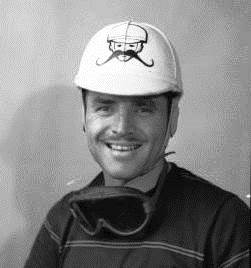
Free on bond awaiting trial, Wainwright was without a ride for the second midget auto race of the 1949 season at the Ce-Mar Bowl in Cedar Rapids Iowa, although it was reported that he had contacted car owner Paul Van Zee and asked to drive the #63 midget. The defending MMARA series champion Danny Kladis driver of the #39 midget, was in Indianapolis in an unsuccessful attempt to qualify the ‘Speedway Cocktail Special’ for the 500-mile race, but his midget car owner Eric Lund stated that he would not put any other driver into his car in Kladis’ absence.  

The featured attraction at Ce-Mar on Sunday afternoon May 22 was the appearance of the “Marvel Man” Don Haynes who had had himself welded inside a 1949 Kaiser Deluxe 4-door sedan. Haynes from Ashland Oregon claimed that he intended to live inside the car for 14 months to win a $25,000 bet with a local farmer.  Haynes was a 39-year-old truck driver and an ex-Merchant Marine so his stunt was also known as the “Seaman of the Sealed Car.’  

Haynes was welded inside his car on February 19, 1949 with chrome bars installed over the windows along with an exercise machine, chemical toilet, folding bathtub, electric shaver, typewriter, radio and a record player. There was no need for a bed, as the Kaiser already featured a rear seat that folded down into a bed. Haynes sponsored by Richard Reinan, the owner of an Ashland lumber mill planned to visit the major cities in all 48 states with visits at Kaiser-Frazer dealerships. Haynes, stopped at Ce-Mar in support of Dan Hunter the local Kaiser-Frazer distributor while enroute to the Indianapolis Motor Speedway for the Indianapolis 500-mile race.  

Haynes eventually lost his bet (which after all that time appeared to be a fabrication) when he had the car doors cut open and he exited the car after being inside thirteen months and eighteen days. Haynes had drove a reportedly 110,000 miles, but ended his ordeal because public interest in his stunt waned and no more paid appearances were booked.  Haynes and his wife tried a similar stunt in 1958 as they were welded into a 1958 Mercury Turnpike Cruiser station wagon but it met with much less success then his earlier publicity stunt.

Tiny drove the John Spach #7 at the Ce-Mar Bowl on May 22, and at Playland Park on May 24 where he finished second in the trophy dash. At Indianola Iowa on June 14 ‘Tiny’ finished seventh in the 20-lap feature, and when the MMARA series visited Davenport on Friday June 17, 1949, Wainwright did not have a ride, but he was scheduled to drive the John Spach #7 midget at Ce-Mar on Sunday June 19. That did not occur because ‘Tiny’ was arrested on Saturday in Columbia Missouri and he was transported by Missouri State Highway Patrolmen to the Cole County jail in Jefferson City Missouri.    

Joe Heninger, an older bachelor farmer who lived in rural Russellville Missouri, alleged that on the evening of Thursday June 16, Wainwright and an unknown accomplice acted as though they had experienced car trouble in front of Heninger’s farmhouse. When Heninger came to investigate, the pair drew guns on him and forced him back inside his home. The pair then used adhesive tape to bind the farmer to a chair and proceeded to ransack his home, while they repeatedly shouted, “where do you keep your money?” When the robbers found no money after several hours, they left bound and Heninger worked himself free from his bonds early Friday morning and called police.

Once ‘Tiny’ was in jail in Jefferson City, police found that he was already under indictment in Moberly Missouri for his participation in an earlier burglary with $315 taken from a food market in Columbia Missouri on March 25, 1948.  Wainwright made his first appearance before Magistrate Foster S Wheatley in Jefferson City at 3 PM on Monday June 20, 1949 and his bail was set at $10,000.  On July 6 a hearing was held in Moberly without ‘Tiny’ who was still in jail in Jefferson City, regarding the 1948 burglary and it was discovered that in addition to his $5000 bond for that case, Wainwright was also out on a $3000 bond on a charge of safe burglary in Dallas Texas.

On July 27, 1949 ‘Tiny’ was released from the Jefferson City jail on a $10,000 bond posted by two Kansas City women, Stella Parke Beatty and Glady Parke Kline. In his next court appearance before Judge Sam Blair on October 3, ‘Tiny’ entered a plea of not guilty to the charge of assault with intent to rob. Two weeks later, his accomplice, William DeWayne Brown, a parolee from Leavenworth who had served 11 years of a 25-year sentence for theft of US mail was identified, arrested and charged.

During his March 1950 assault trial, Wainwright testified that he had driven home to Kansas City from Davenport Iowa, and arrived home in the early hours of June 20, 1949. He said he slept until the afternoon, ate dinner at the Golden West Bar and Grill and then attended a Catholic church carnival until 10 PM. His local attorney, HP Lauf, called ten witnesses that supported ‘Tiny’s’ account, but on March 14, 1950 the jury returned a guilty verdict and recommended Wainwright receive a two-year prison sentence.  

Judge Sam Blair postponed sentencing to allow time for appeal and on April 12 another of ‘Tiny’s’ attorneys, Ed C Orr, requested a new trial on the basis that the entire testimony was not recorded while the trial was in progress and that the prosecution testimony was weak, ambiguous and incomplete. A month later Judge Blair held the appeal hearing and on May 17 ‘Tiny’ was granted new trial over the objections of Prosecutor James T Riley.

While out on bond and awaiting his new trial date, ‘Tiny’ raced Bruce Bromme’s Offenhauser powered ‘big car’ at the Iowa State Fairgrounds in De Moines in August 1950. ‘Tiny’ qualified 14th fastest in a field of 27 cars with a time of 28.80 seconds.  During the “B” feature, due to rough track conditions the front suspension of the Bromme car collapsed and the car flipped end-over-end as it cartwheeled along and through the inner wooden guardrail. ‘Tiny’ reportedly was thrown free and suffered only facial cuts and bruises.      

On September 7 Wainwright drove the repaired Bromme #77 in the two-day IMCA ‘big car’ program at the half-mile track at the South Dakota State Fairgrounds in Huron, ‘Tiny’ timed in eleventh fastest in time trials with a lap of 29.20 seconds compared to Deb Snyder’s fast time of 24.85 seconds. Wainwiright finished third in his heat race and advanced to compete in the feature race where he finished eighth behind winner by Frank Luptow.

Wainwright’s second trial on the felonious assault charges against Joe Heninger was held October 4, 1950 again before Judge Blair. On October 5, after 2-1/2 hours of deliberation, the second jury found ‘Tiny’ guilty and recommended a two-year sentence in the Missouri State Penitentiary. On October 31 ‘Tiny’s’ attorney Ed Orr filed paperwork that requested a new trial, but in open court on November 6, 1950 Orr asked that Judge Blair overrule his appeal of ‘Tiny’s’ second conviction, as his client was out of money and unable to continue the legal battle.

Judge Blair immediately sentenced Wainwright to two years in prison and he was assigned prisoner number 64186 in the Missouri State Penitentiary also located in Jefferson City.  His accomplice in the Heninger assault, William DeWayne Brown, was tried in Howard County on October 26 and the jury deadlocked but in his second trial held on January 18, 1951, Brown was convicted and given a two-year prison term.  

“Tiny’s’ racing career was on hold while he was incarcerated for assault – in the next and final installment we will share the direction Wainwright’s life took after 1951. 

Friday, January 17, 2020


Part one - 1946 racing season


Since its beginnings at Hughes Stadium in Sacramento California on June 4, 1933 there have been some nefarious characters Involved the sport of midget auto racing, such as Diego ‘Dee’ Toran, but none the author is familiar with came close to approaching the level of criminal activities conducted by racer Branch Milton “Tiny” Wainwright.

Wainwright, born August 31, 1912 in the small town of Delmar Maryland, came of age in the Kansas City area as a stout young man of less than average height - feet five inches tall.  His nickname of “Tiny” was ironic, as he weighed at least 250 pounds though period press reports varied; some articles stated that he weighed 275 pounds, while some pieces listed his weight as high as 300 pounds.  

When Wainwright enlisted in the United States Army at Fort Leavenworth Kansas on March 24, 1944 he claimed that he was married and listed his occupation as an “actor.” Military records reviewed by the author have not provided any answers as to Wainwright’s duties in the Army or the length of his service.

Fellow historian Bob Lawrence found the earliest record of Tiny Wainwright’s racing career via a photograph that showed him as the driver of Carl Oliver’s #3 Ford V8-60 powered rail-frame midget at CeJay Stadium in Wichita, Kansas on Sunday September 16, 1945. That date was less than a month after the Office of Defense Transportation lifted the wartime ban on automobile racing. CeJay, which took its name from the initials of the track promoter Carl Johnson, was a 1/4-mile dirt oval track that was located on the southeast side of Wichita that operated until 1949.

‘Tiny” was not related to the famed Texas pioneer midget racer and later Texas-Oklahoma Racing Association business agent and promoter Mel Wainwright but both competed in some of the same events in early 1946.  In a promotional article prior to that start of racing San Antonio Texas Pan American Midget Speedway, ‘Tiny’ was billed in the San Antonio Light newspaper with “a weight of 275 pounds, the biggest midget race car driver in the world.”

Wainwright is credited with a second-place finish in the February 24 “B” feature ahead of ‘Dee’ Toran, then he earned a fourth-place finish in the “B” feature on Sunday March 10 in a program that also featured California drivers Jerry Piper, Cal Niday, and Bill Vukovich.

The following week, in the Sunday afternoon show on March 17 on Pan American’s 1/5-mile clay surface, ‘Tiny’ scored another third-place finish in the ‘B’ feature. On March 31, which was the final scheduled Sunday program for the 1946 racing season, “hard luck” Wainwright was unable to compete due to what the San Antonio Light reported as “a lack of parts for his red midget.”

In the debut of Friday night racing under the lights at Pan American on April 5, 1946, ‘Tiny’ was the fastest qualifier with a lap of 16.36 seconds but his car “threw a shoe” in the third heat, and the San Antonio Light reported that “his masterful driving brought cheers from the crowd as he steered into the pits on three wheels without injury to himself or other drivers in the race.”  After the incident, Wainwright’s car was done for the night, so he did not appear in the evening’s 20-lap feature which was won by Californian Johnnie Parsons in an elapsed time of five minutes and six seconds.

While there is a bit of confusion as some reports of his early racing exploits identified him as ‘Tony,” a week later, on April 12, at Pan-American Speedway, Wainwright finished sixth in the ‘A’ feature as Parsons won again. During the April 19 racing program ‘Tiny’ ran into trouble twice in the same evening.  Just after the start of the consolation race, ‘Tiny’s’ car tangled with those of Jimmy Hicks and ‘Red’ Dowdy.

All three cars restarted after their spins and ‘Tiny’ transferred to the night’s feature race. On the ninth lap of the feature, Dowdy spun in front of ‘Tiny’ and 'Tiny's' car crashed into Dowdy’s then rolled over, with both drivers taken to the hospital where they were checked and released.

Tiny was listed as a competitor in the Sunday afternoon midget racing programs on May 12 and the Tuesday night races on May 14 held on the 1/4-mile clay oval Wichita Falls (Texas) Speedrome along with ‘Red’ Dowdy, Emmett ‘Buzz’ Barton, Dick Sharp, Elmer ‘Rabbit’ Musick (one of five Texas racing brothers), Ted Parker and a pair of local brothers, Tommy and Dale Mendenhall.  

‘Tiny’ also was entered in the AAA (American Automobile Association) sanctioned midget auto races held at the Wisconsin State Fairgrounds track in West Allis. These races were held on the big one-mile flat dirt track, not the smaller track in the infield that was used for weekly midget races. A series of AAA races on the Milwaukee Mile were held as part of the ‘Milwaukee Centurama’ celebration, a thirty-day event that marked the city’s centennial which ran from July 12 to August 12, 1946.

Wainwright, described in a pre-race article in the Hammond Times as a “newcomer“ and “a Kansas City star” joined such legendary midget racers as Tony Bettenhausen, Dennis ‘Duke’ Nalon, Frank Burany, and Henry Banks in a two-day program that saw time trials and heat races completed on Saturday and the 100-mile feature on Sunday June 23, 1946 which was won by two-time pre-war badger Midget Auto Racing Association (BMARA) champion Ray Richards.

Fall 1946 found ‘Tiny’ Wainwright in Lubbock Texas for the Southwest Racing Championship races held on the 1/5-mile dirt Panhandle-South Plans Fairgrounds track along with Dowdy, Parker, Kansas’ Leonard ‘Cotton’ Musick (who was not related to the Texas Musick brothers), Oklahoman Jay Booth and Amarillo’s Lloyd Ruby.

The series of midget auto races, promoted by local garage owner JT Wolfe and sanctioned by the Texas-Oklahoma Racing Association, were slated to start on July 18 but it was July 27 before the first seven-race program began on Saturday night with Parker the red-headed driver from Dallas the initial winner.

Parker repeated with a second victory on August 3, then scored his third win in a row on August 10 in an evening in which he also won the helmet dash before 2,500 fans. Bud Camden won the 25-lap feature on August 17th and Jay Booth won on August 24.  Parker claimed his fourth series feature victory on August 31, which was the final Saturday night program, after which the races were switched to Thursday nights to avoid conflicts with football games (even in those days in Texas, football was King).  

Wainwright was not listed as one of the original drivers announced for the Southwest Racing Championship series, but he was mentioned in press reports as an entrant prior to the September 5 races. That evening Clarence Brooks of Dallas won the 8-lap “Championship race,” then finished second in the first 10-lap semi-main to transfer to feature which he won over Kansan Bud Camden and Tulsa’s Junior Howerton. On the morning of September 12 race promoter Wolfe announced via an article published in the Lubbock Morning Avalanche newspaper that that night’s races were cancelled for unspecified reasons.

The next week’s midget auto racing program, scheduled for the evening of September 19th was postponed due to rain.  When racing resumed on Thursday September 26, Corky Benson won the feature, and ‘Tiny’ won his heat race.  The following week was packed with racing, with the midgets scheduled to race four consecutive days during the six-day run of the Panhandle-South Plans Fair which was being held for the first time since 1941.

On Tuesday afternoon October 8, ‘Tiny’ Wainwright led the feature with Benson in second when their cars tangled and they both spun out. Third place driver “Count” Walter Von Tilius of Denver Colorado in the Frank Hingley owned Kurtis-Kraft Offenhauser powered midget avoided the melee and went on to win the feature as ‘Red’ Dowdy finished in second place. The race program the following day, Wednesday the 9th was rained out, rescheduled for Sunday afternoon, the final day of the fair.  

The Panhandle-South Plains Fairgrounds 1/5-mile dirt track dried sufficiently for the midget races to resume on Thursday October 10, with Eddie Carmichael of Oklahoma City was declared the feature winner as his midget crossed the finish line in a near “dead heat” with the machine of Corky Benson with ‘Tiny’ Wainwright in fourth place.  

On Friday afternoon October 11, Texans swept 3 of the top 4 finishing spots as 18-year-old Lloyd Ruby won the feature, followed by Houston’s Bill Marshall in second place, and local driver Corky Benson in fourth place.

The Sunday afternoon midget finale, the make-up date from the 9th, was a barn-burner. Corky Benson set quick time in time trials, then spun out on the second lap of the feature and had to restart from the tail of the field. Benson carved his way up through the field in dramatic fashion and claimed his second series feature victory.

In our next installment we will trace ‘Tiny’ Wainwright’s exploits through the 1947 and 1948 racing seasons.  


Saturday, November 26, 2016

Two works by the master - Emil Diedt

color photos by the author
black & white photos appear courtesy of the Indianapolis Motor Speedway Collection in the IUPUI University Library Center of Digital Studies

During a recent visit to the World of Speed museum to view the special Indianapolis ‘500’ exhibit, the author photographed two automotive works of art built by one of the sport’s master metal craftsmen. Emil Diedt, born in Germany in 1897 worked out of a shop in Culver City California  and was best known as the builder of the identical pair of 270-cubic inch Offenhauser powered front wheel drive cigar-shaped ‘Blue Crown Spark Plug Specials’ owned by retired driver Lou Moore, but Diedt built two more similar cars later. 

A brief history of the Blue Crowns


Mauri Rose tries out his new Blue Crown in 1947

Reputedly the advantage of the front wheel drive at the Indianapolis Motor Speedway was due to more weight centered over the driving wheels which helped to “pull” the car through the corners and reduced the car’s tires sliding once the track surface got slippery with oil during the race. This proved to be correct, as front wheel drive cars led every lap of the 1947 500-mile race.

The new Blue Crown cars debuted at the 1947 Indianapolis 500-mile race, qualified in third and eighth positions and then dominated the race, leading 177 laps.  With 100 miles to go and his cars running in first and second positions, Moore signaled to the drivers of his cars via the pit board “EZY” the signal for the pair to take it easy. With just eight laps to go the race leader 39-year old rookie Bill Holland waved his teammate, Mauri Rose past him as Holland thought he held a one-lap lead.  Holland was mistaken and Rose raced away to score his second (and first solo) Indianapolis victory as the angry Holland finished 32 seconds behind Rose.   


1949 '500' winner Bill Holland


In 1948, the ‘Blue Crowns’ repeated their domination, with Rose and Holland again finishing one-two over two minutes ahead of the third place finisher, the front wheel drive Novi driven by Dennis ‘Duke’ Nalon. In 1949, Holland finally won the ‘500’ as Mauri Rose’s car broke a magneto strap while he ran in second place with eight laps to go. After a month of ongoing disputes with car owner Moore, the outspoken Rose angrily quit the team, or was fired, depending on whose version one chose to believe.  

The Keck car


The immediate success of the Diedt-built front wheel drive ‘Blue Crowns’ led to other car owners looking for their own versions. One such car owner was Southern Californian Howard B. Keck, heir to the Superior Oil fortune. Keck earlier purchased John Balch’s Offenhauser powered midget racing operation together with the services of co-chief mechanics Jim Travers and Frank Coon and their friend fuel injection pioneer Stuart Hilborn. After dominating in United Racing Association (URA) ‘red’ circuit for Offenhasuer powered cars, the Keck team and was ready to conquer Indianapolis.

With Keck’s backing, Travers and Coon ordered a new front wheel drive chassis from Emil Diedt for the 1948 Indianapolis ‘500.’ Indianapolis native son Jimmy Jackson who scored  two top-five finishes in the 1946 and 1947 500-mile races, qualified the new #61 ‘Howard Keck Special’ at 127.51 miles per hour (MPH) for the fourth positon. After he started the race on the inside the second row behind Rex Mays, Rose and Holland,  Jackson ran just outside the top five for most of the race, but his good finish was spoiled when a wheel spindle broke on the maroon colored machine with six laps to go and he spun into the infield.

Jackson and the Keck team returned to Indianapolis in 1949; Jackson wanted to paint the car green but Keck refused so Jackson wore green gloves. The ground-breaking Hilborn fuel-injected ‘Howard Keck Special’ started seventh after Jackson qualified with a four-lap average of 128.023 MPH. At the end of the 500-mile test, the #61 Diedt front wheel drive machine finished sixth, seven minutes behind winner Hollard’s similar machine.


Mauri Rose adds Pennzoil in this 1951 publicity shot


For the 1950 Indianapolis 500-mile race, former ‘Blue Crown’ pilot Rose was the new driver of the Keck/Offenhauser front wheel drive Diedt machine and Mauri qualified with a  four-lap average of 132.319 MPH to start on the outside of the front row. Rose earned a measure of revenge as he out-qualified both of the Moore ‘Blue Crowns;’ Holland was tenth fastest and Rose’s replacement, Tony Bettenhausen timed in eighth fastest.

Rose and the Keck entry led the race on three occasions for a total of 15 laps, but Rose was slowed when he was briefly forced out of the cockpit by a pit fire on his only stop on lap 109.  Rose had pitted from the lead and once the fire was extinguished Mauri was back underway and he recovered to finish third behind Holland in a controversial rain-shortened 138-lap race. The deluge lasted just 60 seconds, but Speedway officials stopped the race and initially scoring was very confused, with Rose originally unofficially scored in fifth place. The #31 Keck entry’s appearance in race footage of the 1950 Metro-Goldywn-Mayer film ‘To Please a Lady’ was little satisfaction for Rose who lost his chance to become the first Indianapolis 4-time winner.   


For the 1951 Indianapolis 500-mile race the Emil Diedt bodywork was painted black with yellow and red trim and the #16 car carried Pennzoil sponsorship. Mauri Rose, who turned 45 years old four days before the race, qualified fifth fastest at 133.422 MPH to start from the middle of the second of eleven rows of three. In his 15th Indianapolis ‘500’ on his 127th lap, while Rose ran in third place, the right rear wire wheel of the ‘Pennzoil Special’ collapsed. Rose fought for control as the car slid into the infield off turn two and into a drainage ditch where it overturned and momentarily trapped Mauri underneath. 


The aftermath of the 1951 flip


Legend has it that Rose retired from racing on the spot, but in actuality, it was the death of Rose’s first wife and mother of his two young children Mauri Junior and Dory who both were polio survivors during the winter of 1951 that lead Mauri to formally announce his retirement.  On January 30 1952, from his home in Van Nuys California, Rose told reporters that after 24 years, he could no longer risk his life racing.


The 1951 Indianapolis ‘500’ marked the final race appearance of the Howard Keck owned Emil Diedt front wheel drive machine, as the following year the Keck team entered a 270-cubic inch Ferrari 375 and a new Offenhauser-powered creation from Frank Kurtis known as the 500A but nicknamed the “roadster.” The Diedt car as displayed at the Museum of Speed is expertly restored as how the car appeared in the 1951 Indianapolis ‘500.’  

The Tuffanelli-Derrico car


Babe Tuffanelli

Reputed Chicago suburban south side organized crime figure Carmine George “Babe” Tuffanelli became interested in automobile racing and owned several  beautifully maintained  ‘big cars’ and midgets which raced in events across the country. The team of cars, each fielded as ‘Tuffy’s Offy’ were maintained by experienced mechanic Charles Pritchard from a garage on Vincennes Avenue in the Chicago suburb of Rock Island Illinois assisted by a young mechanic named Ray Nichels.


From 1948 through 1950 Pritchard and Tuffanelli entered Kurtis-Kraft 2000 upright dirt cars in the Indianapolis 500-mile race, but for the 1950 running of the International Classic, the team entered their new Emil Diedt built front wheel drive chassis dubbed the ‘Tuffanelli-Derrico Special’. The second name car on the car was one of Carmine’s alleged underworld business associates, Jimmy Derrico, who became part-owner of the ¼-mile Raceway Park in Blue Island in 1952.


For Tuffanelli’ s car Diedt make extensive use of aluminum including the oil and fuel tanks to make the new front wheel drive car 350 pounds lighter than previous versions. For the driver of the new maroon and gold Diedt creation for the 1951 ‘500’ Pritchard and Tuffanelli selected their 1950 driver, the mustachioed California midget racing standout Ronald “Mack” Hellings.  Mack originally a motorcycle racer came up through the URA midget ranks with such future Indianapolis stars as Bill Vukovich and Sam Hanks and was crowned the 1948 champion of the URA ‘Blue’ Circuit for non-Offenhauser powered machines.


Mack Hellings official IMS head shot

Hellings graduated to championship cars during 1948 and drove for two seasons for the Los Angeles–based Don Lee racing team before he jumped to the “Tuffy’s Offy” team for 1950 and he scored five top ten finishes in nine starts in a K-K 2000 during the 1950 AAA (American Automobile Association) racing season  . When not racing, Hellings ran an automotive and motorcycle speed shop first located in North Hollywood and later Burbank California 


Helling's company logo


At Indianapolis in 1951, two days before the first weekend of time trials, the ‘Tuffanelli-Derrico Special’ lost a camshaft bearing.  On the third day of time trials, Hellings could only record a four-lap average speed of 123.925 MPH, which held up although his speed was nearly seven-and- a-half miles per hour slower than the next slowest qualifier. On race day, Hellings and the new Diedt creation started from the middle of the eight row, but only completed eighteen laps before the car was retired with a broken piston in the 270-cubic inch Offenhauser engine.


Hellings did not get a second chance to drive the ‘Tuffanelli-Derrico Special’ at the Indianapolis Motor Speedway.  On Sunday, November 11 1951, Hellings, fellow URA racer and engine builder Bob Baker, and URA photographer George “Lee” Harvey left Brackett Field near LaVerne in a rented plane piloted by Robert Harris. The quartet were headed north for the ‘Bay Meadows 150’ the final 1951 season championship car race scheduled for that evening at Bay Meadows race track in San Mateo.


A typical Piper Pacer


The cream-colored single-engine Piper PA-20 Pacer tail number N74568K was overdue for their mid-day fuel stop in Fresno and after the plane failed to arrive overnight, search parties were dispatched. On November 15 the wreckage of the plane and the four deceased passengers was found near the 4000-foot elevation on the south slope of the Tehachapi Mountains near Gorman California.    

Contemporary legend has it that Tuffanelli was so devastated over Hellings’ death that the car never raced again  but the ‘Tuffanelli-Derrico Special’ was entered for the 1952 Indianapolis ‘500.’ The 1951 driver was Chicago journeyman midget racer Danny Kladis (sometimes spelled Cladis) who had started racing ‘big cars’ before World War Two.  Kladis was the Mississippi Valley Midget Racing Association (MVMRA) driving champion three consecutive seasons from 1946 through 1948. Despite his Hall of Fame midget career, Danny experienced tough times at the Indianapolis Motor Speedway, and only qualified for the ‘500’ once in seven years of trying.  


It is unclear whether Kladis made a qualifying attempt after he spun the car out of turn two on May 15, and the ‘Tuffanelli-Derrico Special’ never appeared again for competition at the Indianapolis Motor Speedway. The beautiful #19 Emil Diedt-built ‘Tuffanelli-Derrico Special’ on display at the World of Speed museum appeared to be in original unrestored condition sporting its striking trademark gold-leaf nose scallop and numbers outlined in red pinstriping.

Although they scored three consecutive 500-mile race victories and three runner-up finishes in four years, the reign of the Emil Diedt built front drive race cars at the Indianapolis Motor Speedway was over after just five years.  With the early retirement of the ‘Blue Crown Special’ driven by Tony Bettenhausen from the 1952 ‘500,’ the front wheel drive concept was replaced by the next generation of Indianapolis race cars, the lighter weight “roadsters.”  


The World of Speed museum located at 27490 SW 95th Avenue in Wilsonville Oregon will feature their “Celebration of the 100th running of the Indianapolis 500-mile race” exhibit through April 2017.