Showing posts with label Museum of Speed. Show all posts

Monday, October 2, 2017


Miss Century 21 hydroplane

When the author visited the Museum of Speed in Wilsonville Oregon they exhibited two historic hydroplanes race boats - U-37 ‘Slo-Mo-Shun V’ which was featured in an earlier article and today’s subject, the 1962 U-60 ‘Miss Century 21.’


click to enlarge
 

This boat was owned during its racing career from 1959 to 1963 by Associated Grocers Cooperative of Washington (AG) in a program run by group’s president Willard Rhodes. AG had owned and an unlimited hydroplane boats since 1955; this boat was the company’s fourth boat. The first boat named ‘Miss Thriftway’ after AG’s successful chain of 74 grocery stores, competed from 1955 and won the disputed 1956 ‘Gold Cup’ before it was destroyed in a crash during the 1957 Governor’s Cup race on the Ohio River at Madison Indiana.

In 1957, Ted Jones designed and Les Staudacher built a revolutionary “cab over” design with the driver seated ahead of the Roll-Royce Merlin engine known as U-62 ‘Thriftway Too.” Jones originally envisioned two engines, so the boat which weighed about 10,000 pounds was underpowered and proved to be not very successful and was retired after the 1960 season. The company’s second U-60 ‘Miss Thriftway’ boat built in 1958 was destroyed that season at Seattle after it lost its rudder left the course at speed and collided  with a Coast Guard utility boat. Both boats sank as Muncey jumped clear at the last second.   

This boat which weighs about 6000 pounds was built in 1959 by a crew led by Jack Ramsey from a Ted Jones design powered by a V-12 Rolls-Royce Merlin engine.  The V-12 1650-cubic inch Rolls-Royce Merlin engine and served as the powerplant for most of the World War 2 British fighter planes, including the Supermarine Spitfire and the Hawker Hurricane.


In the late nineteen fifties hydroplane racing teams began to use the Merlin instead of the American-built 1710 cubic inch Allison V-12 due to its superior two-stage supercharging and intercooling system that gave the engine about 500 extra horsepower over the Allison engine although it was 250 pounds heavier  

Each of the Merlin’s 12 cylinders has two exhaust and two intake valves with the fuel mixture lit by a pair of spark plugs fed independently by a pair of magnetos To transform the engine from use in an airplane to a hydroplane called for the engine to be installed backwards, the supercharger turned upside down so the carburetor was atop the engine instead of on the bottom, as it was in the airplane, and the tail shaft fitted with a special gear box manufactured especially for the application.

Known as U-60 ‘Miss Thriftway’ for its first two seasons, 1959 and 1960 it was driven by William E “Bill” Muncey who had won his unlimited hydroplane race the Gold Cup in 1956 in the original ‘Miss Thriftway.’ Muncey a Detroit native raced 225-cubic inch hydroplane boats in the Midwest before he was offered the chance to drive for the new ‘Miss Thriftway’ team in 1955.

This third version of U-60 won the 1960 APBA (American Powerboat Association) High-Point championship as Muncey won four races the Apple Cup on Washington’s Lake Chelan, the Governor’s Cup, the Detroit Memorial, and the SeaFair Trophy on Seattle’s Lake Washington as well as two second place finishes.


Throughout the history of unlimited hydroplane racing the major prize each season was the Gold Cup, the Indianapolis’ 500’ for the class, which remained true until three factors came into play. First was the expansion of the sport to a more national level, second the creation of Unlimited Racing Commission in 1957 and the third event which was cancellation of the 1960 Gold Cup race at Lake Mead due to high winds. Within a few years, the location of the Gold Cup was no longer set at the previous winner’s home club as it had been since its inception but by competitive bidding from prospective host cities.

This new award process further eroded the importance of the Gold Cup and eventually the Gold Cup became just another event on the annual hydroplane racing schedule. Since 1990 the Gold Cup has been held exclusively on the Detroit River, presented for many years by the Detroit River Regatta Association but in 2016 the race known as the UAW-GM Spirit of Detroit HydroFest APBA Gold Cup was promoted by former hydroplane racer Mark Evans’ Detroit Riverfront Events Inc.

For the 1961 and 1962 seasons, Associated Grocers leased the boat to Century 21 Exposition, Inc. for use as a promotion tool for the 1962 Seattle World’s Fair with the boat campaigned as the U-60 ‘Miss Century 21’ with the same crew and driver as in 1960.  

During 1961, Muncey and U-60 ‘Miss Century 21’ won the Diamond Cup in Coeur d'Alene Idaho, the President’s Cup, the Governor’s Cup and the Gold Cup which was contested only once on Pyramid Lake located within an Indian reservation 35 miles from Reno Nevada where ‘Miss Century 21’ amassed the highest point total as it finished second in each of the three heats. This achievement marked the first back-to-back APBA high points championship since Joe  Schoenith’s U-55 ‘Gale V’ driven by Joe’s son, Lee, in 1954 and 1955

The boat is displayed at the Museum of Speed as it appeared during the 1962 season with the Century 21 logo on the tail fin and the 60-61 US-1 national champion logo behind the headrest. During 1962, Muncey and U-60 ‘Miss Century 21’ won 15 straight heat races and five of seven races including another Gold Cup and the boat earned a third consecutive APBA national championship.

For the 1963 season, with World’s Fair over, the boat’s name returned to U-60 ‘Miss Thriftway’ and it won just one race, the Diamond Cup. Associated Grocers Cooperative sold the boat and crew chief Jack Ramsey retired at the end of the season.  During its career from 1959 to 1963, this third version of the U-60 started 85 heat races and finished 77 (including 55 heat races in a row in a period from 1960 to 1962 and finished first 46 times. Between its debut in 1959 and 1963 with crew chief Ramsey and driver Bill Muncey the boat won fourteen races and three national championships in a row.

After the retirement of ‘Miss Thriftway,’ driver Bill Muncey went through some lean years with just seven wins in the next seven years. Over a ten-year period beginning in 1971, Muncey and his Atlas Van Lines team captured 36 race wins which included four more Gold Cup trophies and four national championships. Muncey won a career total of 62 races before he was killed in a hydroplane crash in Mexico in 1981. Since 2011, the APBA awards its season champion the Bill Muncey Trophy.

In researching this article, the author relied heavily on research performed by the late Fred Farley. Photos of the U-60 by the author


Saturday, November 26, 2016

Two works by the master - Emil Diedt

color photos by the author
black & white photos appear courtesy of the Indianapolis Motor Speedway Collection in the IUPUI University Library Center of Digital Studies

During a recent visit to the World of Speed museum to view the special Indianapolis ‘500’ exhibit, the author photographed two automotive works of art built by one of the sport’s master metal craftsmen. Emil Diedt, born in Germany in 1897 worked out of a shop in Culver City California  and was best known as the builder of the identical pair of 270-cubic inch Offenhauser powered front wheel drive cigar-shaped ‘Blue Crown Spark Plug Specials’ owned by retired driver Lou Moore, but Diedt built two more similar cars later. 

A brief history of the Blue Crowns


Mauri Rose tries out his new Blue Crown in 1947

Reputedly the advantage of the front wheel drive at the Indianapolis Motor Speedway was due to more weight centered over the driving wheels which helped to “pull” the car through the corners and reduced the car’s tires sliding once the track surface got slippery with oil during the race. This proved to be correct, as front wheel drive cars led every lap of the 1947 500-mile race.

The new Blue Crown cars debuted at the 1947 Indianapolis 500-mile race, qualified in third and eighth positions and then dominated the race, leading 177 laps.  With 100 miles to go and his cars running in first and second positions, Moore signaled to the drivers of his cars via the pit board “EZY” the signal for the pair to take it easy. With just eight laps to go the race leader 39-year old rookie Bill Holland waved his teammate, Mauri Rose past him as Holland thought he held a one-lap lead.  Holland was mistaken and Rose raced away to score his second (and first solo) Indianapolis victory as the angry Holland finished 32 seconds behind Rose.   


1949 '500' winner Bill Holland


In 1948, the ‘Blue Crowns’ repeated their domination, with Rose and Holland again finishing one-two over two minutes ahead of the third place finisher, the front wheel drive Novi driven by Dennis ‘Duke’ Nalon. In 1949, Holland finally won the ‘500’ as Mauri Rose’s car broke a magneto strap while he ran in second place with eight laps to go. After a month of ongoing disputes with car owner Moore, the outspoken Rose angrily quit the team, or was fired, depending on whose version one chose to believe.  

The Keck car


The immediate success of the Diedt-built front wheel drive ‘Blue Crowns’ led to other car owners looking for their own versions. One such car owner was Southern Californian Howard B. Keck, heir to the Superior Oil fortune. Keck earlier purchased John Balch’s Offenhauser powered midget racing operation together with the services of co-chief mechanics Jim Travers and Frank Coon and their friend fuel injection pioneer Stuart Hilborn. After dominating in United Racing Association (URA) ‘red’ circuit for Offenhasuer powered cars, the Keck team and was ready to conquer Indianapolis.

With Keck’s backing, Travers and Coon ordered a new front wheel drive chassis from Emil Diedt for the 1948 Indianapolis ‘500.’ Indianapolis native son Jimmy Jackson who scored  two top-five finishes in the 1946 and 1947 500-mile races, qualified the new #61 ‘Howard Keck Special’ at 127.51 miles per hour (MPH) for the fourth positon. After he started the race on the inside the second row behind Rex Mays, Rose and Holland,  Jackson ran just outside the top five for most of the race, but his good finish was spoiled when a wheel spindle broke on the maroon colored machine with six laps to go and he spun into the infield.

Jackson and the Keck team returned to Indianapolis in 1949; Jackson wanted to paint the car green but Keck refused so Jackson wore green gloves. The ground-breaking Hilborn fuel-injected ‘Howard Keck Special’ started seventh after Jackson qualified with a four-lap average of 128.023 MPH. At the end of the 500-mile test, the #61 Diedt front wheel drive machine finished sixth, seven minutes behind winner Hollard’s similar machine.


Mauri Rose adds Pennzoil in this 1951 publicity shot


For the 1950 Indianapolis 500-mile race, former ‘Blue Crown’ pilot Rose was the new driver of the Keck/Offenhauser front wheel drive Diedt machine and Mauri qualified with a  four-lap average of 132.319 MPH to start on the outside of the front row. Rose earned a measure of revenge as he out-qualified both of the Moore ‘Blue Crowns;’ Holland was tenth fastest and Rose’s replacement, Tony Bettenhausen timed in eighth fastest.

Rose and the Keck entry led the race on three occasions for a total of 15 laps, but Rose was slowed when he was briefly forced out of the cockpit by a pit fire on his only stop on lap 109.  Rose had pitted from the lead and once the fire was extinguished Mauri was back underway and he recovered to finish third behind Holland in a controversial rain-shortened 138-lap race. The deluge lasted just 60 seconds, but Speedway officials stopped the race and initially scoring was very confused, with Rose originally unofficially scored in fifth place. The #31 Keck entry’s appearance in race footage of the 1950 Metro-Goldywn-Mayer film ‘To Please a Lady’ was little satisfaction for Rose who lost his chance to become the first Indianapolis 4-time winner.   


For the 1951 Indianapolis 500-mile race the Emil Diedt bodywork was painted black with yellow and red trim and the #16 car carried Pennzoil sponsorship. Mauri Rose, who turned 45 years old four days before the race, qualified fifth fastest at 133.422 MPH to start from the middle of the second of eleven rows of three. In his 15th Indianapolis ‘500’ on his 127th lap, while Rose ran in third place, the right rear wire wheel of the ‘Pennzoil Special’ collapsed. Rose fought for control as the car slid into the infield off turn two and into a drainage ditch where it overturned and momentarily trapped Mauri underneath. 


The aftermath of the 1951 flip


Legend has it that Rose retired from racing on the spot, but in actuality, it was the death of Rose’s first wife and mother of his two young children Mauri Junior and Dory who both were polio survivors during the winter of 1951 that lead Mauri to formally announce his retirement.  On January 30 1952, from his home in Van Nuys California, Rose told reporters that after 24 years, he could no longer risk his life racing.


The 1951 Indianapolis ‘500’ marked the final race appearance of the Howard Keck owned Emil Diedt front wheel drive machine, as the following year the Keck team entered a 270-cubic inch Ferrari 375 and a new Offenhauser-powered creation from Frank Kurtis known as the 500A but nicknamed the “roadster.” The Diedt car as displayed at the Museum of Speed is expertly restored as how the car appeared in the 1951 Indianapolis ‘500.’  

The Tuffanelli-Derrico car


Babe Tuffanelli

Reputed Chicago suburban south side organized crime figure Carmine George “Babe” Tuffanelli became interested in automobile racing and owned several  beautifully maintained  ‘big cars’ and midgets which raced in events across the country. The team of cars, each fielded as ‘Tuffy’s Offy’ were maintained by experienced mechanic Charles Pritchard from a garage on Vincennes Avenue in the Chicago suburb of Rock Island Illinois assisted by a young mechanic named Ray Nichels.


From 1948 through 1950 Pritchard and Tuffanelli entered Kurtis-Kraft 2000 upright dirt cars in the Indianapolis 500-mile race, but for the 1950 running of the International Classic, the team entered their new Emil Diedt built front wheel drive chassis dubbed the ‘Tuffanelli-Derrico Special’. The second name car on the car was one of Carmine’s alleged underworld business associates, Jimmy Derrico, who became part-owner of the ¼-mile Raceway Park in Blue Island in 1952.


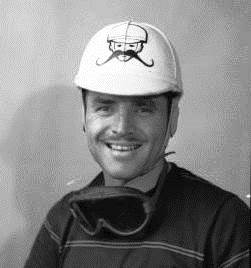
For Tuffanelli’ s car Diedt make extensive use of aluminum including the oil and fuel tanks to make the new front wheel drive car 350 pounds lighter than previous versions. For the driver of the new maroon and gold Diedt creation for the 1951 ‘500’ Pritchard and Tuffanelli selected their 1950 driver, the mustachioed California midget racing standout Ronald “Mack” Hellings.  Mack originally a motorcycle racer came up through the URA midget ranks with such future Indianapolis stars as Bill Vukovich and Sam Hanks and was crowned the 1948 champion of the URA ‘Blue’ Circuit for non-Offenhauser powered machines.


Mack Hellings official IMS head shot

Hellings graduated to championship cars during 1948 and drove for two seasons for the Los Angeles–based Don Lee racing team before he jumped to the “Tuffy’s Offy” team for 1950 and he scored five top ten finishes in nine starts in a K-K 2000 during the 1950 AAA (American Automobile Association) racing season  . When not racing, Hellings ran an automotive and motorcycle speed shop first located in North Hollywood and later Burbank California 


Helling's company logo


At Indianapolis in 1951, two days before the first weekend of time trials, the ‘Tuffanelli-Derrico Special’ lost a camshaft bearing.  On the third day of time trials, Hellings could only record a four-lap average speed of 123.925 MPH, which held up although his speed was nearly seven-and- a-half miles per hour slower than the next slowest qualifier. On race day, Hellings and the new Diedt creation started from the middle of the eight row, but only completed eighteen laps before the car was retired with a broken piston in the 270-cubic inch Offenhauser engine.


Hellings did not get a second chance to drive the ‘Tuffanelli-Derrico Special’ at the Indianapolis Motor Speedway.  On Sunday, November 11 1951, Hellings, fellow URA racer and engine builder Bob Baker, and URA photographer George “Lee” Harvey left Brackett Field near LaVerne in a rented plane piloted by Robert Harris. The quartet were headed north for the ‘Bay Meadows 150’ the final 1951 season championship car race scheduled for that evening at Bay Meadows race track in San Mateo.


A typical Piper Pacer


The cream-colored single-engine Piper PA-20 Pacer tail number N74568K was overdue for their mid-day fuel stop in Fresno and after the plane failed to arrive overnight, search parties were dispatched. On November 15 the wreckage of the plane and the four deceased passengers was found near the 4000-foot elevation on the south slope of the Tehachapi Mountains near Gorman California.    

Contemporary legend has it that Tuffanelli was so devastated over Hellings’ death that the car never raced again  but the ‘Tuffanelli-Derrico Special’ was entered for the 1952 Indianapolis ‘500.’ The 1951 driver was Chicago journeyman midget racer Danny Kladis (sometimes spelled Cladis) who had started racing ‘big cars’ before World War Two.  Kladis was the Mississippi Valley Midget Racing Association (MVMRA) driving champion three consecutive seasons from 1946 through 1948. Despite his Hall of Fame midget career, Danny experienced tough times at the Indianapolis Motor Speedway, and only qualified for the ‘500’ once in seven years of trying.  


It is unclear whether Kladis made a qualifying attempt after he spun the car out of turn two on May 15, and the ‘Tuffanelli-Derrico Special’ never appeared again for competition at the Indianapolis Motor Speedway. The beautiful #19 Emil Diedt-built ‘Tuffanelli-Derrico Special’ on display at the World of Speed museum appeared to be in original unrestored condition sporting its striking trademark gold-leaf nose scallop and numbers outlined in red pinstriping.

Although they scored three consecutive 500-mile race victories and three runner-up finishes in four years, the reign of the Emil Diedt built front drive race cars at the Indianapolis Motor Speedway was over after just five years.  With the early retirement of the ‘Blue Crown Special’ driven by Tony Bettenhausen from the 1952 ‘500,’ the front wheel drive concept was replaced by the next generation of Indianapolis race cars, the lighter weight “roadsters.”  


The World of Speed museum located at 27490 SW 95th Avenue in Wilsonville Oregon will feature their “Celebration of the 100th running of the Indianapolis 500-mile race” exhibit through April 2017.