Friday, December 16, 2016


The forgotten ‘500’ winner- L.L. Corum
Part one


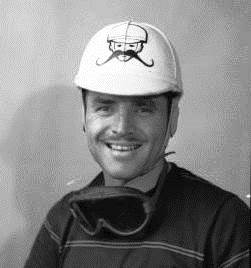
Lora L Corum in 1923
photo courtesy of the Indianapolis Motor Speedway Collection
IUPUI University Library Center for Digital Studies


In the Fall 2016 issue of The Classic Car, the magazine of the Classic Car Club of America, there was an excellent article by Carl Jensen that discussed the second iteration of the Stutz Bearcat. Introduced in 1931 the Bearcat was powered by the Stutz DV-32 double overhead camshaft (DOHC) four valves per cylinder eight-cylinder engine.


To prove its advertised performance, each Bearcat came from the Stutz factory with a notarized affidavit that attested that the car had been tested at 100 miles per hour (MPH).  The Classic Car article featured a reproduction of a period advertisement that featured a copy of one of the affidavits signed by L.L. Corum, the co-winner of the 1924 International 500-mile Sweepstakes at the Indianapolis Motor Speedway.

While not regarded with contempt by historians, Lora Lawrence ‘L.L’ or ‘Slim’ Corum certainly never received the respect and attention that he deserved. Years after his shared victory, Corum was often identified as "the driver that started the car that the late Joe Boyer drove to victory in 1924."

Born in the tiny south central Indiana village of Jonesville on January 8 1899, as young man Lora worked as a mechanic for the Chevrolet brothers – Louis, Gaston, and Arthur – when he first visited the Indianapolis Motor Speedway.

By 1921 though short on race driving experience “Slim” was entered in the ‘500’ as one of the drivers for the 6-car Frontenac Racing team. Corum had been entered for the fourth annual ‘Autumn Classic’ the previous year at the 1-1/8 mile Uniontown Pennsylvania board track, but did not start the race after he spun out during practice.

Corum’s lack of high-speed experience caught him on May 25 1921 during a practice run with his riding mechanic Marcel Treyvoux. Corum’s car spun at the south end of the big brick Speedway, looped three times, and crashed into the outer retaining wall. The pair scrambled out shaken but uninjured.    

Marcel Edmond Treyvoux born in France in October 1896, immigrated in 1908 after his family came to the United States in 1904, but sadly his father passed away a few months after arrival. His older sister, Suzanne, married racer Louis Chevrolet in 1905, and Louis served as a mentor to Marcel who trained as a mechanic. During World War I, Treyvoux served with the American armed forces overseas, and he met 17-year old Madeline Germaine in Paris in 1918.

Treyvoux returned home to Indianapolis, saved his money while he worked at Frontenac and eventually sent for Madeline. They were married before Judge Walter Pritchard in Indianapolis City Court on March 27 1920 and lived on Indianapolis’ near east side.  Marcel is listed as an entrant in several Hoosier dirt track races in the early nineteen twenties but he is primarily remembered as a Frontenac riding mechanic. Marcel died under unknown circumstances in Nazi-occupied Vichy France in October 1941, while his widow Madeline passed away in Florida in 1990. 

While Corum’s #27 Frontenac racer was repaired, solid steel disk wheels replaced the original wire wheels and after some extra driver coaching from AAA Chief Steward W D ‘Eddie’ Edenburn Lora was the first driver to qualify on Saturday May 28, 1921.  Corum and Treyvoux posted four qualifying laps with his lap speeds recorded at 80.25 MPH, 79.75 MPH, and 78.6 MPH with the final lap the fastest at 83.2 MPH for a four-lap average of 80.5 MPH to become the 18th starter on the outside of the sixth row.

Despite his apparently solid qualifying results, AAA officials remained concerned about rookie Corum’s driving abilities and lack of experience. Bloor Schleppy reported in the May 28th edition of the Indianapolis Star that during his time trial run “Corum showed a lack of control even on the straightway and it is scarcely probable that he can stick with the big league grinders for many laps.”
Tom Alley and Marcel Treyvoux in the #27 Frontenac
after Alley replaced Corum as the driver
photo courtesy of the Indianapolis Motor Speedway Collection
IUPUI University Library Center for Digital Studies

The exact nature of events remain unclear, but for the 1921 ‘500,’ Corum was replaced as the driver of the #27 Frontenac by veteran driver Tom Alley. Alley and Treyvoux were eliminated while in they ran in second place on lap 133 when one of the connecting rods inside the Frontenac single-overhead-camshaft (SOHC) four-cylinder engine broke and the car caught fire.  

“Slim” gained additional experience and poise during the summer of 1921 by racing on the Hoosier dirt track circuit, and at Indianapolis in 1922, Corum was back with the Frontenac team. Corum was assigned to the same four-cylinder Frontenac as in 1921 which for 1922 carried sponsorship from the local Monroe Automobile Company. This was a revival of Monroe’s sponsorship from 1920 when the William Small Company then the Monroe manufacturer successfully teamed with the Chevrolet brothers to win the ‘500.’

The 4-cylinder Monroe cars were entered along with the six 8-cylinder Frontenac team cars which were considerably faster; the Monroe team cars driven by Alley and Wilbur D’Alene, all qualified midfield and Corum qualified his #27 Monroe at 89.65 MPH on May 26.

Corum started his maiden ‘500’ from the fifteenth position on the outside of the fifth row, but Corum and riding mechanic Steve Nemesh were eliminated by a broken piston after 422 ½ miles or 169 laps were completed in the only Monroe entry that failed to finish the race. Overall though May 30 1922 was a disappointing day for the Chevrolet brothers, as five of the six Frontenacs also failed to finish.
LL Corum in the Barber-Warnock Special
photo courtesy of the Indianapolis Motor Speedway Collection
IUPUI University Library Center for Digital Studies

L.L Corum was entered for the 1923 Indianapolis 500-mile race as the driver of the “Barber-Warnock Ford Special” a Model T-based race car built by the Chevrolet brothers in their shop at 410 West Tenth Street in Indianapolis with the support of the Ford Motor Company engineering department. The tiny machine was powered by a 122-cubic inch four-cylinder Model T engine fitted with a Chevrolet-developed Frontenac SR (special racing) head fed through a Frontenac intake fitted with two carburetors.  

Sponsorship was provided by Barber-Warnock Ford agency, the oldest Ford dealer in Indianapolis. Clarence O. Warnock claimed that he built racing cars for Ray Harroun before he joined the Ford Motor Company as a traveling supervisor of service in 1914.  In 1917 Warnock and his partner former Ford salesman Hale C. Barber opened their Barber-Warnock Ford agency located at 819 East Washington Street.   

L.L Corum started the “Barber-Warnock Ford Special” in the 1923 Indianapolis ‘500’ from seventh starting position after posting a qualifying time of 86.65 miles per hour (MPH) during time trials.  Corum and the Barber-Warnock Model T finished the 11th annual International 500-mile Sweepstakes on Decoration Day 1923 in fifth place with an average speed of 82.58 MPH.
Later in1923, Lora and his wife Marie who had married on March 4 welcomed their son, Robert to their home at 33 North Kealing Avenue in the Tuxedo Park neighborhood on the west side of Indianapolis.

The dealership then entered three Model T-based race cars in the 1924 Indianapolis race and all finished, but the Barber-Warnock Ford agency business partnership dissolved during 1925. Barber moved south to Martinsville Indiana and invested in real estate until he passed away in 1948 at age 69. The C.O. Warnock Ford agency continued to operate until Warnock passed away from a heart attack in 1943, after which the dealership was sold to C.T. Foxworthy who operated his eponymous Ford dealership that “just can’t be beat,” according to their radio jingle until his passing in 1958.

A unique photo opportunity arose several years ago at Marian College
The 1923 '500' winner is in the foreground
with Corum's Barber-Warnock Special alongside
author's collection

Four spots ahead of Corum 1923 Indianapolis ‘500’ was the race’s first two-time winner Tommy Milton in his white and red trimmed ‘HCS Special.’ The initials “HCS” in this case stood for automotive pioneer Harold Clayton Stutz and the HCS Motor Car Company with its four-story reinforced concrete factory building located at 1402 North Capitol Avenue in Indianapolis.

Harry Stutz entered a hastily-built car in the first Indianapolis 500-mile race in 1911 for driver Gil Andersen and the car’s remarkable eleventh place finish led to the Stutz advertising slogan “the car that made good in a day.” Between 1911 and 1915, the three-car “Stutz White Squadron” racing team racked up numerous wins on race tracks across the country with drivers that included Andersen, Barney Oldfield, Len Zengel, Charles Merz, and the 1913 and 1915 American Automobile Association (AAA) champion Earl Cooper. 

A 1912 Stutz Series A roadster served as the ‘Pace Setter’ for the second running of the International 500-mile Sweepstakes at Indianapolis which also featured thee Stutz race entries. In 1913 Stutz released the stripped-down Stutz Bearcat that is considered by many as the first American-built sports car. 

Harry Stutz left the Presidency of his eponymous car company in 1919 after a disagreement with investors and founded HCS in partnership with financier Harry F. Campbell.  In January 1920, in the lobby of the Hotel Astor in New York, HSC unveiled their new car, with a lineup of six body styles, all powered by a Weidley 185-cubic inch four-cylinder valve-in-head engine. The lowest price HCS, the roadster, had a fairly high starting price of $2725.00.  

For 1921 the HCS 4-cylinder offerings were cut to four types – roadster, coupe, touring car, and sedan, and HCS introduced a larger car powered by a Harry Stutz-designed six-cylinder engine. Built by the Midwest Engine Company the 30-horsepower engine drove the rear wheels via a driveshaft that featured a universal joint on both ends, claimed to be a first in the industry. A yellow HCS 4-cylinder Series II roadster driven by Harry Stutz himself served as the ‘Pace Setter’ for the 1921 Indianapolis 500-mile race. 

The 122-cubic inch ‘HCS Special’ race winner bore no resemblance to the passenger car; as it was built by Harry A. Miller Engineering in Los Angeles to Milton’s specifications. The narrow 18-inch wide lightweight 1350-pound chassis was powered by straight-eight, twin-camshaft engine with hemispherical cylinder heads that developed 120 horsepower.

The HCS Motor Car Company failed to capitalize on the publicity surrounding the Indianapolis 500-mile race win just as Monroe failed in 1920. By late 1924 or early 1925, HCS had produced just 1600 cars and it ceased the manufacture of passenger cars and reorganized as the HCS Cab Manufacturing Company which failed in 1927. Harry Stutz himself moved onto the aircraft industry but passed away in June 1930 at Methodist Hospital in Indianapolis after an operation to remove his appendix.

Harry Miller’s new 122-cubic inch creations swept to victory in all eight of the 1923 AAA championship races, but the following year were supplanted as the Duesenberg race team debuted new cars fitted with superchargers. There were three supercharged factory Duesenberg racers entered in the 1924 500-mile race with a driver lineup that featured Corum, veteran Joe Boyer, and rookie Ernie Ansterburg while the factory entered an unsupercharged entry for Peter DePaolo.   

This rare pre-race photograph shows LL Corum in the #15
photo courtesy of the Indianapolis Motor Speedway Collection
IUPUI University Library Center for Digital Studies

Joe Boyer started the 1924 ‘500’ from fourth positon in the #9 Duesenberg and led the first lap, before the Millers driven by Jimmy Murphy and Earl Cooper took over the lead of the race. On lap 95 Boyer turned the #9 car over to relief driver Ernie Ansterburg (whose own car had crashed out), and then Boyer took over from third-place Corum on lap 111. Boyer then pushed the #15 Duesenberg to the front of the field from fourth place and made what proved to be the winning pass on Earl Cooper with 23 laps to go.


This undated photo shows the Krauss crown on display
photo courtesy of the Indianapolis Motor Speedway Collection
IUPUI University Library Center for Digital Studies
 

Consider these odd facts about the 1924 Indianapolis ‘500’: Boyer led the first lap and the final lap of the 1924 ‘500’ but in two different cars and L.L. Corum who won the ‘500’ despite never leading a single lap drove the same two cars in the race. At the drop of the checkered flag, Corum was a forgotten man; Boyer was celebrated as the victor, photographed in Victory Lane as he received the jewel-encrusted gold-and-silver Krauss Crown one of the forerunners of the Borg-Warner Trophy created by Indianapolis jeweler Leo Krauss.  

There was post-race controversy after Chief Steward W D ‘Eddie’ Edenburn declared that under AAA rules, the pair shared the credit for the victory but that Corum earned the points and the $20,000 race purse.  Despite what the rules read, the public perception was that Corum contributed little to the pair’s “co-victory” and that their success was due to Boyer’s superior skills as a race driver.

14 years later, Corum told Associated Press writer Harold Harrison that he bore no ill will towards Boyer who died three months later in a crash at Altoona Pennsylvania, but that he felt that he could have taken the #15 Duesenberg to victory that day. “I’d taken the car from ninth place up to third after nursing it in the early part of the race,” said Corum “It had been a hard race and they probably figured I could stand relief. At any rate I got out, they sent Joe in and Joe got the checkered flag.”     

After his surprise shared victory in 1924 Lora Lawrence Corum’s results in the 500-mile races at Indianapolis over the next five years were nothing short of disappointing.  “Slim” qualified for the 1925 ‘500’ starting field in Ralph DePalma’s Miller but crashed in practice the day before the race. Corum reportedly escaped without injury but Corum was replaced in the repaired machine for the race by Phil ‘Red’ Shafer, which was just one act in a flurry of ride-switching activity among four other drivers. Corum wound up driving 29 laps of the 1925 ‘500’ in relief for Ralph DePalma and then drove the last 28 laps of the race for Earl Devore while Corum’s original entry was driven to a fourth place finish by Shafer.  

In 1926 Corum was entered in the ‘500’ as a member of a three-car team entered by Continental Motors president Albert Schmidt who had entered partner Ralph DePalma’s former Mercedes car in the 1923 and 1924 500-mile races. Corum’s 1926 teammates were Frenchman Albert Guyot with four previous Indianapolis starts and Hungarian-born rookie driver Steve Nemesh who was Corum’s 1922 ‘500’ riding mechanic.  

A cross section diagram of the Argyll engine
Click to enlarge
 

The trio was set to race in 8-foot wheelbase cars fitted with 29-inch wheels powered by a supercharged 6-cylinder Scottish-built Argyll (frequently misspelled Argyle) Burt-McCollum single sleeve valve engine. The exotic 122-cubic inch displacement Argyll engine, which used an Alpax silicon-aluminum alloy engine block with steel cylinder liners and magnesium pistons, developed 100 horsepower when force-fed by the Roots supercharger.

The Argyll engine photograph

Earlier versions of the cars, built in Guyot’s French shop with Cozette chain-driven superchargers, were entered in the 1925 running of the ‘500,’ but construction delays forced Guyot to formally withdraw his team on May 12 1925. In the fall of 1925, Continental purchased the worldwide patent rights for the Argyll engine and Schmidt saw the entry of the uniquely powered cars in the famous 500-mile race as a great way to publicize Continental’s new engine offering.   

Unfortunately the 1926 500-mile race was disaster for the Schmidt/Agryll team, though not due any defect with the sleeve valve engines. The three light blue cars started from 19th, 22nd and 24th in the 28-car field but trouble soon started when the steering linkage on Guyot’s car broke on lap eight. The transmission in Nemesh’s car failed on lap 41 and three laps later Corum’s #23 entry retired with a broken shock absorber.

Continental continued to develop sleeve valve powerplants and even produced some prototype aircraft engines for the U.S. Navy before returning to conventional poppet valves for their successful A-70 seven-cylinder radial aircraft engine used in the Stearman YPT10 basic training aircraft.    

In our next installment of the Lora L Corum story, we’ll examine his foray into stock car racing with the Stutz Motor Company in 1927 and 1928.


Saturday, November 26, 2016

Two works by the master - Emil Diedt

color photos by the author
black & white photos appear courtesy of the Indianapolis Motor Speedway Collection in the IUPUI University Library Center of Digital Studies

During a recent visit to the World of Speed museum to view the special Indianapolis ‘500’ exhibit, the author photographed two automotive works of art built by one of the sport’s master metal craftsmen. Emil Diedt, born in Germany in 1897 worked out of a shop in Culver City California  and was best known as the builder of the identical pair of 270-cubic inch Offenhauser powered front wheel drive cigar-shaped ‘Blue Crown Spark Plug Specials’ owned by retired driver Lou Moore, but Diedt built two more similar cars later. 

A brief history of the Blue Crowns


Mauri Rose tries out his new Blue Crown in 1947

Reputedly the advantage of the front wheel drive at the Indianapolis Motor Speedway was due to more weight centered over the driving wheels which helped to “pull” the car through the corners and reduced the car’s tires sliding once the track surface got slippery with oil during the race. This proved to be correct, as front wheel drive cars led every lap of the 1947 500-mile race.

The new Blue Crown cars debuted at the 1947 Indianapolis 500-mile race, qualified in third and eighth positions and then dominated the race, leading 177 laps.  With 100 miles to go and his cars running in first and second positions, Moore signaled to the drivers of his cars via the pit board “EZY” the signal for the pair to take it easy. With just eight laps to go the race leader 39-year old rookie Bill Holland waved his teammate, Mauri Rose past him as Holland thought he held a one-lap lead.  Holland was mistaken and Rose raced away to score his second (and first solo) Indianapolis victory as the angry Holland finished 32 seconds behind Rose.   


1949 '500' winner Bill Holland


In 1948, the ‘Blue Crowns’ repeated their domination, with Rose and Holland again finishing one-two over two minutes ahead of the third place finisher, the front wheel drive Novi driven by Dennis ‘Duke’ Nalon. In 1949, Holland finally won the ‘500’ as Mauri Rose’s car broke a magneto strap while he ran in second place with eight laps to go. After a month of ongoing disputes with car owner Moore, the outspoken Rose angrily quit the team, or was fired, depending on whose version one chose to believe.  

The Keck car


The immediate success of the Diedt-built front wheel drive ‘Blue Crowns’ led to other car owners looking for their own versions. One such car owner was Southern Californian Howard B. Keck, heir to the Superior Oil fortune. Keck earlier purchased John Balch’s Offenhauser powered midget racing operation together with the services of co-chief mechanics Jim Travers and Frank Coon and their friend fuel injection pioneer Stuart Hilborn. After dominating in United Racing Association (URA) ‘red’ circuit for Offenhasuer powered cars, the Keck team and was ready to conquer Indianapolis.

With Keck’s backing, Travers and Coon ordered a new front wheel drive chassis from Emil Diedt for the 1948 Indianapolis ‘500.’ Indianapolis native son Jimmy Jackson who scored  two top-five finishes in the 1946 and 1947 500-mile races, qualified the new #61 ‘Howard Keck Special’ at 127.51 miles per hour (MPH) for the fourth positon. After he started the race on the inside the second row behind Rex Mays, Rose and Holland,  Jackson ran just outside the top five for most of the race, but his good finish was spoiled when a wheel spindle broke on the maroon colored machine with six laps to go and he spun into the infield.

Jackson and the Keck team returned to Indianapolis in 1949; Jackson wanted to paint the car green but Keck refused so Jackson wore green gloves. The ground-breaking Hilborn fuel-injected ‘Howard Keck Special’ started seventh after Jackson qualified with a four-lap average of 128.023 MPH. At the end of the 500-mile test, the #61 Diedt front wheel drive machine finished sixth, seven minutes behind winner Hollard’s similar machine.


Mauri Rose adds Pennzoil in this 1951 publicity shot


For the 1950 Indianapolis 500-mile race, former ‘Blue Crown’ pilot Rose was the new driver of the Keck/Offenhauser front wheel drive Diedt machine and Mauri qualified with a  four-lap average of 132.319 MPH to start on the outside of the front row. Rose earned a measure of revenge as he out-qualified both of the Moore ‘Blue Crowns;’ Holland was tenth fastest and Rose’s replacement, Tony Bettenhausen timed in eighth fastest.

Rose and the Keck entry led the race on three occasions for a total of 15 laps, but Rose was slowed when he was briefly forced out of the cockpit by a pit fire on his only stop on lap 109.  Rose had pitted from the lead and once the fire was extinguished Mauri was back underway and he recovered to finish third behind Holland in a controversial rain-shortened 138-lap race. The deluge lasted just 60 seconds, but Speedway officials stopped the race and initially scoring was very confused, with Rose originally unofficially scored in fifth place. The #31 Keck entry’s appearance in race footage of the 1950 Metro-Goldywn-Mayer film ‘To Please a Lady’ was little satisfaction for Rose who lost his chance to become the first Indianapolis 4-time winner.   


For the 1951 Indianapolis 500-mile race the Emil Diedt bodywork was painted black with yellow and red trim and the #16 car carried Pennzoil sponsorship. Mauri Rose, who turned 45 years old four days before the race, qualified fifth fastest at 133.422 MPH to start from the middle of the second of eleven rows of three. In his 15th Indianapolis ‘500’ on his 127th lap, while Rose ran in third place, the right rear wire wheel of the ‘Pennzoil Special’ collapsed. Rose fought for control as the car slid into the infield off turn two and into a drainage ditch where it overturned and momentarily trapped Mauri underneath. 


The aftermath of the 1951 flip


Legend has it that Rose retired from racing on the spot, but in actuality, it was the death of Rose’s first wife and mother of his two young children Mauri Junior and Dory who both were polio survivors during the winter of 1951 that lead Mauri to formally announce his retirement.  On January 30 1952, from his home in Van Nuys California, Rose told reporters that after 24 years, he could no longer risk his life racing.


The 1951 Indianapolis ‘500’ marked the final race appearance of the Howard Keck owned Emil Diedt front wheel drive machine, as the following year the Keck team entered a 270-cubic inch Ferrari 375 and a new Offenhauser-powered creation from Frank Kurtis known as the 500A but nicknamed the “roadster.” The Diedt car as displayed at the Museum of Speed is expertly restored as how the car appeared in the 1951 Indianapolis ‘500.’  

The Tuffanelli-Derrico car


Babe Tuffanelli

Reputed Chicago suburban south side organized crime figure Carmine George “Babe” Tuffanelli became interested in automobile racing and owned several  beautifully maintained  ‘big cars’ and midgets which raced in events across the country. The team of cars, each fielded as ‘Tuffy’s Offy’ were maintained by experienced mechanic Charles Pritchard from a garage on Vincennes Avenue in the Chicago suburb of Rock Island Illinois assisted by a young mechanic named Ray Nichels.


From 1948 through 1950 Pritchard and Tuffanelli entered Kurtis-Kraft 2000 upright dirt cars in the Indianapolis 500-mile race, but for the 1950 running of the International Classic, the team entered their new Emil Diedt built front wheel drive chassis dubbed the ‘Tuffanelli-Derrico Special’. The second name car on the car was one of Carmine’s alleged underworld business associates, Jimmy Derrico, who became part-owner of the ¼-mile Raceway Park in Blue Island in 1952.


For Tuffanelli’ s car Diedt make extensive use of aluminum including the oil and fuel tanks to make the new front wheel drive car 350 pounds lighter than previous versions. For the driver of the new maroon and gold Diedt creation for the 1951 ‘500’ Pritchard and Tuffanelli selected their 1950 driver, the mustachioed California midget racing standout Ronald “Mack” Hellings.  Mack originally a motorcycle racer came up through the URA midget ranks with such future Indianapolis stars as Bill Vukovich and Sam Hanks and was crowned the 1948 champion of the URA ‘Blue’ Circuit for non-Offenhauser powered machines.


Mack Hellings official IMS head shot

Hellings graduated to championship cars during 1948 and drove for two seasons for the Los Angeles–based Don Lee racing team before he jumped to the “Tuffy’s Offy” team for 1950 and he scored five top ten finishes in nine starts in a K-K 2000 during the 1950 AAA (American Automobile Association) racing season  . When not racing, Hellings ran an automotive and motorcycle speed shop first located in North Hollywood and later Burbank California 


Helling's company logo


At Indianapolis in 1951, two days before the first weekend of time trials, the ‘Tuffanelli-Derrico Special’ lost a camshaft bearing.  On the third day of time trials, Hellings could only record a four-lap average speed of 123.925 MPH, which held up although his speed was nearly seven-and- a-half miles per hour slower than the next slowest qualifier. On race day, Hellings and the new Diedt creation started from the middle of the eight row, but only completed eighteen laps before the car was retired with a broken piston in the 270-cubic inch Offenhauser engine.


Hellings did not get a second chance to drive the ‘Tuffanelli-Derrico Special’ at the Indianapolis Motor Speedway.  On Sunday, November 11 1951, Hellings, fellow URA racer and engine builder Bob Baker, and URA photographer George “Lee” Harvey left Brackett Field near LaVerne in a rented plane piloted by Robert Harris. The quartet were headed north for the ‘Bay Meadows 150’ the final 1951 season championship car race scheduled for that evening at Bay Meadows race track in San Mateo.


A typical Piper Pacer


The cream-colored single-engine Piper PA-20 Pacer tail number N74568K was overdue for their mid-day fuel stop in Fresno and after the plane failed to arrive overnight, search parties were dispatched. On November 15 the wreckage of the plane and the four deceased passengers was found near the 4000-foot elevation on the south slope of the Tehachapi Mountains near Gorman California.    

Contemporary legend has it that Tuffanelli was so devastated over Hellings’ death that the car never raced again  but the ‘Tuffanelli-Derrico Special’ was entered for the 1952 Indianapolis ‘500.’ The 1951 driver was Chicago journeyman midget racer Danny Kladis (sometimes spelled Cladis) who had started racing ‘big cars’ before World War Two.  Kladis was the Mississippi Valley Midget Racing Association (MVMRA) driving champion three consecutive seasons from 1946 through 1948. Despite his Hall of Fame midget career, Danny experienced tough times at the Indianapolis Motor Speedway, and only qualified for the ‘500’ once in seven years of trying.  


It is unclear whether Kladis made a qualifying attempt after he spun the car out of turn two on May 15, and the ‘Tuffanelli-Derrico Special’ never appeared again for competition at the Indianapolis Motor Speedway. The beautiful #19 Emil Diedt-built ‘Tuffanelli-Derrico Special’ on display at the World of Speed museum appeared to be in original unrestored condition sporting its striking trademark gold-leaf nose scallop and numbers outlined in red pinstriping.

Although they scored three consecutive 500-mile race victories and three runner-up finishes in four years, the reign of the Emil Diedt built front drive race cars at the Indianapolis Motor Speedway was over after just five years.  With the early retirement of the ‘Blue Crown Special’ driven by Tony Bettenhausen from the 1952 ‘500,’ the front wheel drive concept was replaced by the next generation of Indianapolis race cars, the lighter weight “roadsters.”  


The World of Speed museum located at 27490 SW 95th Avenue in Wilsonville Oregon will feature their “Celebration of the 100th running of the Indianapolis 500-mile race” exhibit through April 2017.  

Monday, November 14, 2016


The 1916 Jovian Trophy race

In late August this site featured an article about the 1970 Shriner’s race and that article noted that unlike today when the Indianapolis Motor Speedway hosts multiple races and events during the year, from 1919 until 1994, the Indianapolis Motor Speedway hosted just one sanctioned race each year.


Prior to the cessation of racing at the big brick oval from 1917 to 1919, in 1916 the Indianapolis Motor Speedway hosted four races – the ‘International 300-mile Sweepstakes’ on Memorial Day, May 30, and three short races, of 20, 50 and 100 miles all dubbed the ‘Harvest Auto Classic’ which were held on Saturday September 9. The Speedway founders decided that the 500-mile race, which took six hours to run, was too long and decided to schedule several shorter races to attract more spectators.


A fourth, little-known 1916 race, for the Jovian Trophy was scheduled for October 18, held in conjunction with the 14th annual convention of the Jovian Order held in Indianapolis. The motto of the Jovian Order, formed around 1900 as a social and business fraternity to promote electricity was “All together - All the time - for Electrical Interests.” In 1916 there were 60 to 70 local Jovian Order chapters known as “leagues,” across the United States with the home office in St Louis Missouri.

Members of the local Jovian leagues met for weekly or bi-weekly luncheons to discuss important electrical industry topics and socialize. The leagues worked to educate the public through public display rooms, teach school students the basics of electricity, and to educate architects. Jovians campaigned for efficient and uniform electrical inspections and contractor licensing, maintained an employment bureau and even had a benevolent fund for needy members of their community. Delegates reported that the leagues generated and fostered the "all together" doctrine, and stopped, or at least abated destructive competition and price cutting by bringing men of the same industry together socially.

The organization which was apparently governed based on ancient beliefs about mythological gods, elected officers that were named after Roman mythological gods; the group’s top position was Jupiter (also known as Jove) the Roman god of thunder and lightning as “the father of electricity” with the lesser officers named after Jupiter’s children and siblings with titles such as Neptune, Vulcan and Mars.

The base of operations for the three-day 14th annual Jovian convention was the Hotel Severin located across the street from the Union Station, a location very convenient for out of town visitors who arrived on one of the more than 300 trains that arrived in Indianapolis daily. Interspersed with the Jovian annual business meeting and election of new officers, there were social activities which included a 100-mile race at the Indianapolis Motor Speedway scheduled to start at 2 PM on Thursday October 19 2016.

 Drivers advertised as entrants for the Jovian Trophy race included John Aitken, Charles Merz, Dave Lewis, Howard Wilcox, and Gil Andersen, which makes sense since all were drivers of cars owned during the 1916 season by the Indianapolis Motor Speedway (IMS) Team.  The IMS team, formed and funded by James Allison supplemented the short fields during the 1916 season caused by a lack of foreign entries due to the conflict in Europe, provided seven cars for the 21-car 1916 Indianapolis 300-mile race.   It is unclear what if any other cars were planned for the Jovian Trophy race.
 

Johnny Aitken


Aitken, a hometown driver had a spectacular season in 1916 in the IMS Peugeot, as he started from the pole for the Indianapolis ‘300’ and scored five consecutive American Automobile Association (AAA) race victories that included a clean sweep of the three-race ‘Harvest Auto Classic.’ Aitken is credited with 15 victories in 41 starts at the Indianapolis Motor Speedway. 1916 would prove to be the 31-year old Aitken’s last full racing season as he died during the 1918 influenza pandemic.

Charles Merz


Merz another hometown driver raced also extensively at the Speedway in the early days, and had business ties to Arthur Newby, James Allison, and Carl Fisher, three of the four founders of the Indianapolis Motor Speedway.  Merz was unfortunately involved in one of the Speedway’s first fatal crashes in August 1909 when his riding mechanic and two spectators died after Merz’ National blew a tire and crashed. Merz’ three career AAA wins all came on road courses, although he notched two top-four finishes in his four starts at the Speedway.  

1916 was Merz’ last season as a race car driver; during the war years of 1917 to 1919 he served with the U.S. Army Air Corps in Washington DC. Merz entered the signal corps industrial department as a Captain, was later promoted to Major; after the war he served as a Lieutenant Colonel in the Army Air Corps reserve at Fort Benjamin Harrison and was recalled to active duty in 1940.

Merz succeeded W D “Eddie” Edenburn as the ‘500’ Chief Steward beginning with the 1935 ‘500’ and served in that role through the 1939 race. In January 1940, Merz was named by Theodore E “Pop” Myers to role of assistant to the General Manager at the Indianapolis Motor Speedway.  Charles a prolific engineer and inventor founded Merz Engineering in 1927 to manufacture of aircraft parts and machine tools in its plant located north of downtown Indianapolis. He ran the eponymous company until his death at his home in 1952, four days after he celebrated his 64th birthday.
 
A photo of the 1923 HCS team
Milton left, Stutz center and Wilcox to the right
 

Howard Wilcox, Dave Lewis and Gil Andersen all drove “Premiers” for the racing team owned by the Speedway which were in effect copies of the Peugeots built in Indianapolis   Wilcox, another Hoosier driver, qualified for the pole position for the 1915 Indy 500 and won the 1919 ‘Liberty 500-mile Sweepstakes’ after he led the final 98 laps. In 1923 Wilcox drove 46 laps during the 500’ in relief of his HCS teammate Tommy Milton to help Milton become the first two-time 500-mile race winner.  

Four months after the 1923 “500,’ Wilcox died in a crash on Labor Day at Altoona Pennsylvania after his Duesenberg blew a tire and crashed on the high-banked 1-1/4-mile board track. A second race driver of the same name, known as Howdy Wilcox II, was not related. Wilcox’ son, Howard Wilcox Junior four years old at the time of his father’s death, served on the United States Auto Club (USAC) board of directors.  
Dave Lewis
 

New Yorker Dave Lewis debuted as a member of the Stutz racing team in 1911, and had a long racing career that stretched into the late nineteen twenties. Lewis drove the first front wheel drive entry in the Indianapolis ‘500’ in 1925 and finished second in the Miller ‘122,’ his best finish in the ‘500.’ In his mid-40’s Lewis proved to be a steady top-five finisher on the brutally fast board tracks.

In early May 1927, Lewis set a new world’s record as he won the 200 mile race on the high-banked 1-1/2 mile Atlantic City wooden oval at an average speed of 130 miles per hour (MPH).  The following month he crashed in spectacular fashion at Altoona Pennsylvania after his car hit a hole in the wooden racing surface.  Dave was thrown from the car when it “turned turtle” (rolled over) but he was unhurt and returned from the hospital in time to see the end of the race, but his front-drive Miller was destroyed which ended his 1927 AAA season.

Less than a year after the accident, on Sunday  May 13 1928 Southern California fire wardens responded to a grass fire four miles above the site of the failed St. Francis Dam and found Lewis, a newlywed who had just turned 47 years old, dead from a gunshot in his mountain cabin. Days later a coroner’s jury ruled that Lewis had died by his own hand after he panicked when a fire he had set got out of control. His widow Laura rejected the jury’s finding as she claimed Dave planned to leave for Indianapolis the following day to drive a new Miller race car.  

In the days after the suicide ruling, a woman named Margaret Hixson came forward and filed a claim on Lewis’ estate as she claimed that she and Lewis had a 16-year relationship and a 14-year old daughter. This claim was filed although they had never married, and paternity could not be proven. Hixson said she traveled with Lewis as his wife though he was already married but he later divorced his first wife. After a few months, this controversial story faded from the headlines with the final outcome of the claim unknown.   
 
Gil Andersen
 

Gulbrand “Gil” Andersen a Norwegian emigre was an early star driving for Harry Stutz; it was Andersen’s performance in the inaugural Indianapolis ‘500’ which led to the Stutz advertising slogan “the car that made good in a day.” Andersen started his “White Squadron” Stutz from the pole for the 1912 ‘500’ not due to his driving prowess but because his entry was the first one received at the Speedway office on North Capitol Avenue.   

Gil became a member of the Premier IMS team after the Stutz factory team’s withdrawal from AAA racing in 1915. Andersen retired from open-wheel competition at the end of the 1917 season, but returned to racing during 1927 as a member of the Stutz factory stock car racing team. Andersen died at age 50 on September 20 1930 from tuberculosis at his home in Indianapolis.  

On October 19 1916 the Indianapolis area dawned warm and the temperature reached 65 degrees at noon but soon after, a cold front arrived; it began to rain and the temperature dropped 20 degrees. The scheduled 100-mile race for the Jovian Trophy was called off due to the cold and rain and the conventioneers moved to a reception at the Indianapolis Athletic and Canoe Club located on the banks of the White River.        

Events far from Indianapolis conspired to make the September 1916 ‘Harvest Auto Classic’ the last race held at the Indianapolis Motor Speedway until 1919. In the early months of the 1917, the Speedway staged a battle with hotel managers over high room rates; Allison threatened to move the 500-mile race to other speedways. The hotel acquiesced to Allison’s demands for regular room rates to be charged.

On March 23 1917 days after the entry blanks for the race were mailed out, Speedway President James Allison canceled the 500-mile race. Allison stated that “racing means taking away from the government the services of skilled mechanics whose services can be used by the government to better advantage in time of war than by the Speedway Corporation as a means of entertainment” and he noted that “many materials and accessories used in racing will become absolute necessities in times of conflict.”
 
The cancellation came days after President Wilson’s cabinet had voted to go to war, but a full two weeks before the United States Congress authorized the declaration of war on the German Empire.The facility that Allison had built on Main Street in Speedway as the headquarters for the IMS racing team was converted to make parts for Liberty aircraft engines, and the use of the Speedway grounds was offered to the government for free. In May 1917 Allison announced that the government had not selected the Speedway as a site for an aviation training school and that the Speedway was released from all obligations to the government.   
 
821st Squadron group photo
 

It was not until March 1918 that the government announced the formation of the 150-man 821st Aero Squadron Signal Corps under the command of Captain Edwin Webb with the Speedway’s 250-acre infield converted for use as an aviation repair and refueling depot. Sadly Captain Webb as a passenger on his first airplane flight lost his life in a June 2 1918 plane crash during a flying/bombing exhibition prior to a fund-raising baseball game at Washington Baseball Park.

Less than a month after the armistice was signed that ended World War One, on December 6, 1918, Speedway General Manager "Pop" Myers announced that the ‘Liberty  500-mile Sweepstakes’ would be held on May 30 1919.  Racing on the bricks continued through 1941 including a special match race held in September 1941 as a feature of another convention. On December 29, 1941 Indianapolis Motor Speedway owner and World War One flying ace Eddie Rickenbacker announced that the 1942 Indianapolis 500 was canceled.
 
All the black & white period photographs that accompany this article appear courtesy of the Indianapolis Motor Speedway Collection in the IUPUI University Library Center for Digital Studies