Showing posts with label Offenhauser. Show all posts

Friday, March 1, 2019


Hanford Motor Speedway‘s heyday

Part four of the rich history of the first superspeedway west of the Mississippi


In early 1964 KS Racing Enterprises Inc. (KSRE) signed a 20-year lease with track builder and owner Bircha Lewis “B.L”. Marchbanks for the facility, which included a paved ½-mile, oiled dirt 1/3-mile and 1-3/8-mile high banked paved tri-oval, on property located southeast of Hanford California. KSRE operated by Kalmon “Kal” Simon and T L “Tommy” Francis renamed the facility Hanford Speedway and aimed to book USAC (United States Auto Club) National Championship Indianapolis car races for the big tri-oval

For the 1964 and 1965 seasons, Hanford Speedway hosted a late season USAC stock car race, but was unable to land the desired National Championship race. In 1966, the facility reached its nadir of racing activity, with no major events reported in news outlets.   

Finally, in 1967 the newly re-named Hanford Motor Speedway landed a USAC National Championship race but only because the race was promoted by Joshua “JC” Agajanian, owner of the 1952 and 1963 Indianapolis winning cars and the West’s foremost racing promoter. Agajanian, a founding USAC board member, famed for his promotion of the half-mile dirt Ascot Park track located at 183rd Street and Vermont Avenue in Gardena, also promoted annual USAC National Championship races at the Phoenix International Raceway and the California State Fairgrounds in Sacramento.   


The new Hanford Motor Speedway date became part of a four-race western swing that comprised the final two months of the 1967 USAC schedule, along with Phoenix, Sacramento and the addition of a new date and venue for the season finale ‘Rex Mays 300’ booked for the Riverside International Raceway. Agajanian proudly proclaimed that the inaugural ‘California 200’ at Hanford would be the first time for rear engine Indianapolis cars to race in California.  

The initial entry list released in late September listed AJ Foyt, who had won his third Indianapolis ‘500’ in May, joined by Mario Andretti, Bill Vukovich Junior, Roger McCluskey, Jim McElereath, Joe Leonard, Al and Bobby Unser and Gordon Johncock. Agajanian stated that the 26-car starting field would include “most of the Indy 500 field,” and that Parnelli Jones would make pre-race speed runs in the STP turbine car and then would pace the start of the race.

Both the major tire companies conducted pre-race tire testing at Hanford. AJ Foyt in his Ford-powered Coyote tested Goodyear tire compounds and ran multiple laps at 151 miles per hour (MPH). Agajanian, ever the great promoter claimed in newspaper interviews that Foyt told him that “it was the finest track he had ever raced on.” Art Pollard ran the Firestone tire tests in Fred Gerhardt’s turbocharged Offenhauser powered Gerhardt chassis with his faster lap reported as 154 MPH.

Days before the race, the Bakersfield Californian announced that four additional drivers had been added to the entry list – USAC regulars Chuck Hulse, Johnny Rutherford, Ronnie Duman and Wally Dallenbach.


When the gates at Hanford swung open at 9 AM on October 22, 1967 there were 7,000 general admission seats still available at $6.00 apiece. Qualifying runs for the 31 cars entered began at noon with the race scheduled to take the green flag at 3 PM.
Art Pollard in Fred Gerhardt’s turbocharged Offenhauser powered ‘Thermo King Auto Air Conditioning Special’ ran the fastest lap clocked at 154.816 MPH as Gordon Johncock in his similar Gerhardt chassis, the ‘Gilmore Broadcasting Special’ powered by a DOHC Ford engine, ran the second-best lap with an average speed of 154.26 MPH.  Al Unser in the Retzloff Chemicals Lola/Ford was third fastest, with Mario Andretti in the Dean Van Lines Ford-powered Brawner Hawk in the fourth starting position.

Towering above the field of 25 low slung rear-engine cars was the ‘Joe Hunt Magneto Special’ a Lujie Lesovsky built Offenhauser powered front engine dirt car driven by Gary Bettenhausen in just his third USAC championship start. Tommy Copp, Bob Harkey and Sonny Ates failed to qualify, while Bruce Walkup crashed in practice and Dempsey Wilson’s car broke a piston in practice. To confirm JC Agajanian’s pre-race claim that most of the Indy ‘500’ field would be Hanford for the ‘California 200,’ 20 of the 26 starters had competed in the 1967 Indianapolis 500-mile race.   

Race day dawned with cold temperatures and valley fog, but the sun broke through just before the command to start engines. At the drop of the green flag, Pollard rushed into the lead and led the first 108 laps, while challengers Al Unser and Andretti were both eliminated in a first turn crash on the 18th lap.

Pollard was passed by Joe Leonard in the ‘Vel’s Ford Sales’ DOHC Ford powered Mongoose on the 109th lap, and Joe led until he spun in turn one on the 129th lap, which handed the lead to Johncock. Gordon led the final four circuits around the 1-1/2-mile tri-oval to claim his first USAC championship victory and a $15,000 check out of the total $60,000 purse.

Bobby Unser in the Rislone Oil Treatment/Leader Cards Eagle/Ford crossed beneath Shim Malone’s checkered flag five seconds behind Johncock. Lloyd Ruby in the American Red Ball Special was third one lap behind with Foyt fourth and Pollard in fifth position as Leonard recovered from his late race spin to finish seventh as he had lost two laps.

Bettenhausen in the Hunt dirt car finished in 11th place, five laps in arrears just ahead of McElreath in the second Leader Cards entry which was the final car to finish. The race was completed in one hour 34 minutes and 34 seconds with an average speed of 127.531 MPH for the 201-mile race distance.

Post-race press reports were enthusiastic as JC Agajanian reported gate admissions of $121,000, with the crowd count reported as both 18,000 and 20,0000.  Jack Lattimer with the San Mateo Times newspaper reported the higher head count and stated that “on more times than we can recount, we watched the cars race three abreast” but eluded to some complaints from drivers regarding dusty track conditions that caused several of the cars to spin. 

Lattimer claimed that “when the drivers get the ‘feel’ of the track Hanford is in for some headlines, although a little more time and money must be spent to put the grounds in shape, but the superspeedway is excellent.”  Lattimer claimed that Agajanian told him that he planned two visits per year of the Indianapolis cars in the future. Larry Press’ column in the Bakersfield Californian newspaper reported 18,000 attendees and noted that “seating, concession and restroom facilities all are temporary and there is room for improvement in those areas.” 

True to Agajanian’s promise following the October 1967 race, the USAC championship cars were booked for two races for the 1968 season, with dates that bookended the season with races scheduled in February and November to avoid the intense heat of California Central Valley summers. The 1968 USAC season opener, the second annual ‘California 200,’ was set for Sunday March 17, with reserved seats tickets priced at $10 for those closest to the start-finish line with advance sale seats at the ends of the grandstand available at $8 each.

In the weeks leading up to the race, Bobby Unser tested tires for Goodyear and reportedly recorded a lap in his turbocharged Offenhauser Eagle of 156.069 MPH, faster than Pollard’s 1967 pole-winning speed. Pre-race news articles quoted a press release that stated that “during the winter months many improvements have been made to the Hanford site.

New bleachers were brought in and placed farther from the track for better viewing. Many more restroom and concession stands have also been added for race fan’s convenience.” An article by Al Auger in the Hayward Daily Review claimed that “the track has been completely modernized with a new surface,” but this claim years later remains unsubstantiated.

In qualifying for the second ‘California 200,’ Bobby Unser set a new track record with an average speed of 155.709 MPH which outpaced Art Pollard, Mario Andretti, Lloyd Ruby and Roger McCluskey. Once again, Gary Bettenhausen put the ‘Joe Hunt Magneto Special’ into the starting field, but this time his upright dirt car was joined by sprint car veteran Charles “Sonny” Ates in a Turner chassis front engine upright dirt car and George Benson in the Vince Conze-owned Watson roadster.

The appearance of Conze’s Watson roadster, which had finished second in the 1960 Indianapolis ‘500’ driven by Rodger Ward, powered by a 220-cubic inch Offenhauser engine, marked the final instance of a Watson roadster in the starting field for a USAC race according to author Joe Scalzo.  In a field filled with cars equipped with Offenhauser and Ford engines, four cars powered by stock-block Chevrolet power plants made the 26-car starting field: Ates’ upright front engine machine owned by Hoosier muffler shop chain owner Boyce Holt, and the rear-engine cars of Max Dudley, Dempsey Wilson and Johnny Rutherford in the Jerry Eisert entry. 

USAC sophomore driver Jim Malloy in the ‘Jim Robbins Seat Belt Special’ Vollstedt was the only car that failed to record a lap fast enough to qualify, as Bob Hurt’s entry broke an oil line and drag racer Danny Ongais, in his first Indianapolis-car appearance, crashed the rear-engine Chevrolet-powered Mickey Thompson entry in practice after it caught fire.

The first twenty laps of the race saw furious action at the front, as Pollard, Bobby Unser, and McCluskey each took turns at the point until Unser established himself as the leader. Bobby led until lap 91, then with his pit stop, Pollard and McCluskey got past Unser and the pair exchanged the lead over the next 14 laps.

Unser’s Eagle reassumed the lead on lap 105 and Bobby looked to be cruising for the victory until he spun in traffic on lap 120 and Art Pollard hit the wall in the ‘Thermo King Auto Air Conditioning Special’ to avoid Unser’s spinning ‘Rislone Special.’  Bobby lost a lap with his spin and fell to sixth place with his brother Al and Gordon Johncock at the front of the field.   

Johncock assumed the lead and repelled Al’s late attempts to pass and led the final 14 laps to claim his second consecutive “California 200’ victory. Lloyd Ruby finished in third position, and AJ Foyt fourth as Bobby Unser recovered to finish fifth. Mario Andretti, now a car owner following the death of benefactor Al Dean, started what would be an unhappy 1968 season, a retired early when his Brawner Hawk broke a half shaft after just 40 laps.

Attrition was much less of a factor in the 1967 “California 200,’ as 17 of the 26 starters finished the race, which finished in an hour and 39 minutes with a record average speed of 155.709 MPH. The racing was good with ten recorded lead changes, but attendance was down from the inaugural event, with only 15,000 fans reportedly on hand.

There were apparently no other major races held at Hanford Motor Speedway during the Summer months of 1968, but a major event occurred that did not bode well for the long-term survival of the facility. On July 9, 1968, the sale of $25.5 million in mortgage bonds were completed to finance the construction of the Ontario Motor Speedway. The new facility west of the Los Angeles metropolitan area would feature a 2-1/2-mile oval and infield road course was planned to be the world’s most modern multi-purpose racing facility with seating for 95,000 fans. With the general contractor Stole, Inc. already under contract, the new facility was set to open with a USAC Indianapolis-car race in the Fall of 1970.

In the lead-up to the November 3, 1968 ‘California 250’ race, much of the publicity focused on the appearance of a pair of STP-sponsored Lotus 56 machines powered by Pratt & Whitney ST6N-74 gas turbine engines. The door-stop shaped dayglo red turbine cars had been a sensation in their debut at the Indianapolis ‘500,’ and a turbine car came within nine laps of winning the race.

Two weeks after the ‘500,’ ownership of the turbine cars shifted from STP Oil Treatment president Andy Granatelli to Parnelli Jones and they had appeared in a handful of USAC races, mainly road courses. The four-wheel drive turbines proved to be fast in qualifying but suffered from numerous mechanical maladies and brake problems in races which had limited their finishes.

‘California 250’ ticket prices increased over the Spring race, with starting line area seats priced at $12 each, with outer area reserved grandstand seats $10 and day of the race general admission seats $8 apiece. JC Agajanian who had posted a guaranteed purse of $25,000, featured the entries of three drivers in piston engine cars to battle the turbines – Roger McCluskey, Al Unser and Bill Vukovich Jr.  McCluskey a two-time USAC sprint car champion and Vukovich from Fresno, the 1968 Indianapolis Rookie of the Year were entered in cars powered by turbocharged Offenhauser engines, while Unser was entered in a Lola powered by 750-horsepower turbocharged Ford engine.

There was a three-hour practice session held on Saturday November 2, with qualifying on Sunday at noon followed by the start of the race at 2:30 PM. Defending champion Gordon Johncock crashed in Saturday practice and Pollard in one of the turbines broke a differential and neither car could be repaired in time.  In qualifying, Joe Leonard in the STP turbine obliterated the previous track record with a best lap of 163.093 MPH trailed by USAC points leader Mario Andretti, Lloyd Ruby and the 1968 Indianapolis ‘500’ winner Bobby Unser, as all four drivers posted laps which were faster than the old track record.     

At the drop of the green flag by JC Agajanian, Leonard in the #60 turbine seized the lead and led the first 93 circuits until he pitted for a kerosene fill-up and new tires on lap 94.  While Leonard was stopped, the yellow flag flew which allowed AJ Foyt, Bobby Unser and Andretti to pit under caution and dropped Leonard to fourth place. Unser and Andretti battled for the lead over the next 29 laps before AJ Foyt took the lead for good on lap 132 and led the final 36 circuits.

Foyt’s Coyote crossed the finish line three seconds ahead of Unser with Andretti in third one car length behind Bobby. Leonard wound up in fourth place on the lead lap, the best-ever finish for the STP turbine with Jim McElreath in fifth place three laps in arrears to the winner.
Foyt’s win marked the first USAC championship victory for the turbocharged Ford engine as Andretti’s points lead fell to 72 markers with two races remaining on the 1968 schedule. Post-race newspaper articles  the next day optimistically reported attendance of 15,000, but a later local newspaper article stated that “promoter Agajanian barely escaped with his shirt.”  

In our next installment, we will look at the 1969 season as the 18-year old Hanford Motor Speedway facility began to encounter serious financial difficulties.

Monday, May 1, 2017

A collection of photographs
from the
Classic Racing Times 
Vintage Desert Classic 
at Phoenix Raceway


CRT President Gary Mondschein outlines the rules in the driver's meeting

FRONT ENGINE CARS

The Demler laydown built by Quinn Epperly- second in the 1958 "500"

The Pirrung Speical - second in the 1935 "500"

The 1952 KK500A Auto Shippers Special 

The 1948 Don Lee Special driven by Mack Hellings

1961 Watson roadster driven by Johnny Boyd
 
pure craftsmanship

REAR ENGINE CARS

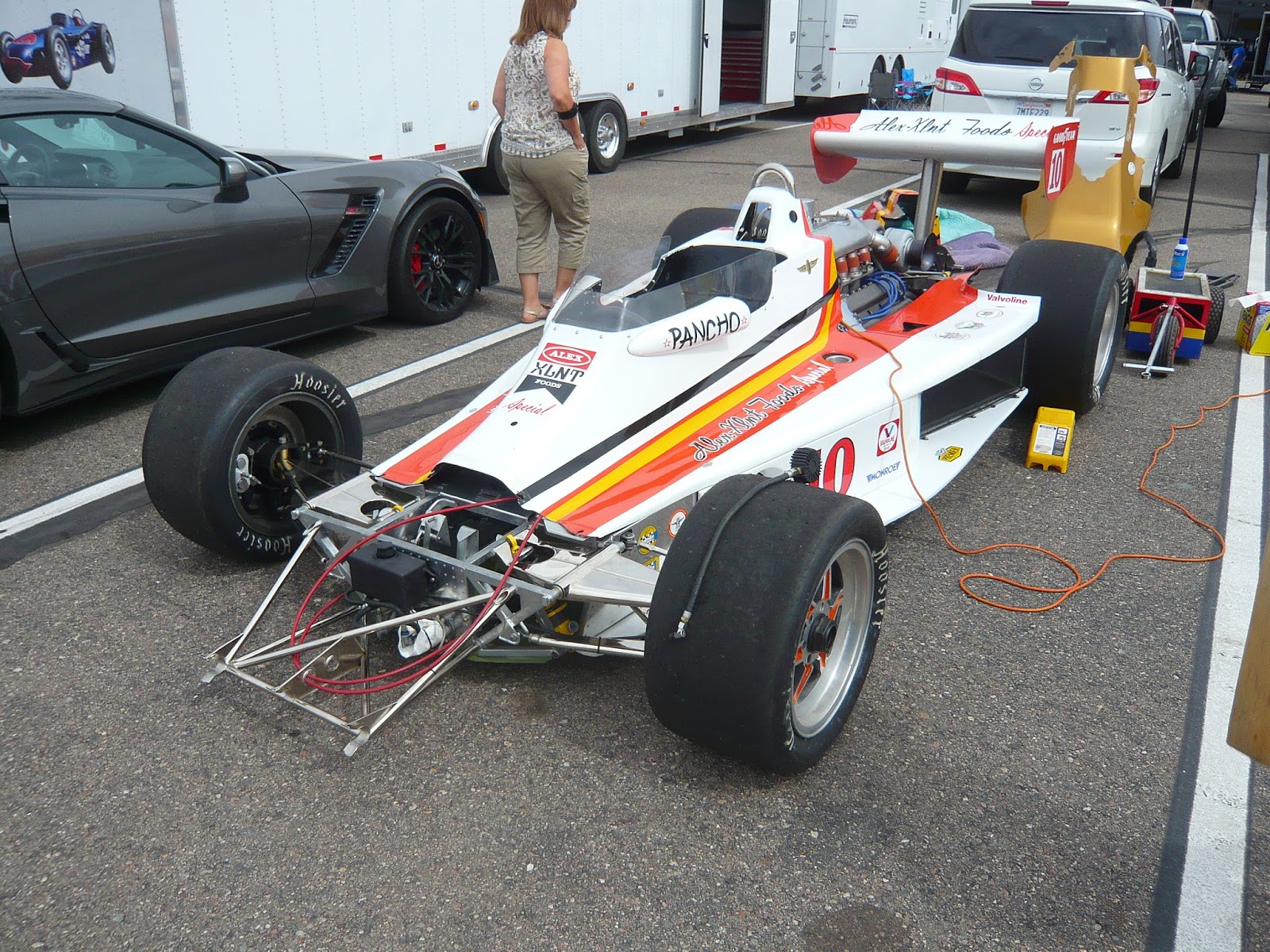
Alex Foods Lightning as driven by Pancho Carter powered with a Drake V-8

1972 Antares driven by Roger McCluskey


A prototype Coyote never raced


Gary Mondschein's pair of RE cars
 
The famous lightweight John Buttera 1982 Eagle - dressed and undressed


1961 Cooper-Climax


1972 AAR Eagle

ENGINES


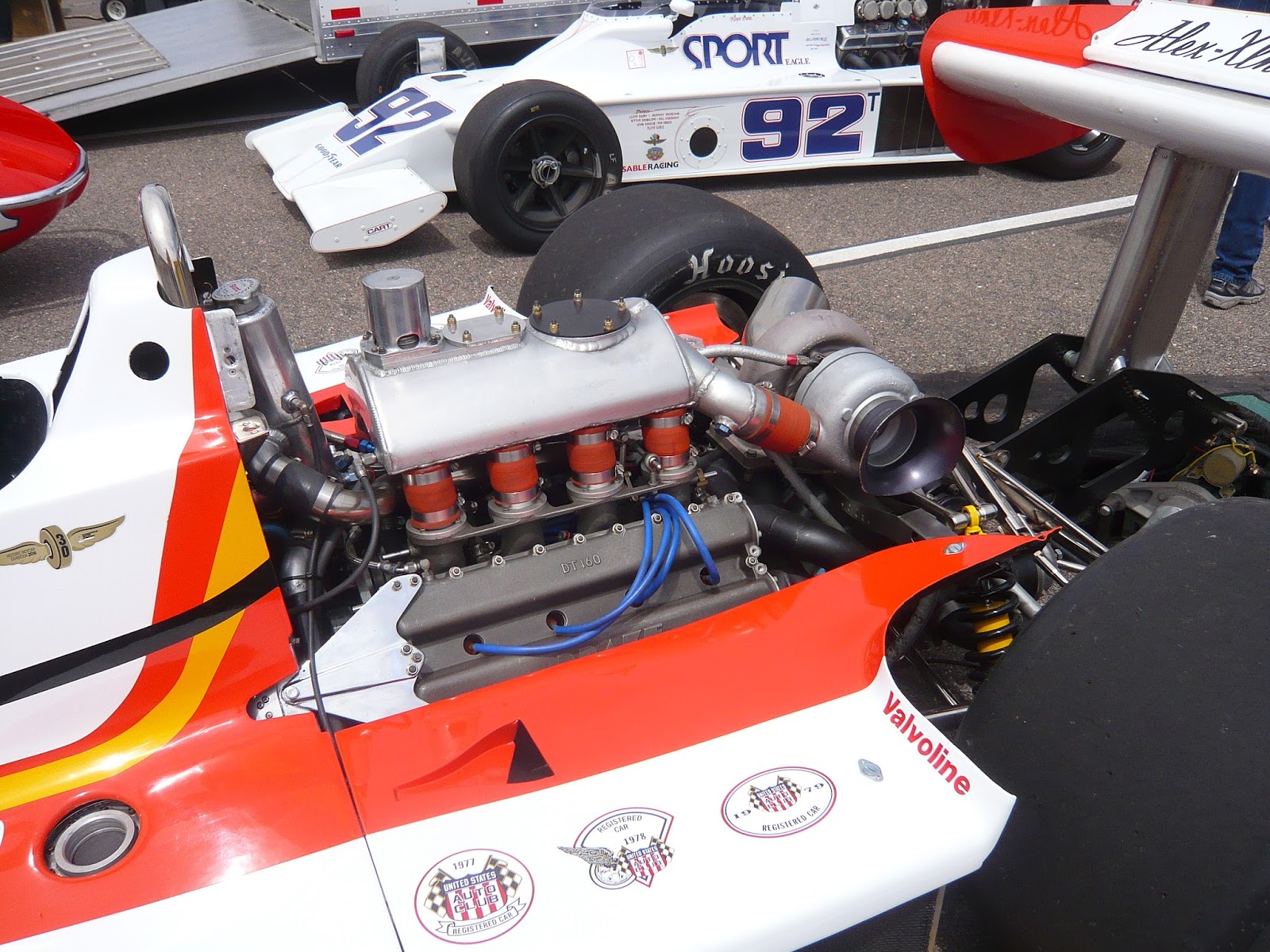
A pair of Ford 4-cam engines

Drake V-8


ALL PHOTOGRAPHS BY THE AUTHOR


Thursday, January 5, 2017


Fred Agabashian
from the Bay Area to Indianapolis glory
Part three -1958 and a busy retirement 

 
Fred's 1958 IMS portrait in his
Champion Spark Plug 100 MPH club leather jacket
courtesy of the Indianapolis Motor Speedway Collection
in the IUPUI University Library Center for Digital Studies


Bignotti-Bowes Racing Associates entered their pair of Kurtis-Kraft 500G chassis for the 1958 Indianapolis '500' with Fred Agabashian and Johnnie Parsons set to return as the drivers, but in early April, they had to quickly find a driver. Agabashian resigned from the Bowes team in mid-April and accepted a large retainer from trucking magnate Pat Clancy to drive the "City of Memphis Special" another Kurtis Kraft 500G with Danny Quella as chief mechanic.  As Agabashian’s replacement Bowes and Bignotti chose his teammate from the 1956 Federal Engineering team, Bob Veith.

Agabashian came to Indianapolis in May 1958 fully expecting to start his 12th consecutive Indianapolis ‘500’ but the month proved to be a painful experience. Fred made an aborted qualifying attempt on May 17 the first day of qualifying. During a “test hop” in the “Helse Special” during practice on Wednesday May 21 he turned a lap at 143.9 MPH then spun and crashed in turn two.

This accident marked the first time in his twelve-year career that the 44-year old Agabashian crashed at the Indianapolis Motor Speedway. Fred suffered minor injuries to his left leg and hand in the crash and he also complained of pain in his mid-section. Fred took a private car, not an ambulance, to Methodist Hospital where he stayed overnight. 

The new Helse Kuzma chassis was one of three built for 1958 with independent front suspension and was originally assigned to second-year team driver Jimmy Daywalt who left the team in frustration after suitable speed could not be found.  Apparently the handling problems were not traced to the front suspension, but rather the new one-piece fuel tank design. In retrospect, it appears as though the frame was too flexible.  

An article in the May 21 1958 issue of the Indianapolis Star revealed that “just about everything has been tried by builder Eddie Kuzma and the mechanics, even stuffing inner tubes in the fuel tanks and inflating them to keep the fuel from swishing around too much and finally even cutting off some of the fuel tanks,” In addition to cutting off the fuel tank, prior to Agajanian’s crash crew chief Bruce Crower and his crew “rebuilt the Helse car virtually from the ground up” according to the Star. 

Fred's 1958 '500' qualifying photo
Author's collection
 

Three days after the crash on May 24 the third day of time trials Fred spun in the southeast turn on the second lap of his second qualifying attempt and brushed the wall which damaged the car’s front axle. After repairs Fred qualified the ‘City of Memphis’ Kurtis Kraft 500G at a relatively slow 142.135 MPH which bumped Dempsey Wilson from the field and placed Fred at the tail of the field.

On the windy final day of time trials, Wilson climbed into the ‘Sorenson Special’ and bumped Agabashian from the starting field.  Fred completed a four-lap run into the Racing Associates “D-A Lubricants Special” Kuzma backup car but his four-lap average was not fast enough to bump back in and Agabashian’s string of consecutive Indianapolis ‘500’ starts ended at eleven.  

Agabashian and the "City of Memphis Special" wound up as the 34th fastest qualifier and won $500 from the Speedway as the first alternate. In the third turn of the first lap of the 1958 ‘500’ Ed Elisian and Jim Rathmann tangled as they foolishly fought to lead the first lap.

Bob Veith who had replaced Agabashian in the second Bowes KK 500G was run over by Pat O’Connor’s 'Sumar Special' which flipped and O’Connor was killed instantly. In reaction to this accident, for the 1959 season USAC required that all cars have roll bars behind the driver.  In an interview after the race, Freddie told news reporters that "he wasn't too upset to have been bumped" as he had had a premonition of disaster. 

Fred never officially announced his retirement as a race car driver, he simply moved on to the phase of his life for which he had preparing for years.  According to automobile racing historian Chris Economkai, “Agabashian was one of the first racers to realize the value of public relations” and Fred began making public speeches about racing around 1950.


Fred's image appeared in Champion Spark Plug ads like this one for years


 early in his racing career Fred worked in sales at Bob Phillipi’s Lincoln Mercury dealership in Oakland but at the time of his retirement from driving in 1958, Fred was the senior member of the Champion Spark Plug Highway Safety Team, a group of 100 MPH club members who toured the country to speak to high school students about driving safety.  Fred worked for the Champion Spark Plug Company until he retired 1978 and was succeeded by Jerry Grant.  

In 1959, Fred joined the Indianapolis Motor Speedway radio network as the driver expert on the annual 500-mile race broadcast hosted by Sid Collins, and Agabashian’s gravelly voice was heard nationwide providing expert insight on the Memorial Day broadcast through 1965, and again from 1973 to 1977.

Agabashian worked as an USAC observer and later the chief steward of the Mobilgas Economy Run in 1967 and 1968. In the final  Run held in 1968, Fred dropped the checkered flag on contestants as they crossed the finish line at the Indianapolis Motor Speedway after the original finish in New York City was abandoned after the assassination of Martin Luther King Jr.  

Fred remained active and regularly visited local Bay Area tracks and was an annual visitor to the Indianapolis Motor Speedway until he passed away in October 1989 at his home in Alamo California.  His daughter reportedly still lives in the home and his office  remains just as it was when Fred was alive.  
 
For his career accomplishments Fred Agabashian is an inductee into the Bay Cities Racing  Association (BCRA) Hall of Fame, the National Midget Auto Racing Hall of Fame, the American Auto Racing Writers and Broadcasters Association (AARWBA) Hall of Fame and the Indianapolis Motor Speedway Auto Racing Hall of Fame. 


Wednesday, December 28, 2016


Fred Agabashian
from the Bay Area to Indianapolis glory
Part one 1947 to 1952  


All photographs appear courtesy of the IUPUI University Library Center for Digital Studies from the Indianapolis Motor Speedway Collection

San Francisco Bay Area midget driver Levan “Fred” Agabashian achieved great success in local midget racing before he made it to the Indianapolis Motor Speedway. In his years at the Speedway which coincided with the early part of the roadster era, "Doctor" Agabashian was highly regarded for his ability to diagnose and solve the problems with ill-handling race cars.

Born in Modesto California in 1913 to Armenian immigrants Levan and Nevart Agabashian, legend has it that Fred drove his father’s car at age five and tinkered with cars as a youngster. Fred participated in his first race with a jalopy at age 17 in 1931 while still a student at Berkeley High School. One of Fred’s three younger sisters, Alice Elcano, became a famed Bay Area radio Big Band singer. 

During his career, Fred drove stock cars and ‘big cars’ but he made his name in midgets and won his first midget racing championship in 1937 with the short-lived Northern California Racing Association. Fred raced with such midget legends as Herk Edwards, “Lucky” Lloyd Logan, Ted Ayers, 3-time STAR midget champion Al Stein, and Tony Dutro on long-lost tracks such as the 1/5-mile dirt ‘Motordromes’ in San Francisco and San Jose and the 1/6-mile dirt Neptune Beach Speedway which was next to the amusement park of the same name in Alameda.   

In 1946, Agabashian won his first Bay Cities Racing Association (BCRA) championship for car owner Jack London and the following year Agabashian made his first visit to the Indianapolis Motor Speedway as the rookie driver of the “Ross Page Special” a supercharged Miller-Offenhauser powered Kurtis chassis owned by one the promoters of the San Jose Speedway.


Fred and the Ross Page Special shown in 1947.
Note the clear Plexiglas fairing behind Fred's head 
 

Though many observers were drawn to the clear Plexiglas fairing behind driver Agabashian’s head, the maroon and white Ross Page car with gold trim is considered to be the forerunner of Frank Kurtis’ later roadster designs as it featured an offset engine and driveline. After he finished ninth in the 1947 ‘500,’ he returned to the Bay Area, and Agabashian won the BCRA title again in  1947, this time for car owner George Bignotti.      

Agabashian was one of 25 drivers who took part in the February 1948 “Aztec Championship” a series of 15 races that the BCRA club staged in Mexico City. The tour organized by Damon Miller and Art Driefer led by BCRA starter Hank Madeiros and Floyd Busby who filled in for “Boots” Archer the BCRA business manager.

The venue was the new Ciudad de los Deportes stadium which reportedly held up to 65,000 fans. The Mexican promoters guaranteed the club $18,000 for six nights of racing, with three nights of racing each of the planned two weeks with an option to extend the contract for up to two months.

A group of nearly 100 people (wives and mechanics) left the Bay Area aboard a Southern Pacific train on January 20 1948. The rail line promised to arrive at the stadium in Mexico City in five days for a cost of $205 per car but five teams elected to tow their cars and equipment to Mexico.

Once there the teams learned that their cars did not run well at Mexico City’s altitude even with the use of high octane gasoline. Agabashian won the opening night race before 20,000 fans over Andy Guthrie. Johnnie Parsons won the trophy dash and finished third in the feature ahead of Jerry Piper.

The author could not find any more race results in period newspapers, but thanks to Bay Area racing historians, the author pieced together a few more details. BCRA historian Jimmy Montgomery provided his copies of the results of the seven non-points races in Mexico City. The first race was held on Thursday February 5 with 26 cars entered.

Woody Brown set quick time of 13.58 seconds in the Jack O’Brien owned Ford V8-60 powered midget which stood as the track record for three days until Johnnie Parsons reset the track record of 12.92 seconds three nights later. The Mexico City racing programs featured time trials each night followed by a trophy dash, four 5-lap heat races, and two 6-lap “finals” for the top finishers in the heat races. After a break the BCRA racers ran a 15-lap semi-feature and a 25-lap feature.

The second night in Mexico City, February 7th, Parsons won the Trophy Dash and the feature, and Woody Brown captured the third night 25-lap feature on February 8. After a night off, racing resumed on the tenth and Parsons won his third trophy dash and Agabashian his second Mexico City feature race. Marvin Burke won the fifth feature over Agabashian on February 12 over Agabashian and the racers took a few days off before their next race.

On February 15 in the penultimate Mexico race the car count dropped to 24 midgets, and fast qualifier Jerry Piper won the Trophy Dash, while Vic Gotelli won the feature over Parsons. The last Aztec race was run on February 19 as Woody Brown won his second feature over Marvin Burke and Agabashian.

The tour was not extended beyond the original contract and Al Slonaker in his February 24 “Speedway Sparks” column in the Oakland Tribune reported that “midgeteers are drifting home from Mexico City” and that   Agabashian won the Aztec Championship.   The tour ended after the contracted two weeks because according to the recollections of Floyd Busby, Sr. the size of the crowds steadily declined over the six nights.

Slonaker later reported in March that “Mexican publicity billed our boys as ‘suicide pilots’ and ‘death defying drivers.’ Somehow our sensible speedway sportsmen began to believe this nonsense, and overnight they became madmen. Mexico City saw two weeks of the craziest and downright wildest driving ever witnessed.” There seems to be a measure of exaggeration in Slonaker’s article as Floyd Busby, Jr. remembers that his father told him that despite the local press hype, none of the ‘death defying drivers’ even turned a midget over while they raced in Mexico. This second-hand recollection was confirmed by historian and writer Tom Motter.  

Agabashian returned to Indianapolis in May 1948 to reprise his roles as the driver of the ‘Ross Page Special’ and bumped his way into starting field but the 183-cubic inch Leon Duray-designed supercharged engine broke an oil line with just 58 of the 200 laps completed.  In October Agabashian was crowned the BCRA champion for the third consecutive year, after his chief competitor Jerry Piper broke his arm in a crash during a BCRA midget race in Santa Rosa late in the season which ended Piper’s season early.   

For 1949, Piper and Agabashian started the BCRA season as teammates for George Bignotti, with Piper taking the wheel of the 1948 championship car while Fred drove the brand-new Kurtis-Kraft #154 “Burgermeister Special.” Fred set the quick time in the first race in the BCRA winter indoor championship held January 8 on the 1/10-mile oval laid out on the concrete floor of the Oakland Exposition building.

Agabashian set quick time on three occasions during the 8-race series and eventually lowered the track record to an amazing 8.22 seconds. Fred won the penultimate feature race, but Hayward’s Bob Sweikert won the inaugural BCRA indoor championship.

In May 1949 at Indianapolis, Fred was again nominated as the driver of the ‘Ross Page Special,’ but the Miller-Offenhauser supercharged engine broke its crankshaft during a practice run on Friday May 27. The next day, Fred jumped into the Indianapolis Race Cars Inc. (IRC) Maserati 8CL chassis number 3035 and posted a four-lap qualifying average speed of 127.007 miles per hour (MPH) which bumped Henry Banks from the field.

IRC was a group of three Indianapolis businessmen led by investment banker Roger Gould Wolcott that purchased the assets of the Boyle Racing Team after the 1948 death of Boyle chief mechanic Harry “Cotton” Henning. Evidently the IRC team mechanics lacked the understanding of the complexities of Italian engineering that Henning had possessed as both of the IRC team’s Maserati entries retired from the 1949 ‘500’ early.

Agabashian’s car dropped out first, with terminal overheating on lap 38 and teammate Leland “Lee” Wallard retired the 1939 and 1940 winning Maserati 8CTF 17 laps later with gearbox troubles.  Near the end of the 1949 AAA season, Agabashian substituted for injured driver Johnny Mantz in JC Agajanian’s Kurtis 2000 in the 100-mile race at the old California State Fairgrounds in Sacramento. Fred started from the pole position and led 99 of the 100 laps to post his first (an only) AAA championship victory. 

Fred’s entry for the 1950 Indianapolis ‘500’ was announced very early, in mid-January with Fred as the teammate to Johnnie Parsons, the defending American Automobile Association AAA National Champion in the Kurtis-Kraft “house cars.”

Fred in his #28 car to the left of his teammate in #1 Johnnie Parsons
 

Parsons drove the same Kurtis-Kraft Offenhauser that he drove in 1949 for St. Louis car owner Ed Walsh, Frank Kurtis’ partner and the President of Kurtis-Kraft Inc. while Fred was assigned the team’s “new” Kurtis 3000, one of five built for the 1950 ‘500.’ What made Agabashian’s “Wynn’s Friction Proofing Special” different was that it was powered by an experimental 179-cubic inch supercharged Offenhauser engine.

“I always liked research and development, new stuff," Agabashian said in an interview at the Indianapolis Motor Speedway in 1987. "I could've probably had better luck if I drove something conventional." Never was that statement truer than in 1950.

During May Fred turned some of the fastest laps in practice, and he coached rookie driver Walt Faulkner, a fellow midget driver who struggled with JC Agajanian’s #98 Kurtis 2000 upright chassis. On “Pole Day” May 13 Agabashian’s #28 “Wynn’s Friction Proofing Special” was the first car out and posted a 10-mile qualifying average speed of 132.792 MPH much to the delight of the more than 50,000 fans which held up through the day as the fastest average speed. 

Just before time trials closed at 6 PM local time, Faulkner in the #98 ‘Agajanian Special’ took to the track. After a “slow” first lap of 132 MPH, Faulkner’s best lap was his second, recorded at 136.013 MPH before laps of 134.8 and 133.8 MPH for a four-lap average of 134.343 MPH. Faulkner’s last second run not only knocked Agabashian off the pole, but set new track records and nudged Fred to start from the middle of the front row for the ‘500.’

On Memorial Day, Fred ran in third place at 40 laps, but the yellow #28 Kurtis 3000 fell out on the 64th lap with a broken oil line while his teammate’s conventional Offenhauser-powered Kurtis chassis won the rain-shortened race. Fred drove the supercharged ‘Wynn’s Friction Proofing Special’ for Ed Walsh for the rest of the AAA season and appeared in nine of the twelve 1950 AAA championship races and wound up 14th in points.  

In October, Fred received special permission from AAA’s West Coast Supervisor Gordon Betz to participate in the BCRA midget portion of the Bert Moreland Benefit race held on the ¼-mile oval at Oakland Stadium. Moreland who had driven Agabashian’s midget in BCRA competition had been paralyzed in a crash at Contra Costa Speedway earlier in the season and would be confined to a wheelchair for the rest of his life until he passed away in 2001. 

In January 1951 it was announced that Fred had assumed the responsibilities of the manager of the BCRA club but his reign was a short one, as he resigned on April 8 under pressure from the AAA following Bill Holland’s suspension for “outlaw (non-AAA) activities.” 

At the Indianapolis Motor Speedway Fred in the “Granatelli Bardahl Special” was the fastest of only three drivers to complete a qualifying run on the second day of time trials and his 135.029 MPH four-lap average earned him the 11th starting position. The clutch on the Granatelli Kurtis 3000 failed as Fred left the pits on his 109th lap and he was placed 17th in the final standings.

Fred’s 1951 AAA racing season was a difficult one, as Agabashian failed to qualify for two other AAA races with Andy Granatelli and he drove for three other car owners – Ray Brady, Pat Clancy, and JC Agajanian for a total of six AAA race appearances with a best finish of sixth recorded twice during the season. After the 1951 AAA season, Fred now 38 years old, cut back on his racing appearances and focused his energies on success in just one race a year- the Indianapolis 500-mile race.

In our next installment we’ll continue to tell the story of Fred Agabashian’s Indianapolis ‘500’ career.

Monday, July 18, 2016

The racing life and times of Jerry Grant

Part five –1972 after the Indianapolis ‘500’


While car owner Dan Gurney’s appeal of the 1972 Indianapolis ‘500’ penalty of ten finishing positions and over $71,000 by United States Auto Club (USAC) officials for a pit violation was being addressed, the “Mystery Eagle” team moved to Milwaukee for the 150-mile ‘Rex Mays Classic’ on June 4. Grant’s teammate, Bobby Unser qualified his 1972 All American Racers (AAR) Eagle #6 for the pole position with Grant alongside in the purple and white #48.

Bobby Unser led the first 45 circuits on the flat Wisconsin State Fair Park one-mile oval before he pitted and yielded the race lead to Grant for one lap while the field ran under the caution flag. While Unser went on to lead the last ninety laps and win the race, the turbocharger on the four-cylinder Offenhauser engine in Grant’s car failed and the “Mystery Eagle” retired on lap 86.

Three days after the Milwaukee race, Gurney and Grant learned that their appeal of the Indianapolis penalty had been rejected, and rather than a minimal fine which they had hoped for, Grant was awarded twelfth place. Around that same time, Grant and Gurney discovered that their Indianapolis sponsor, Chris Vallo of CV Enterprises, rather than being a millionaire as he claimed was a scam artist who had dropped of sight owing the AAR team and Grant tens of thousands of dollars.

Grant’s promising 1972 USAC season ground to a halt for lack of sponsorship with the purple and white #48 AAR Eagle grounded for three months. In mid-August, Gurney’s primary sponsor Oscar L “Ozzie” Olson of the Olsonite Corporation, manufacturer of molded one-piece plastic toilet seats, announced that he had purchased the “Mystery Eagle.” Olson announced that Jerry Grant would run the final three USAC races on the 1972 schedule, starting with the third leg of the USAC ”Triple Crown” at the 2-1/2 mile “Indianapolis of the West,” Ontario Motor Speedway.

Practice at Ontario California began on August 22 and both the Eagles of Grant and teammate Bobby Unser soon posted practice lap speeds of over 200 miles per hour (MPH). Experts calculated that the turbocharged Offenhauser engines in the AAR Eagles had to produce nearly 1,100 horsepower in order to accomplish the 200 MPH feat.

That huge amount of horsepower from 159 cubic inches of engine displacement came at a price as the high level of boost pressure put a tremendous strain of the engine’s internal components.  Unser experienced two engine failures in practice and then in pre-qualifying practice on the morning of August 26, Unser’s car suffered another engine failure, which opened the door for Grant.

Jerry Grant’s first lap around the Ontario Motor Speedway in the purple and white #48 “Olsonite Eagle” lap was completed in 44.7 seconds, or 201.414 MPH. Jerry Grant was the first man to officially turn a lap in an Indianapolis-type championship race car at over 200 MPH. Grant’s lap broke Peter Revson’s day-old Ontario track record of 194.470 MPH and set a new world’s closed course speed record and took the two-year old "world’s closed course speed record" away from NASCAR stock car racer Bobby Issac.

Grant’s last three laps of his 10-mile time trial run were progressively slower, but he would start the ‘California 500’ from the pole position with a four-lap average of 199.600 MPH. In a post-qualifying interview, Grant explained “I didn’t want to push it so I backed off a little after that first lap. The track is slick and I didn’t want to make a stupid mistake.”

Grant seemed a bit underwhelmed by his accomplishment. “Going 200 MPH to say you’ve gone 200 MPH is not the object. I want to get a good starting position in the race and any of the three in the front will be fine with me.”    

Meanwhile, the AAR crew replaced the engine in Unser’s car in time for him to make his time trial run later on Saturday, but rain showers in the area kept Unser off the track and therefore he was ineligible to make a run for the pole position. 

The next day, Sunday August 27, Unser’s Eagle blazed to a new track and world’s record with a lap of 201.965 MPH and a four-lap average of 201.374 MPH but because his run came a day too late, Unser started the 1972 ‘California 500’ from the twenty-third starting position.

If there was any question of the level of animosity between Grant and Unser, it was answered by Grant’s quote printed by the Associated Press after Unser’s record-setting run. “Isn’t it ironic?” said Grant, “the B team is sitting on the pole and the A team is back in 23rd?”  Unser later told Preston Lerner "that record should have been mine.  Letting Jerry get the record irks me like hell because I did all the development work on the car.”

In pre-race publicity, AJ Foyt predicted race laps would be in the 175-180 MPH range with engine turbocharger boost levels reduced and the cars carrying full fuel loads . In final practice on September 1, Grant ran a lap with full tanks at 190.779 MPH, and Unser practiced at 192.028 MPH. In an article published the day before the race the Long Beach Press-Telegram ranked Grant as a 10-1 favorite to win the race to be held on September 3 1972.  

Jerry Grant’s “Mystery Eagle” failed to complete the first parade lap of the third annual $700,000 “California 500” before a rod bolt in the Offenhauser engine broke. In an interview days later with Ohio sportswriter Rick Yocum, Grant revealed “I never felt more confident about a race in my life than I did about Ontario. Usually we change the engine after qualifying, but mine was running good, and you hate to fool with something that’s working so well. We changed pistons, valves and bearings, but not the bolts.”

Grant struggled with engine problems at the “Trenton 300” held on the 1-1/2 mile dog-leg oval Trenton (New Jersey) Speedway; he qualified eighteenth and finished 21st after the engine failed on lap 53. At the season-ending ‘Best Western 150’ at Phoenix International Raceway, Grant qualified tenth and finished eighth, 11 laps behind his teammate Unser who won his second consecutive USAC championship race.

Next time we will tell the story of Jerry Grant's shortened 1973 season and his struggles against  the USAC hierarchy. 


Wednesday, March 2, 2016


Post War racing was dangerous

Many veterans of service in World War 2 left the ranks of the United States military and once home quickly joined the ranks of racing drivers. One such driver, Al Duris sadly became an example of just how hazardous racing was in those post-war days - long before fuel cells, five-point safety belts, and roll bars (let alone roll cages). Duris narrowly avoided death on the track twice, but he did not survive his third brush with death.   

Born on March 24, 1924 in Bedford Ohio, the source of Albert J. “Al” Duris’ interest in automobile racing is unknown but it seems plausible that as a young man Duris watched midget auto races in his hometown at Sportsman Park, a greyhound track alleged built by Al Capone in 1934 that first hosted midget racing on the ¼-mile oval in 1936. A 1942 graduate of Bedford High School, Duris enlisted in the U.S. Army on January 28 1943 and served in World War 2 with the Army Corps of Engineers for three years as a truck driver.  After his military service was completed, Al returned home to Bedford and took a civilian job as truck driver. 

In June 1947, Duris raced in a semi-stock race at the ½-mile Ravenna Speedway on the Portage County Fairgrounds near his home, and then on July 9th Al appeared in a midget at the Williams Grove Speedway in Pennsylvania. Duris raced regularly through the balance of the 1947 season in the Pennsylvania area, as on July 15 he appeared at Ebensburg Speedway in the 50-lap American Automobile Association (AAA) sanctioned ‘Mid-Season Championship ‘race together with fellow Ohioans Bob Harnar and Bob Orr. The next night, Duris finished third behind track record holder “Little Artie” Cottier and Jack Seither in the 25-lap feature at Williams Grove.

Al Duris was one of several Central States Racing Association (CSRA) “All Star” drivers scheduled to appear on Sunday afternoon September 12 1948 at the ½-mile banked dirt Conococheague Speedway in Hagerstown Maryland for a scheduled seven-event program that was topped by an eight-lap “Australian pursuit” race and the 25-lap feature. During this era, “Australian Pursuit” races were very popular with the fans - the field started in reverse order of their qualifying time, e.g. the slowest car started first. The fastest qualifier started last and he passed cars, they left the track. The leader at the end of eight laps was declared the winner. 
 
A postcard photograph of Al Duris in "Kitty's Offy."
  
Besides Duris who drove Claude Catt’s maroon-and-white #48 “Kitty’s Offy” (often referred to as the “Kitty Catt Offy”) other CSRA “All Stars” entered at Conococheague included Charles Miller of Philadelphia and Al Shaffer of Columbus Ohio, who later survived a plane crash, was behind the wheel of ‘Dutch’s Offy.’  Herb Swann drove one of the two ‘Ray Leo Offys,’ with CSRA point leader “Big“ Bill Spears in the ‘Jeffers Offy’ and Eddie Dunn in his own Offenhauser-powered midget.

On Sunday, in time trials Bill Spears set a new CSRA record for a half-mile track when he completed one flying lap in 25.36 seconds. As feature time approached, due to the lateness of the hour, the promoters reduced the length of the feature to 20 laps. On the leader’s tenth lap, flagman “Doc” Conway ran onto the track surface to black flag two cars that had been disqualified but had continued to race. Conway’s sudden actions took back marker Earle C. Fattman of by surprise, and Fattman, a 25-year old Army veteran from Washington Pennsylvania who had served in Greenland, swerved into the path of the leaders and his car glanced off of Duris’ passing “Kitty’s Offy.”

A crowd of 6,000 fans watched as Fattman’s “doodlebug” veered out of control towards the infield of the track and smashed through the track’s flimsy inner wooden fence. Fattman’s car then crashed into a Cities Service oil truck parked in the infield and overturned, narrowly missing a crowd of spectators in the infield.  According to the report in the newspaper The Daily Notes from Canonsburg, Pennsylvania the oil truck was “completely demolished” and Fattman was “killed instantly,” pronounced dead at the scene by local physician Dr.  E.G. Hoachlander. 

According to published reports the race continued and was won by Charles Miller of Philadelphia followed by Fred Moore of Tampa Florida, Shaffer, and Swann, while Duris who had narrowly skirted disaster, finished the race in fifth place.  Earle Fattman’s body was transported home by train the following day to Glyde Pennsylvania for burial.
Fattman’s death, the track's first fatality added to the Conococheague Speedway’s growing pains which stemmed from the track’s operation on Sundays in defiance of Maryland’s “Blue Laws.” “Blue Laws” common in many states at the time, could be traced back to colonial times banned sales of certain items and prohibited entertainment or leisure activities on Sundays, which was considered to be devoted to worship or rest.

The fatal accident was investigated by Maryland State Trooper Harold Basore who was on duty at the track at the time of the accident. Basore then met with Maryland State Attorney Martin Ingram who ruled that Fattman’s fatality was an “unavoidable accident,” while the local sheriff, Joe Baker, stated though he had received no sworn complaints, he wanted Sunday racing at Conococheague Speedway halted immediately.

In defiance of the Sheriff, the CSRA midgets returned to  Conococheague Speedway for the 50-lap ‘Maryland Sweepstakes’ on Sunday October 17 and the  50-lap “Gold Cup” race on Sunday October 31 1948 with the same cars and drivers, which included Duris in “Kitty’s Offy,” with the exception of Al Shaffer who had moved into the cockpit of the ‘Lockington Offy.’ 

Through the 1949 racing season, Al Duris concentrated on running the Pennsylvania AAA and Speedway All-Star midget club circuits, which made weekly visits to the 3/8-mile Ebensburg Speedway, the ½-mile Heidelberg Raceway dirt oval in suburban Pittsburgh, the ¼-mile Hilltop Speedway near Lebanon, and Williams Grove Speedway.  Duris had a successful 1949 season, as he won races at Williams Grove and Hilltop, led the All-Star points at mid-season, and during a stretch in June and July 1949, he notched five consecutive wins at Heidelberg Raceway.  

1950 found Al Duris engaged to be married in October, and he continued to race frequently in Pennsylvania with an occasional foray to the Don Zeiter promoted Canfield (Ohio) Speedway. On July 21 1950 Duris traveled to take part in the AAA-sanctioned event at the 3/8-mile high 34-degree banked paved Cincinnati Race Bowl. Located in the suburban community of Evendale the track promised “wild competition” in pre-race newspaper advertisements. 

During one of the night’s races, the right rear wheel on Duris’ midget broke off, cleared the guardrail and an eight-foot high wire fence and then struck two boys seated in the sixth row in the grandstand. Duris brought his damaged midget car to a stop without further incident but James Karpe, 12, died at the adjacent Good Samaritan Hospital shortly after his arrival, while his 17 year old cousin Robert Ellis passed away six hours later on July 22 1950.  A bystander in the infield, Erwin Hansell of Anderson Indiana, was struck by the flying wheel hub but suffered only minor injuries.

Less than a month later, Al Duris entered the AAA National championship midget race at the famed Milwaukee Mile in West Allis Wisconsin set for Sunday August 20 1950. This race would be Duris’ greatest challenge so far in his young career, as the field of 26 drivers included twelve men who during their careers would start the Indianapolis 500-mile race and three future ‘500’ winners - Bill Vukovich, Sam Hanks, and Jack McGrath.  

At the drop of the green flag for the 100-lap feature, as the field entered turn one, Duris’ midget clipped the inner fence, swung across the track and struck the red #58 midget owned and driven by Ray Crawford, the grocer and World War 2 fighter ace from Alhambra California. After it hit Crawford’s car, Duris’ machine continued out of control across the track, through the outside fence, and then fell into the eight foot deep dry concrete bed of Honey Creek.

Duris’ midget landed upside down, burst into flames and burned in view of the 16,372 fans in the covered grandstand that included his 24-year old fiancĂ©e Lillian Parker. Crawford’s car also went into the fence during the accident and then Crawford suffered hand burns in an unsuccessful attempt to pull Al Duris from the burning vehicle.
 
Ray Crawford’s rescue efforts were in vain, however, and the dangerous post-war era of midget racing had claimed another victim.  The race restarted after the accident scene was cleared and the fences repaired was won by Tony Bettenhausen in the #39 Eric Lund-owned Offenhauser midget in one hour and ten minutes over Chuck Stevenson.

All racing enthusiasts owe a debt of gratitude to racing pioneers like Duris, one of many young men who returned home from World War 2 and bravely raced in spite of the dangers and helped our sport grow. If you ever find yourself near Bedford, Ohio stop at the Bedford Cemetery and pay your respects to Al Duris.