Showing posts with label SCCA. Show all posts

Monday, May 25, 2020

Historic Acura NSX race car


Historic Acura NSX race car


The Honda booth at the 2019  Specialty Equipment Market Association (SEMA) show in Las Vegas featured this historic Acura NSX race car. Campaigned by Real Time Racing (RTR) from Saukville Wisconsin and driven by Peter Cunningham this car took part in 50 races and scored 26 podium appearances with 14 victories (28% win rate) is typically displayed in the Honda Museum in Torrance California.

Photo of Acura NSX street car courtesy American Honda Motor Company


The Acura  NSX designed by a team led by Masahito Nakano and Shigeru Uehara was the world's first all-aluminum body production car to feature, powered by an all-aluminum 3.0 L V-6 engine with Honda's VTEC (Variable Valve Timing and Lift Electronic Control) system that generated 400 horsepower in race trim.  This particular car was a very early pre-production car serial number 0008.


This car debuted in the SCCA Pro Racing Speed TV World Challenge GT Championship in 1996 and it won the season’s final two races at the Reno Nevada street course and Sear Points Raceway. 1997 was a breakout year as the RTR Acura NSX won four races at St Petersburg, Mid-Ohio, Tros Riveries (Three Rivers) road course in Canada and Pike’s Peak International Raceway, and Peter Cunningham won the driver’s championship.  In his championship defense in 1998, Cunningham won two races at Lime Rock Park and the Grand Rapids Michigan street course, and finished third in points.


The Acura NSX engine was upgraded with a Vortech® supercharger which boosted the power to 500 horsepower, and in 2001 and 2002 it competed in the World Challenge GT category where it scored six wins and Cunningham finished second in the 2001 and 2002 drivers’ Championships. For the car’s final start on Nov. 27, 2002 at Virginia International Raceway the right rear fender was the only original bolt-on part left on it according to Peter Cunningham.  

All photos by the author except as noted 


Friday, May 8, 2020


The most original Porsche 935 


The GoPro booth at the 2019 SEMA (Specialty Equipment Market Association) show featured Bruce Canepa’s spectacular Porsche 935, the last Porsche factory-built 935, and the most original 935 in existence.

Bruce’s father, Angelo, owned Palomar Lincoln Mercury in Santa Cruz California, and Bruce worked in the shop of his father’s Lincoln Mercury dealership every day after school beginning at 12 years old. 

A multi-sport athlete in high school, after college, Bruce worked full-time at the family dealership as the used car manager.   Bruce’s passion for Porsches was ignited after a customer traded in his Porsche for a new Lincoln.

In 1966, Bruce competed in his first race, a sportsman stock car race at nearby Watsonville Speedway. Bruce moved up the racing ladder to supermodifieds and later sprint cars that raced on both pavement and dirt tracks with the Northern Auto Racing Club (NARC) against such drivers as Brent Kaeding, Johnny Anderson and Jan Opperman, and was named the 1973 NARC Rookie of the Year. 

Bruce at speed in his 1976 Maxwell sprint car
courtesy Bruce Canepa  


In 1978 Bruce took part in his first sports car race at Sears Point Raceway as he drove his own Porsche 934, sponsored by the family car dealership, and he finished seventh. The following year, Canepa, along with co-drivers Rick Mears and Monte Shelton finished third overall at the 24 Hours of Daytona in the 934.

Based on that result, the Porsche factory offered Canepa a new Porsche 935 with full works support. At that time the 935, powered by a 3-liter twin turbocharged flat six engine that developed over 700 horsepower, was the world’s dominant sports racing car. 


Bruce’s car, chassis number was the 13th and last factory-built customer 935 as after 1979, Porsche ceased 935 development and production to concentrate on prototype racing and left the continued development of the 935 to private teams.

Chassis number 009 00029 was delivered to California just prior to the eleventh round of the 1979 IMSA (International Motor Sport Association) championship “Sprite Grand Prix Winston GT at Sears Point.”  Driving a 935 for the first time on July 29th  Canepa qualified the car tenth and finished fifth one lap behind Peter Gregg’s similar machine in the premier class known as GTX (Grand Touring Experimental).


A week later, Bruce visited the Portland International Raceway for the first time to race in the “G.I. Joe's Grand Prix Portland” and qualified fourth. With less than two laps to go, and a one-lap lead, Canepa’s 935 began to run out of fuel, and Canepa crossed the finish line on fumes in third place. 

In October at Laguna Seca Raceway for the SCCA Trans-Am “Sprite Bottlers Monterey Grand Prix at Laguna Seca” Canepa qualified tenth and  finished fifth, one lap behind Peter Gregg in the Group 5 equivalent T-A II class.


For the 1980 season chassis number 009 00029 sat idle as Canepa drove for Gianpiero Moretti’s MOMO racing team.   The car returned to action for the 1981 IMSA season, fitted with special aerodynamic “M16” bodywork. The car suffered mechanical problems early in the “Datsun Monterey Triple Crown Laguna Seca”, but Canepa qualified sixth for the “Datsun Camel GT Sears Point.” In its final race appearance, the 935 broke down four laps from the finish and was classified ninth overall.  

In 1983, Canepa began selling Lamborghinis, Maseratis, Porsches, Audis and BMW cars in his hometown as Bruce Canepa Motorcars. Bruce later started Canepa Design, which built custom SUVs, race trailers, and custom semis which has evolved into Canepa as it exists today.

Located in Scotts Valley California the 70,000-square-foot facility, Canepa is an auto dealership, restoration facility and spectacular free to visit museum. Canepa does everything in-house - fabricating, repairs, bodywork, painting and interiors – only plating is sent out.  Check out their website at https://canepa.com


Since its last appearance in 1981. the Porsche 935 remains Bruce Canepa’s personal collection and is driven in selected historic events around the United States. Raced just five times in the 1979 and 1981 season, this is the most original 935 in existence.


GoPro manufactures action cameras and mobile phone apps and video-editing software, such as the GoPro Max displayed on top of the Porsche 935. Check them out at https://gopro.com/en/us/

All photos by the author 


Monday, December 9, 2019


A Lola T70 Mark 3 with an interesting history


As he wandered through the garages at the CSRG Charity Challenge at Sonoma Raceway the first weekend of October 2019 , the author found this Lola T70 Can-Am car that competed in the famous Group 7 Sports Car Club of America (SCCA) Canadian-American Challenge Series in 1967 and 1968 owned by a famous mechanic, sponsor and with a pair of well-known drivers.

This car, chassis number SL73/127 was originally sold to famed racing mechanic George Bignotti sometime during the middle of the 1967 season.  Bignotti at the time was employed by Texas oil man and racer John Mecom, who was the Lola Cars importer for the United States. In 1967, Bignotti had already amassed three Indianapolis 500-mile victories – two with AJ Foyt in 1961 and 1964, and a third in 1966 with rookie driver Graham Hill in a career that would eventually total seven Indy ‘500’ wins.  

While the Ford Motor Company was very successful in Indianapolis-type car racing with Indianapolis 500-mile race wins in 1965, 1966, and 1967, as well as United States Auto Club (USAC) national championships those years, along with victories at LeMans in endurance racing in 1966 and 1967, Ford struggled for success in Can-Am racing.

Despite well-funded efforts with Dan Gurney’s All-American Racing team, Shelby American, and Holman & Moody, as well as its own G7A program with the unique three-valves per cylinder Calliope V-8 engine, Ford had been unable to break the McLaren/Chevrolet stranglehold in the Can-Am series. The 1967 Bignotti effort was another innovative Ford effort that used the proven-at-Indianapolis Ford double overhead camshaft DOHC "four cam" V-8 engine bored out to 305 cubic inches of displacement.  

The Bignotti Lola T70 with race number #98 was initially entered for the third round of the1967 SCCA Can-Am series, the ‘Player’s 200’ at Mosport Park in Canada in late September for driver Al Unser, but the car did not appear as the engine was not yet ready. The car appeared finished in metallic blue at the series’ fourth round in mid-October at Laguna Seca Raceway carrying race number 21 for driver ‘Parnelli’ Jones with sponsorship from American Rubber and Plastics Corporation.


American’s owner John Chalik Junior from LaPorte Indiana had raced at the Indianapolis Motor Speedway from 1961 through 1964, with his first year the most successful. Veteran Hoosier midget car racer Gene Hartley started the 1961 ‘500’ in fifteenth place in a Floyd Trevis built machine and finished eleventh, two laps behind winner AJ Foyt. 

In 1962, Chalik expanded his efforts to two cars, a new Quinn Epperly-built laydown for driver Paul Goldsmith and the previous years’ Trevis built chassis was assigned to Eddie Johnson. Both entries made the starting field, but both cars retired early in the race within laps of each other with magneto failure.      

For 1963, Chalik contracted with famed car builder Frank Kurtis to build the final Kurtis Kraft chassis built for the Indianapolis Motor Speedway, the KK500L roadster, which incorporated three innovations – first, a roll cage around the cockpit to reassure the driver, NASCAR stock car star Robert “Junior” Johnson, second, fully independent suspension on all four corners and finally, the car’s Offenhauser engine used a battery and distributor ignition system, as Chalik now mistrusted the common magneto ignition system after the team’s Indianapolis 1962 debacle. Chalik remained a two-car team owner, as he also entered the Epperly laydown roadster for New Mexico rookie driver Bobby Unser.

Johnson was never comfortable in the Kurtis-Kraft and stepped out of the car before his completed his rookie test and was replaced by Colby Scroggin. The battery system in the KK500L did not allow the Offenhauser engine to develop full power, and Scroggin could not generate enough speed to qualify for the 33-car starting field. Unser successfully completed his rookie test, then spun and afterwards, Chalik asked Unser to buy his own tires. After Unser landed a Novi ride and left the team, Chalik replaced Unser with Bob Harkey, who crashed in practice and the seriously damaged car could not be repaired in time.

In 1964, the repaired Epperly was entered for journeyman driver Chuck Rodee, but early in the month, Rodee ran over some debris and crashed. Later in the month, the engine blew during practice and car owner Chalik elected not to repair the damage. 

Chalik’s Indianapolis efforts ended with a whimper, and most historians assumed that was the end of Chalik’s involvement in racing. While it is unclear on how (or why) John Chalik Jr.  became involved in the Bignotti Can-Am effort it is without question as the American Rubber and Plastic Corporation sponsorship was (and still is) emblazoned on the Lola’s front fenders.  

At the 1967 Laguna Seca Can-Am race, Parnelli Jones qualified the metallic blue #21 fourth for the ‘Monterey Grand Prix’ behind pole sitter Bruce McLaren, a Weslake Ford-powered Lola T70 Mark 3 driven by Dan Gurney, and Denny Hulme.   On race day, October 15, Jones dropped out after 14 of the 106 scheduled laps with fuel vaporization issues. 


Two weeks later, at Riverside International Raceway, Jones qualified sixth for the ‘Los Angeles Times Grand Prix’ and finished in fourth place, one lap behind winner Bruce McLaren.

At the 1967 Can-Am season finale, held in early November at the Stardust International Raceway outside Las Vegas Nevada, Jones qualified fourth only ½ second behind pole-sitter Bruce McLaren. In the October 12th ‘Stardust Grand Prix,’ Jones jumped the start from the second row and surged into the early lead, but the Lola was eliminated after just four laps when the gear selector linkage broke at the shifter. This race marked Parnelli’s final appearance in North America’s famed Group 7 racing series.

For 1968, the driver of the Bignotti DOHC Ford-powered Lola T70 Mark 3 for the Can-Am series was two-time USAC National Champion Mario Andretti, who had appeared at five 1967 Can-Am rounds behind the wheel of the fast but unreliable Holman & Moody ‘Honker II.’ At the opening round of the 1968 Can-Am series at Road America in Elkhart Lake Wisconsin, Andretti qualified eighth and was running in third place on lap 48 of 50 when the DOHC Ford engine lost oil pressure and grenaded in spectacular fashion.
   
Two weeks later, on September 17th at the ‘Bridgehampton Grand Prix’ held on the Bridgehampton Road Course on Long Island, Andretti again qualified the metallic blue #21 to start eighth on the grid, but this time during the race the DOHC Ford Indy engine lost oil pressure on the fourth lap and Andretti retired in the car’s final SCCA Can-Am race appearance.

Andretti and Bignotti skipped the next two rounds of the 1968 Can-Am series but reappeared at the final two rounds with a new car, the red #3 Lola T160, chassis number SL160/1 which was powered by a Ford 427 cubic engine built by Holman & Moody that carried STP Oil Treatment sponsorship. The Lola blew its engine during the qualifying session at Riverside, but in the season finale at Las Vegas, Andretti qualified the red T160 sixth and finished twelfth after a lengthy mid-race pit stop.

The appearance of such a historic machine as Lola chassis SL73/127 that appears as it did in 1967 and 1968, even though it is now equipped with a small block fuel injected Chevrolet engine at the CSRG Charity Classic highlights the importance of vintage car racing in keeping racing history alive. It was true joy to watch car owner Carl Moore of Alamo California put this restored beauty through its paces.      

Wednesday, July 10, 2019


Hogan HR-001 Can-Am car 

The second Can-Am series was created to use the unloved SCCA Formula 5000 open-wheel single-seat stock-block cars, a series that had been created in 1968 but had never caught the public’s attention even though it featured star drivers and American powerplants. From the beginning the Formula 5000 series was a source of controversy between the United States’ top open-wheel racing sanctioning body, the United States Auto Club (USAC) and the SCCA.  


In 1974 USAC threatened to withdraw from ACCUS over the “Full International” status of SCCA races but instead a series of meetings between USAC and SCCA officials commenced in January 1974 with an agreement was reached in May 1974 for the Formula 5000 series to be jointly sanctioned by the SCCA and USAC. The eighth season of the open wheel formula car road racing series, known as the 1974 “SCCA/USAC Formula 5000 Championship” began June 2 at the Mid-Ohio Sports Car Course with "Buckeye Cup." 

Beginning immediately, the Formula 5000 championship was open to not only SCCA legal cars but also to USAC cars powered by either 161 cubic-inch turbocharged, 255 cubic-inch double overhead camshaft or 305 cubic inch "stock block" engines. The USAC cars would run on methanol, with a required pit stop for turbocharged cars. Over the next few years, there were several USAC stars that competed in the Formula 5000 series; the roster included Mario Andretti, Mike Mosely and Johnny Rutherford, as well as Bobby and Al Unser, but there were only three turbocharged Offenhauser powered entries that ever tried to run the Formula 5000 series.

In a press release that announced the agreement worked out with USAC President Reynold McDonald, SCCA President Cameron Argetsinger was quoted that “joint sanction is an important step, but more importantly, USAC and the SCCA have agreed to direct their best efforts of a long-range plan for a common open-wheel car and engine formula and a single championship to be run on both road courses and ovals.” The timetable called for the two groups to formulate a detailed plan for approval by each governing board by January 1975 with the common formula put into effect in January 1976.

Alas, this plan of a common formula never came to pass as the SCCA and USAC were unable to agree on a common formula. Nearly a year after the planned target, on October 11, 1976, the USAC announced its withdrawal from the joint sanction of the Formula 5000 series. Frankie DelRoy, USAC’s Technical Director told Milwaukee Journal writer Roger Jaynes “for a while it looked like we could work out a common formula. But every time we tried to work out a compromise the SCCA wanted everything their way. Fuel, tire sizes, type of engine- everything.”

In the end, said DelRoy, “it was a case of us helping out the SCCA and them not helping us (USAC).  They got our name drivers - Mario Andretti, Al Unser and the rest to strengthen their series, but they didn’t want to help us one bit.”

The Formula 5000 series came to an end at the close of the 1976 season, and most of the teams enclosed their Formula 5000 chassis in full bodywork to compete in the “new” SCCA Can-Am series for 1977. This second version of the Sports Car Club of America’s Can-Am series, was created as the stepchild of the original Canadian-America Challenge Series for Group 7 (unlimited) sport cars which had collapsed in 1974.

For the 1977 racing season, the Sports Car Club of America’s (SCCA) “new” Can-Am series used the same single seat chassis used in Formula 5000 cloaked in enclosed bodywork. 

The same team that dominated the final years of Formula 5000, Carl Haas Racing, won the 1977 Can-Am title although the team’s lead driver Brian Redman was seriously injured in the first race of the season and replaced by Patrick Tambay who won six of nine races as Redman’s replacement.

With driver Alan Jones, the Haas team again claimed the 1978 Can-Am title as they won five of the series’ ten races. Veteran American second-generation road racer Al Holbert finished third in the Can-Am points for the Carl Hogan Racing Team and he scored a win at the series’ penultimate round at Laguna Seca Raceway and six top-five finishes. 


For the 1979 Can-Am series, Holbert and the Hogan team had a new weapon- the Hogan HR-001 designed by veteran race car engineer Lee Dykstra with a new revolutionary body that used the new concept of “ground effects’ with enclosed rear wheels, an undertray designed to generate suction and side skirts. Under the body the Hogan HR-001 used the Formula 5000 Lola T333 chassis and suspension components and a 305-cubic inch fuel-injected Chevrolet V-8 racing engine.   


Lee Dykstra was a graduate of the General Motors Institute and worked for the Cadillac division until he left GM to join the Ford racing program with the Ford GT40 and led the design team for Carroll Shelby’s Trans Am Mustangs. In the early nineteen seventies Dykstra formed his own firm DeKon Engineering with driver Horst Kwech.


Carl Hogan was a second-generation St. Louis trucking magnate who had been involved in Formula 5000 racing since the early nineteen seventies, and his 1979 Can-Am effort carried sponsorship from St. Louis based Anheuser-Busch Breweries Busch beer brand.  

In 1979, in addition to the Can-Am Series, Al Holbert was in his third season of racing with the NASCAR (National Association of Stock Car Racing) Grand National series in his own self-sponsored Chevrolet Monte Carlo painted in Porsche racing colors of blue, red and yellow.

The new Hogan car’s debut at Road Atlanta in May was a success, as Holbert qualified fifth fastest and finished fourth, albeit a lap behind the first three finishers, as the HR-001 was slowed during the alter stages of the race with fuel pressure problems. At the next race at Charlotte Motor Speedway, Holbert qualified tenth but dropped out on lap 40 of the 69-lap race with a burnt piston.

On June 3, 1979 at Mosport Park, Holbert qualified third but finished the race fifth, three laps behind winner Jacky Ickx in the Carl Haas entry.  A week later at the Mid-Ohio Sports Car Course, Holbert qualified fourth with the HR-001, but again was victimized by fuel system problems and dropped out on lap 11.

Next up was the Watkins Glen Can-Am race which was held the same weekend of the Watkins Glen Six-hour race for sports cars. Holbert qualified sixth for the Can-Am race but dropped after contact with another car broke the front suspension. Later in July, Holder finished third at the long Road America road course on the same lap as winner Jacky Ickx and won $8,600.  

Before the next Can-Am race, Holbert was involved in a dramatic NASCAR crash at Pocono and his Monte Carlo burned and was destroyed. On August 19 Holbert qualified fifth at Brainerd International Raceway Can-Am race, but the clutch failed on lap 29.  


Before the next race, the original Hogan HR-001 body was replaced, and the team debuted the new car sans the enclosed rear wheels over Labor Day weekend at the Grand Prix de Trois-Rivières in Canada, the Hogan HR-001 broke on lap 37 of the 42-lap race after Holbert qualified seventh. That was the final race for Holbert with the Hogan HR-001, and after he left the team he was replaced by Australian racer Geoff Brabham for the final two West Coast rounds in October.


At Laguna Seca Raceway Brabham qualified fourth, 1.2 seconds behind pole-sitter Keke Rosberg, but once again the engine failed during the race on lap 16 At the season finale at Riverside International Raceway, Brabham qualified eighth, the car’s worst time trial result of the season, but in the race Geoff and the Busch-sponsored Hogan finished in fourth place on the same lap as the winner Jacky Ickx who posted his fifth win of the 1979 season and claimed the championship for Carl Haas Racing. 

In interviews regarding his racing career, Brabham has credited the Hogan ride as his big break in racing which lead to subsequent contract with the VDS Racing team  which led Geoff to an IndyCar ride.   

Holbert was disappointed in the performance of the Hogan HR-001 the first true “ground effects” Can-Am car which developed high levels of downforce that helped in the corners but hampered the car’s overall straight-line speed. Certainly some of the disappointment stemmed from the reliability problems with the fuel system which dogged the team 

Holbert started his own team for the 1980 Can-Am season, with the CAC-1 designed by Hogan designer Lee Dykstra and scored two wins and finished second in the 1980 season points.

The restored Hogan HR-001 shown in its second body configuration is today owned by Steve Ruiz, was shown over the winter of 2018 at the Automotive Driving Museum as a fund raiser for the Racing History Project. Check out the project’s website at  http://www.racinghistoryproject.com/index.html

All photos by the author 


Sunday, May 12, 2019


Al Unser's 1978 Triple Crown winner 


Midland Texas’ Jim Hall ended his Chaparral Can-Am program in 1970, after a series of ground-breaking race car designs, the last being the famed 2J ‘sucker car” which was outlawed. 

In 1974, Hall teamed up with Lola Cars US importer Carl Haas to field a car in the SCCA (Sports Car Club of America) Formula 5000 road racing series for open-wheel cars powered by American stock-block V-8 engines driven by Brian Redman.

The Boraxo-sponsored team used a Lola T332/Chevrolet that won the Formula 5000 championship three consecutive years – 1974, 1975, and 1976 when the series ended.  The team tried the revitalized Canadian-American Challenge Series in 1977 but Redman crashed in practice for the first race and was seriously injured.


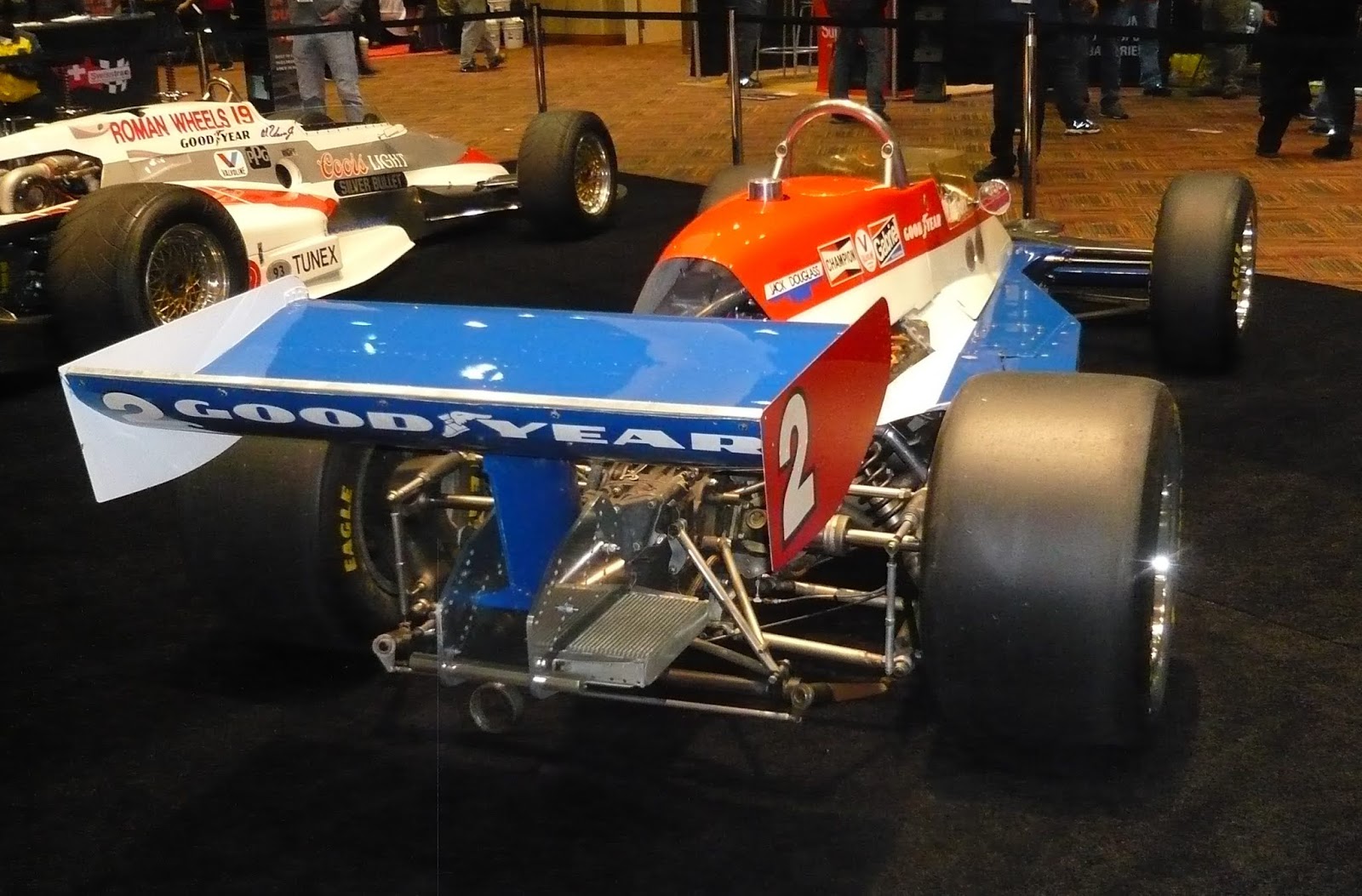
Jim Hall next set his sights on the Indianapolis Motor Speedway in 1978 with a Lola T500-1 powered by a turbocharged Cosworth DFX engine driven by two-time Indianapolis ‘500’ winner Al Unser. Although the car was a Lola, it carried the name Chaparral for sponsor First National City Travelers Checks and the number “2” to denote Al Unser’s finish in the national points in 1977.


 The new team performed well at the first two rounds of the 1978 USAC (United States Auto Club) championship series, but Unser crashed in practice and destroyed the first T500 chassis at the third race at Texas World Speedway, and the team skipped the fourth race of the season at Trenton New Jersey. 


Al Unser qualified in fifth place for the 1978 Indianapolis 500-mile race and did not move into the race lead until lap 76, and he led three times for 121 laps and beat Tom Sneva to the checkered flag for 8.09 seconds for his third Indianapolis ‘500’ crown.


 A month later, Unser won the Schafer ‘500’ at Pocono International Raceway in the original rebuilt T500 chassis, then on Labor Day, Al and the Chaparral chassis number 2 won the California ‘500’ at Ontario Motor Speedway to become the first man to win the USAC “Triple Crown” – all three of the 500-mile races on the schedule. Although Unser won those three major races, he lost the 1978 USAC national championship by Tom Sneva by 122 points, due to the two races that Unser missed.

The restored 1978 First National City Travelers Checks Chaparral Lola now is owned by the Indianapolis Motor Speedway Foundation and was shown as part of the Unser Family Tribute at the 2018 Performance Racing Industry (PRI) trade show in Indianapolis.    


All photos by the author

Tuesday, May 1, 2018


The Sauter Porsche – one of one


One car on display as part of the special single-marque exhibit at the Petersen Automotive Museum entitled ‘The Porsche Effect’ is this modified 1951 Porsche 356 known as the “Sauter Porsche.” While the car’s history does not include any major racing victories, it is a remarkable story and the significance of its impact on Porsche design is undeniable.

In 1951, Heinrich Sauter, the young heir of the German Hahn + Kolb toolmaking firm based in Stuttgart, purchased Porsche 356 cabriolet chassis #10359. The rear-engine, rear-wheel drive 356 powered by an air-cooled flat four-cylinder engine was Porsche’s first post-war production car. Sauter’s car was powered by a 1300 cubic centimeter (CC) (79 cubic inch) engine advertised to develop 44 horsepower, plenty of power to push along the lightweight 1290-pound machine.

Sauter was a racer who competed mainly in hill climbs and rallies, and he wanted more performance so he contacted Karosserie (coachbuilder) Klenk in Frankfurt Germany to modify his 356. Klenk had close ties to the Porsche factory and installed a new larger Porsche 1500S (1500 CC or 91 cubic inches) engine which developed 55 horsepower, but the important change was the new steel low-profile bodywork.


With input from the factory, Klenk built a body with “suicide” (front opening) doors, a new panel to fill in for the missing convertible top, air ducts to cool the front brakes, small competition windscreens, ducts at the rear to allow air out of the engine compartment and an external fuel tank filler.      

Records indicate that Sauter raced the car sparingly before his sold it back to the Porsche factory and during 1952 it was raced across Europe by Frenchman Francois Picard, before it was sold to American Jack Armstrong. Armstrong shipped the car to the Unified States and it was raced on the West Coast in 1953 by Stan Mullin in SCCA (Sports Car Club of America) events at Santa Barbara and Long Beach. Armstrong himself drove the Sauter 356 at the August 1953 races held at Moffett Field Naval Air Station near Mountain View California.


By the time of the SCCA Orange Empire National Sports Car Races held at March Air Field in November 1953, Mullin and Armstrong were listed as partners in the ownership of the special-bodied Porsche. Mullin became the owner/driver in 1954, and after a single appearance at the March races held at Minter Field in Shafter California, the Sauter Porsche dropped from sight.
 
Porsche factory photo of a 356 America
 

While not a great success on the racetrack, the ground-breaking styling of the Sauter Porsche inspired three subsequent Porsche 356 designs. In 1952, Porsche built a small series (less than 25) of cars destined for the North American market known as the “356 America Roadster.” Clad with an aluminum body built by Dresden-based Gläser-Karosserie with cut-down doors and a removable windshield, the “America” a true roadster with no permanent top or roll-up windows weighed 1330 pounds. However, the cost of production was higher than expected and reportedly coachbuilder Glaser lost money on each body. In the end the high-priced stripped down racing “America” sports car was a dismal commercial failure.  


In late 1954 in his New York City showroom designed by Frank Lloyd Wright, Porsche importer/dealer Max Hoffman unveiled the iconic “356 Speedster” which featured the design elements shown in the Sauter Porsche, namely a 1500 CC engine, a stripped down interior with no roll-up side windows and a cut-down windshield. Equipped with a minimal convertible top,  the “Speedster” was an immediate hit with over 4,100 Porsche 356 and 356A Speedsters built before production ended in 1959.

The Speedster appealed particularly to Hollywood celebrities. Before he traded it in on his Porsche 550 Spyder death car, actor James Dean owned and raced a white 1955 Porsche 1500 Super Speedster, chassis # 80126, and won one race at Palm Springs in March of 1955. “The King of Cool” Steve McQueen owned and raced a black 1959 Porsche 1600 Super Speedster serial number 84855 equipped with Rudge alloy knock-off wheels and won a SCCA novice race at the Goleta airport course on Memorial Day 1959.


The final Porsche production car that can trace its origins back to the Sauter Porsche is the 1955 Porsche Continental, the brainchild of North American Porsche importer Max Hoffman who thought that a plusher Porsche would appeal to the American market. In addition to a plusher interior and high-quality convertible top, the bodywork of the Continental, built by Stuttgart’s’ Karosserie Reutter, was accented by “Continental” in gold script on the front fenders, “turbine style” wheel covers and whitewall tires.  Within the first year however, the name of the car was changed to “European” reportedly after the Ford Motor Company explained that they held the rights to the “Continental” trademark for automobiles.    

The history of the Sauter Porsche itself fast forwards to 1982 when an Indianapolis physician Dr. Ray Knight bought a strange “Porsche/Volkswagen hybrid” from a rural eastern Indiana junkyard. Reportedly the car had been stored outside since 1958 and was fitted with an incorrect albeit blown engine, but Knight paid $4,500 for the car and then set out to research its history and restore the car.

Knight tracked down the car’s provenance through interviews with Sauter, Klenk and Mullin and spent nearly 4,000 man-hours to bring the car up to the level of finish we see today. Several years ago Knight sold the car to collector Phil White, and Dr. Knight donated half of the “high six figure” proceeds to his alma mater Wabash College. Under Mr. White’s ownership the Sauter Porsche won an award as the “best open 356” at the Porsche Club of America 2017 Werks Reunion in Monterey California.  

Color photographs by the author

Sunday, March 4, 2018


Porsche 917/30 – “the Can-Am killer”

After John Surtees drove a Lola to the inaugural 1966 season championship for the Johnson Wax-sponsored SCCA Canadian-American Challenge (Can-Am) series, the series for FIA Group 7 racing machines was dominated for the next five seasons by Team McLaren in their orange Chevrolet-powered rockets.  


Then as now, Porsche, the German sports car manufacturer sold a large percentage of its production in North America, had made previous attempts at competing in the Can-Am series with a spyder (open-top) short-tail version of the 908 sports car for driver Tony Dean in 1969 and 1970.
 
In 1969 the 183-cubic inch flat six powered 908 was part of a two-car factory effort and the following year Dean himself was the entrant of the 908.  Dean in the 908 emerged as the surprise winner of the seventh round of the 1970 Can-Am series at Road Atlanta after four separate accidents eliminated the leaders. 

In the latter stages of the 1969 Can-Am season, in addition to the 908 entry the Porsche factory entered a spyder version of the new 917 sports car, known as the 917 PA that was driven by Swiss driver Jo Siffert. The 917 PA consistently placed in the top five finishers but being heavier and with “just” 580 horsepower as it was typically two seconds a lap slower and never in the hunt for victory versus the mighty big-block powered McLarens and Lolas.   

Porsche tried again with the revised bright red 917/10 spyder with STP Oil Treatment sponsorship for the 1971 Can-Am series. Powered by a naturally aspirated 305-cubic inch flat twelve-cylinder engine the 917/10 finished in the top five positions in all six races that it appeared in, but it remained heavier and underpowered compared to its competition. That would change for the 1972 season, as the Porsche factory partnered with Team Penske, led by driver and engineer Mark Donohue.

Donohue and the Porsche developed an improved version of the Porsche 917/10 powered by the twin-turbocharged 330-cubic inch flat twelve-cylinder engine that could develop over 1100 horsepower in qualifying trim. The #6 car with sponsorship from the Liggett & Myers Tobacco Company’s L&M cigarette brand, won the pole position for at the opening race at Mosport Park and dominated the early stages of the race until Donohue pitted with engine problems.

With the problems solved, Donohue returned to the track three laps down then stormed back to finish second to finish on the same lap as winner Denny Hulme’s McLaren. After Donohue was injured in a pre-race test crash before the series’ next race at Road Atlanta, he was replaced by George Follmer who won five of the remaining eight races and the 1972 SCCA Can-Am championship while Donohue, recovered from his injuries, won one race in his twin 917/10.

Although the McLaren juggernaut had been vanquished in 1972 and McLaren had quit the series, for the 1973 Can-Am season Porsche and Team Penske continued their development program and built the most powerful racing car ever built to that time.  The 917/30 was bigger and faster in every aspect compared to the 1972 racer with a longer and aerodynamically efficient body and an engine that developed up to 1500 horsepower for qualifying.


Mark Donohue and the Sunoco-sponsored 917/30 won six of the season’s eight races, finished second once and won the championship in dominant fashion over his ex-teammate Follmer and Charlie Kemp who drove the former Penske 917/10 cars for Rinzler Racing with RC Cola sponsorship.  


The Porsche 917’s back-to-back domination of the series combined with the nationwide gasoline shortage led the Sports Car Club of America (SCCA) to introduce a rule requiring 3-miles per gallon maximum fuel consumption for the series for 1974.  The new rule worked as Porsche withdrew from further Can-Am competition.
 
Without Porsche and Penske racing, competitor and fan interest ebbed and five races into the 1974 season, the SCCA cancelled the Can-Am series. Although the Can-Am series had already lost teams and spectators through the years, the death of the series was blamed on Porsche’s domination, and the 917/30 was branded “the Can-Am killer.”  Penske and Donohue saw it as another example of applying their “Unfair Advantage.”

The history of the 917/30 is worth reviewing. A total of six chassis were eventually built, but only three cars were actually raced in period, and only two of those competed in blue and yellow Sunoco colors. All six cars remain in existence and today five of them are painted in the Sunoco colors. 

The first car built, serial number #001 built during 1972 featured an adjustable wheelbase and served as the factory test car. In 1973 #001 was raced three times in the Group 7 European Interserie Championship (the European version of the Can-Am series) and scored a victory at Hockhenheim Germany driven by of Vic Elford. It raced again in 1975 and won at Hockenheim driven by Herbert Mueller. It is part of the Porsche factory collection, painted as it appeared in 1975 in sponsor’s Martini & Rossi colors of silver, red white and blue.

917/30 chassis serial number #002 was one of two cars built for use by Team Penske and Mark Donohue in the 1973 Can-Am challenge series. Donohue drove it to his first 1973 Can-Am victory in the third round of the season at Watkins Glen.
 
Serial #002 was later seriously damaged in a testing crash then was completely rebuilt and served as the Penske backup for the remainder of the 1973 season. After the Can-Am program had ended chassis serial number 002 was returned to Porsche and it has since been part of the factory museum collection. 


The car on display at “The Porsche Effect” exhibit at the Petersen Automotive Museum, chassis 917/30 #003 is the most historically significant as it was the most successful, driven by Mark Donohue to six consecutive victories in the 1973 SCCA Can-Am series.


Mark won both heats at the Mid-Ohio Sports Car Course, followed by a win at Road America (where he won the pole position by over three seconds), Edmonton International Speedway, Laguna Seca Raceway (where he won by a lap) and the season finale  at Riverside International Raceway.

With the withdrawal of Penske and Porsche from the 1974 Can-Am series following the SCCA fuel mileage rule change, the car sat in Penske’s Pennsylvania shop until 1975 when the bodywork was modified and painted in red and white to represent its sponsorship from “Cam 2” motor oil (a new hobbyist oil from Sun Oil Company) for Mark Donohue’s attempt to break the world’s closed course speed record.

In preliminary testing at Daytona International Speedway, the team broke the original 330-cubic inch engine as they discovered that the mighty flat-12 engine was not designed for sustained wide open throttle operation.  This meant they had to use the smaller 305-cubic inch engine from 1972, and with help from Porsche engineers, massive intercoolers were fitted to cool the charge air. 

The track chosen for the record attempt was the 2.66-mile long Talladega Motor Speedway oval in Alabama. Donohue, who had returned to driving after a short retirement of eight months, cut short his first attempt due to an engine wiring fire that destroyed the rear bodywork.
 
After overnight repairs, Donohue’s second attempt the following day on August 9th, 1975 in rainy and windy conditions opened with a lap of 195 miles per hour (MPH) from a standing start, followed by a 220.027 MPH lap, then on his third lap he set a new closed course standard of 211.160 MPH, with a recorded trap speed on the long back straightaway of 240 MPH.


The team expected faster lap speeds, but Donohue confessed after the run "I might have gone a little faster, too, but I got chicken," as he cited the weather conditions. Ten days later Donohue was killed in an accident while practicing for the Austrian Grand Prix, but his speed record stood for 11 years until it broken by Penske IndyCar driver Rick Mears, who reset the record at 233.924 MPH at Michigan International Speedway. 

In 1976 Porsche chassis 917/30-003 was sold to noted American collector and Los Angeles Times owner/publisher Otis Chandler who had the car returned to its 1973 Can-Am appearance as part of his extensive collection. Following Chandler’s death, the car changed hands several times, and within the last few years it was purchased by  investment banker racer and NASCAR team owner Rob Kauffman who had chassis serial #003 recently meticulously restored by Canepa Motorsports of Scotts Valley California.

Chassis 917/30 #004 was under construction intended for use for the 1974 Can-Am season, but became obsolete following Porsche and Penske's withdrawal from the Can-Am series. It was sold as an unpainted car to long-time Porsche racer and Melbourne Australia Porsche dealer Alan Hamilton who displayed it in his showroom and later sold the car back to the Porsche factory in 1991. Porsche had #004 painted in the Sunoco livery and fitted with a rebuilt engine which reportedly produced 1,200 horsepower during a dynamometer test. At one time 917/30 chassis # 004 was owned by comedian Jerry Seinfeld.  

Chassis 917/30 #005 was never completed as work stopped with the termination of the program. In 1979, it was found at the Weissach factory as a bare chassis by Florida Porsche/Audi dealer and Porsche collector Gerry Sutterfield. After the factory’s discovery of a mislabeled 917 engine in storage and the exchange of a huge sum of money Porsche completed the car for Sutterfield and was delivered painted white with the Porsche logos. 917/30 chassis serial #005 was used for a track test that was published in the March 1982 issue of  Motor Trend magazine, and a subsequent owner had it painted in its current Sunoco livery.

Chassis 917/30-006 the final chassis was acquired by legendary Porsche dealer Vasek Polak in 1982 along with existing parts were after he found sufficient parts to complete the car in 1995 and had it painted as it might have appeared in the Group 7 European Interserie Championship. The car has since been painted in “Cam 2” motor oil livery to resemble the 1975 record attempt 917/30 serial number 003. 
Color photos by the author