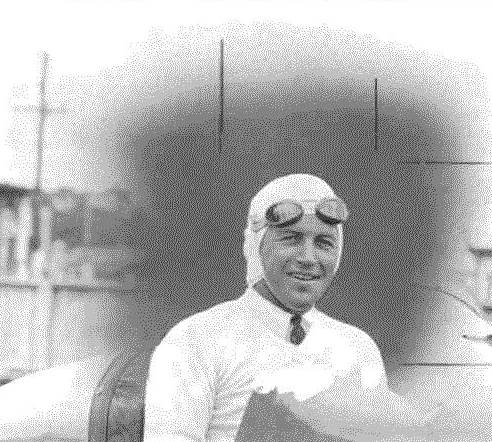
Showing posts with label George Souders. Show all posts

Monday, December 14, 2020

The history of auto racing in Haskell Texas


The history of auto racing in Haskell Texas


In the nineteen twenties, cotton farming was the major industry in the central Texas county of Haskell, named in honor of the Texas Revolution hero Charles Ready Haskell who died at the Alamo.       

Haskell County held fairs intermittently at various locations within the county, but that all changed in 1924. On May 22 1924, the Fort Worth Star-Telegram published news from the city of Haskell, the county seat, that on that very morning, 25 men began construction of permanent buildings and a race track with a 4000-seat grandstand on 68 acres near the city’s business district recently purchased by the Haskell County Fair Association.

The finished 5/8-mile oval dirt race track featured 6-to-1 sloped turns (9.5% banking) “to hold the swiftly moving cars safe on their course,” according to an August 1924 article in the Fort Worth Record-Telegram.

The Haskell County Fair opened its three-day run at the new location on Thursday October 2 1924, with American Automobile Association (AAA) sanctioned automobile races set for Friday.  Before the scheduled event at Haskell, the AAA racers appeared in Abilene Texas on September 26th, Amarillo on September 27th and Wichita Falls on September 29th.  The Fort Worth Record-Telegram newspaper listed drivers Phil “Red” Schafer “well-known auto ace,” and Dick Calhoun from Cleveland Oklahoma as entries for the Texas swing promoted by oil transport magnate D. H. Jeffries, the AAA area representative.  

Three accidents marred the September 26th West Texas Fair race at Abilene, one of which killed a spectator. During the day’s fourth race, a wheel came off Lee Bammel’s machine, “hopped over the fence,” as described in the Fort Worth Record-Telegram report and struck farmer T. W. “Tom” Carlisle who stood on the running board of his father-in-law’s car watching the races.  Carlisle, 28 years old and married with three children, died later at the West Texas Baptist Sanitarium in Abilene from a fractured skull. 

“Red” Shafer, the July Abilene race winner, won the first 10-mile race in his Duesenberg after early leader Dick Calhoun’s ‘Cresswell Special’ broke a connecting rod and retired for the day.  Shafer, a native of Des Moines who lived in Fort Worth, won the day’s featured event, the fifteen-mile handicap race over Harry Milburn. Shafer took the lead during the eleventh mile after he overcame the one-minute starting handicap.   

Before the races on October 3, officials treated the new Haskell track surface with a reported 360 barrels of crude oil (over 15,000 gallons) to prevent dust. The afternoon program, attended by 5,000 fans, boasted seven races and a total purse of $1,100 but a sparse field of cars  Notably absent was the highly advertised “Red” Shafer and his Duesenberg racer as he raced that day in the inaugural AAA “Raisin Day Classic“ National Championship race on the 1-mile board track in Fresno California.  

Calhoun’s troubles continued at Haskell, as his car caught fire during a practice run before time trials, but with the fire extinguished and repairs effected, the ‘Cresswell Special’ set quick time as Calhoun completed two laps in 77 seconds (58 miles per hour) and won the silver loving cup.  

J. E. Larrick of Wichita Falls won the first five-mile race for the eight fastest qualifiers, then Calhoun won the ten-mile race. During the non-qualifiers race, the right rear wheel of H.V. Link’s machine collapsed and he “came perilously near to ending in a junk heap,” according to the Fort Worth Record-Telegram report.  In the day’s featured fifteen-mile handicap race, Calhoun edged Jimmie Reeder’s Chrysler Special and German emigre Johnny Mais in his “16-valve” Dodge. For his day’s work at Haskell, Calhoun won $375.

1925

Nearly a year passed before the AAA racers returned to Haskell County. On September 25, 1925 D. H. Jeffries announced that “Red” Shafer, Ralph DePalma, Frank Lockhart and Dick Calhoun were among the twenty-five drivers entered the October 2nd races.  Shafer and Calhoun were well-known to Texas race fans, as well as DePalma, the 1915 Indianapolis 500-mile race winner, while young Frank Lockhart, a relative unknown, had experienced some success behind the wheel of Harry Miller’s 183-cubic inch dirt car.

The Haskell County Fair opened its three-day run on Thursday October 1, with the races held on Friday afternoon. Among the honored guests at the races were R.Q, Lee of the West Texas Chamber of Commerce accompanied by his wife and Hardy Grissom the president of the Haskell County Fair Association.

In time trials, five drivers broke Calhoun’s year-old track record of 77 seconds, led by John Gerber (misidentified as “Goerber” and “Garber” by some sources). Gerber completed his two qualifying laps in 72 seconds with an average speed of 62 miles per hour (MPH) while Calhoun could not defend his record as his car experienced engine trouble. 

Gerber, the original ‘outlaw’ racer from Meriden Kansas, won the day’s first 10-mile race for the eight fastest qualifiers in his Chevrolet-powered “bobtail” over Shafer, then George Souders won the second race and Harry Milburn won the day’s third race, each of which were 5 miles in length. W. R Hayes won the day’s third five-mile race, then he captured the day’s featured 15-mile event and its $250 purse. J.E. Larrick finished second and George Souders (misidentified as “Souder” in some reports) originally from Lafayette Indiana but then living Abilene finished in third place and won $75.  

1926

As in 1925, the Haskell County Fair races were part of a series of Texas fair races along with races in Abilene and Amarillo.  Peter DePaolo the 1925 Indianapolis 500-mile race winner, received top billing and was joined by Elbert “Babe” Stapp, Dick Calhoun, George Souders, Fred Fame, Roy Meacham and Chester “Chet” Gardner. Frank Lockhart originally signed to appear, but after his brilliant Indianapolis 500-mile race victory, he chose to concentrate on the AAA National Championship trail, much to D. H. Jeffries’ annoyance. 

The September 22nd West Texas Fair races in Abilene were marred by the death of Freeman Minyett, a welder by trade, who suffered a fractured skull when his Frontenac-powered racer overturned.    The other racers, including Chet Gardner, the feature race winner, donated their portion of the purse to Minyett’s widowed mother.

The three-day Haskell County Fair opened on September 30th, with the races scheduled for October 1 and 2nd.  On the opening day of races, Fred Frame, in a Miller Special, won the first 7-1/2-mile race while Souders, who would win the 1927 Indianapolis 500-mile race, in a similar machine in third. 

Roy Meacham won the second 7-1/2-mile preliminary race, then finished second in five-mile dash behind Roy Gardner of Denver. Fred Frame won the 15-mile finale to claim $250, as Meacham in second place won $140, while Souders finished third and won $90.     

We do not have the results from the second day of races in Haskell, but during the day’s third race, Meacham of Pawhuska Oklahoma died instantly from a broken neck after his Chevrolet racer veered out of control and plunged over the embankment.  Meacham, a World War one veteran, had been a motorcycle officer in Tulsa and Pawhuska before he started racing motorcycles then graduated to racing cars in the three months before his death.  

1927

1927 saw the introduction of motorcycle racing on the Haskell 5/8-mile track on July fourth.  The fourth annual Haskell County Fair held from October 6 through 8, 1927 featured two days of automobile racing on the 7th and 8th. Again, results of the races are nonexistent but during the second day’s featured fifty-lap race, H.S. Fortner’s car crashed into the disabled machine of Joe Miller and overturned several times.  An ambulance rushed Fortner to the Stamford Hospital, 15 miles south of Haskell.  

Fortner who hailed from Okmulgee in east central Oklahoma reportedly passed away the following day, with the news of his death distributed widely on the Associated Press wire service. On October 12, many Texas newspapers, including the Austin American, reported that Fortner had not only not died, but was in fact “rapidly recovering.” After his recovery, Fortner relocated to the Houston area and raced briefly during the 1928 season before he started a sewing machine sales firm. 

1928

Motorcycles returned for the July 4th races, and attracted a large field of riders and 5,000 spectators. Perrett Austin “E. A.” Kathcart from Waco established a new track record as he rode two laps on his Harley-Davidson in 77 1/5 seconds then went on to win the day’s five-mile and eight-mile events.

The AAA Contest Board granted sanction #2085 to Henry Alexander (of the Fair Board) for two days of automobile racing on October 4th and 6th 1928. In qualifying on the 6th, Vic Felt, a standout driver from Colorado in his Marathon Special, lowered the track record for two laps to 68 3/5 seconds. Felt won the first event, a 7-1/2-mile (12-lap) dash over Tulsa’s John Bolling, but Bolling swept the other two races on the program, the 2-1/2 and 5-mile races in a program marred by numerous accidents but thankfully no injuries.

After 1928, horse races on the 5/8-mile track replaced automobile races during the Haskell County Fair but auto racing would return to the fairgrounds track eight years later. In the intervening years, large oil deposits were discovered in Haskell County which transformed the local economy.

1936   

The four-day Central West Texas Fair in Haskell hosted automobile racing on the first two days of the fair October 21 and 22, promoted by Eugene Tonn (the local Farm Bureau agent) and sanctioned by the Southwestern Automobile Racing Association and part of the six-race series to determine the 1936 Southwestern dirt track champion.

The Haskell race on the 21st counted towards the title, along with races at Oklahoma City, San Antonio and Meridian Mississippi. Morris Musick, one of the five racing Musick brothers from Dallas, won the feature in a 17-car program that also featured entries from Joie Chitwood, Leonard Musick, and Augustus “Cotton” Grable, the “Blond Blizzard from Texas.”

1937 

Haskell hosted a two-day meet on July 3rd and 4th 1937 again promoted by Tonn, as each program featured time trials and five races - three eight-lap heat races, one five-lap handicap and the 20-lap feature. “Wild” Bill Morris of Lincoln Nebraska had great success on July 3rd, but could not race on the 4th as his “DO Hal” racer had reportedly “thrown a connecting rod.”

On July the fourth, 2,000 fans watched Herschel Buchanan set quick time with a 33.4 second lap. Red Hodges won the first heat race over Buchanan, but Herschel came back to win the day’s feature race over “Tex” West of Junction City Kansas.

Automobiles raced again at Haskell on October 23 1937 on the last day of the Central West Texas Fair with a scheduled field of fourteen cars. “Wild” Bill Morris led qualifying with a 38-second lap and won his heat race, then captured the feature event over Leon Fondoble and Buddy Rusch.  

1938

In 1938, the 5/8-mile dirt oval in Haskell then known either as “Fair Park Speedway” or “Haskell Speedway” hosted a two-day racing program held over the Fourth of July holiday, promoted by Oklahoma-based Joe Ziobro with the sanction provided by the Southwestern Auto Racing Association. 

On Sunday July third, Joe Termin of Dallas Texas dominated in his blue double overhead camshaft “DO Hal” powered machine, which used a conversion cylinder head built by Harold “Hal” Hosterman for the four-cylinder Ford model B engine.  Termin set quick time and new lap record of 33.3 seconds in qualifying, won his preliminary six-lap heat race and the twelve-lap feature as he finished ahead of Johnny Holland and Gene Fredrick.

William “Red” Hodges of Dallas won the second “slow” heat race despite that his car limped around the last two laps of the race on a flat tire. Lex Newbill of McKinney Texas won the day’s four-lap consolation race.  

Promoter Joe Ziobro promised the 1,200 fans a better show for Monday the fourth of July, with three new cars scheduled to arrive from Oklahoma City that included Waldo Parnett and Posey Reeves together with a possible visit by Texas Governor James Allred.

1,000 fans turned out on July fourth and saw Termin qualify second fastest.  As Termin entered the first turn on the third lap of the preliminary heat race, the right rear tire on his “DO Hal” racer failed, and the out-of-control machine went through the wooden fence and disappeared over the embankment. Termin, a 35-year old auto mechanic married less than a year, suffered fatal injuries when the car rolled over him. According to fellow racing historian Bob Lawrence, Termin’s death was the first fatality in Ziobro’s twelve years of racing promotions  

Herschel Buchanan, the 31-year old driver from Shreveport Louisiana, won the six-lap heat race which was completed under the caution flag after Termin’s crash. Oscar Coleman won the second heat race which was marred by a crash by rookie driver Arthur Rhodes in the same place as Termin’s earlier fatality, but Rhodes escaped unhurt.  “Red” Hodges captured the third heat race, then Buchanan, who years later became a two-time champion in International Motor Contest Association (IMCA) late model stock cars, won the Haskell 12-lap feature event ahead of Hodges in a time of six minutes and nine seconds.  

There were no races presented as part of the two-day 1938 West Central Texas Fair, and reportedly there were “stock car” races held in Haskell on the 5/8-mile track in August, September and October 1939 but the author has been unable to uncover any details.

There was a second Haskell Speedway which began operation in 1966 located approximately 4 miles west of the town of Haskell on farm land owned by T C Redwine and promoted by Redwine and CW McKelvain. The first two seasons the track hosted stock car races on Sunday afternoons, but for 1968 and 1969 presented races on Saturday nights.  The track apparently closed after the 1969 season.

The author has been unable to find information about the exact locations of the either the Fairgrounds 5/8-mile or the later “Haskell Speedway,” and welcomes any leads from our readers.   

Friday, May 12, 2017


George Souders- the story of the 1927 ‘500’ winner
Part four

George Souders - 1927 Indianapolis 500 champion
Photograph appears courtesy of the Indianapolis Motor Speedway Collection in the IUPUI University Library Center for Digital Studies


George Souders in Europe

Following his surprising 1927 Indianapolis ‘500’ victory George Souders made only one other AAA (American Automobile Association) 1927 championship appearance at Altoona Pennsylvania in June before he traveled to Europe to compete on the Grand Prix circuit.

In 1927, the Grand Prix circuit was much different than it is today. Organized by the Association Internationale des Automobile Clubs Reconnus (AIACR) (translated into English as the International Association of Recognized Automobile Clubs) the 1927 world championship encompassed only five events. The five races began with the Indianapolis 500-mile race followed by the French, Spanish, and European (held in Italy) and ended in October with the British Grand Prix.

Championship points were much different as they awarded to the marque, not the driver. In order to be eligible for the championship the car builder had to participate in at least two races. The manufacturer that scored the lowest point total was awarded the 1927 championship.  Points were awarded to the highest finishing car of each marque with one point for the win, two points for second place and three points for the third finisher. A car that simply finished a race out of the top three earned that its builder four points, while a “did not finish” result was awarded five points and a “no entry” or “no start” earned the team six points,.

The championship was open to single-seat bodied cars with a body having a minimum width of 80 centimeters (31-7/16 inches)  powered by engines not displacing more than 91 ½ cubic inches (1.5 liters).  Duesenberg took the early 1927 AIACR world championship lead by winning the Indianapolis ‘500’, followed by Miller, while the French manufacturers Delage and Bugatti each received six points for their lack of participation. George Fernic was entered in the ‘500’ in a Bugatti, although he failed to make the starting field after his car broke a connecting rod in practice. 

Neither Duesenberg or Miller cars appeared at the French and Spanish Grand Prix events in July, both won by Delage, which after three races left Delage with the points lead with 8 points, followed by Bugatti and Duesenberg tied with thirteen points, as Caberto Conelli’s Bugatti had finished second in Spain. Three American cars appeared at the European Grand Prix held at Monza in Italy – two Millers driven by Earl Cooper and Peter Kreis and Souders in a Duesenberg. Since the American cars’ bodies did not meet the minimum width requirement, the cars raced with crude boxes grafted onto the body to meet the spirit of the AIACR 31-7/16 inch body width rule.   

The September 4th race at Monza with just six entries was run in a rainstorm after a six abreast standing start. Kreis who had qualified third was out after the first lap with a split crankcase, while Souders retired after twelve laps with carburetor and magneto troubles from water intrusion.  Robert Benoist in his supercharged straight-eight double overhead camshaft Delage 155B won his third straight race while Cooper finished in third place with relief from Kreis. At the end of the fourth 1927 season race the championship points tally was Delage leading with nine points, followed by Miller with 17 points and Duesenberg third with 18 points.
 
Since they had no mathematical chance to capture the championship neither the Miller nor Duesenberg teams appeared at the October 1 British Grand Prix held on the high-speed rough concrete Brooklands track which used part of the high-banked oval. Delage led by Benoist swept the first three places, followed by six Bugatti racers.  

In the final season points tally, Delage captured the world championship with ten markers, followed by Miller with 23 and Duesenberg tied for third with Bugatti with 24 points due to the four points Bugatti earned in the British Grands Prix by Louis Chiron’s finish.  Robert Benoist later received the Legion of Honor medal from the French President for his accomplishment of four straight victories in French-built racing car.

After winning the world championship, Delage dropped out of racing following the 1927 season and sold the racing cars, one of which appeared in the 1929 Indianapolis 500-mile race driven by Louis Chiron.  Benoist who wound up without a Grand Prix ride for the two-race 1928 Grand Prix season later worked for the Bugatti factory and then served with the French Resistance in World War Two before he was captured and executed at the Buchenwald concentration camp in 1944.

George Souders in 1928

On February 9 1928 in Fort Worth Texas George Souders married Ruth Heeman identified as his college sweetheart who was also a practicing lawyer in Texas.  The Huntington (Indiana) Herald newspaper of April 21 1928 in an article headlined “Effect of matrimony to be noted,”  revealed that “the young driver who in his first year of big league racing won the International 500-mile race on the most difficult race course in the world has no business worries. His lawyer-wife can negotiate his contracts and other tangled skeins of commercial commotion that cause temperamental and un-businesslike sportsmen more hours of grief and worry than their speed creations.”
 
 
George Souders in his 1928 '500' entry
 Photograph appears courtesy of the Indianapolis Motor Speedway Collection
in the IUPUI University Library Center for Digital Studies
 

George’s entry in the 16th annual International 500-mile Sweepstakes, a two-year old light blue and white trimmed supercharged 91-cubic inch Miller was purchased by William S. White from Harry Hartz. Under Hartz the car was driven by Fred Comer to a fourth place finish in the 1926 ‘500’ and sixth in the 1926 AAA (American Automobile Association) season points, with a total of eight top-five finishes during the season. Eddie Hearne drove the car to a 7th place in the 1927 ‘500’ before the car was sold to White who entered the car for Souders at Indianapolis with sponsorship from the State Auto Mutual Insurance Company of Columbus Ohio.    

The Indianapolis Motor Speedway itself was under new leadership for 1928 after Captain Eddie Rickenbacker led a group of investors that bought the facility on November 1, 1927.  The defending champion reportedly had early steering problems with the Miller traced to the ½-inch wider new for 1928 Firestone “balloon” tires  Souders but still qualified on the first day of time trials May 26th with a four-lap average of 111.444 miles per hour (MPH). The starting field wound up short of a full field after three days of qualifying, and remained short with only 29 cars even after the track held time trials the morning of the race.  

Starting from the twelfth position on the outside of the fourth row on Decoration Day Souders led race for 16 laps from lap 63 to lap 78, and never ran lower than fourth place after first 100 miles. However, Souders was never in contention for the win due to two added pit stops because of two blown Firestone tires.
 
Years later Souders, who finished in third place 5-1/2 minutes behind rookie winner Louie Meyer, stated in an Indianapolis Star interview “I should have had my head examined for not driving the Duesy.” The previous year’s winning supercharged Duesenberg, still owned by White was driven to an eighth place finish by Souders’ teammate Fred Frame who also carried State Auto Insurance sponsorship.  

Souders and Bill White’s Miller appeared at the next 1928 AAA championship round on the one-mile dirt oval at the Michigan State Fairgrounds held June 10 in Detroit. The program featured a 100-mile race for the supercharged AAA championship car supplemented by a scheduled 50-mile support race for twelve non-supercharged cars.

Souders qualified in the eighth positon in the 14-car field on a track that had been treated with calcium chloride following three straight days of rain but on the second lap was hit in the mouth by a rock and retired after he completed just two laps. Souders lost his right lateral incisor in the incident and forever after wore a gold tooth in its place.  

On July 4 at the Rockingham Speedway 1-1/4 mile board track in Salem New Hampshire Souders in the #3 Miller failed to qualify for the 14-car starting field as did his teammate Jimmy Gleason in the old Duesenberg. Eleven days later, George appeared at the non-championship “Knights Templar 100” and this second visit to the Michigan State Fairgrounds Detroit nearly cost him his life.

The third week of July 1928 the City of Detroit hosted the 27th triennial conclave of the Knights Templar fraternal organization. In addition to the official ceremonies and the grand parade, boats were chartered for boat rides, and there were water sports, banquets, dancing, airplane trips and guided tours of ten of the city's largest factories.
The Detroit Civic Opera scheduled special performance for the Knights that included one act of "CavIeria Rusticana" and the following night a ballet entitled "Moon God."  Mid-week one thousand children recruited from the city's playfields participated in a special show held on Belle Isle; first was a pageant fore 500 girls followed by a juvenile circus with an equal number of boys.  

The automobile race on Sunday was held in honor of George W. Vallery of Denver the 27th Grand Master of the Knights, who occupied a special band stand built in front of the reserved grandstand for him and his honored guests which included Governor Fred W. Green.  A few days before the race, the Detroit Free Press reported that with the official close of entries, 22 drivers had entered the race but that “late nominations are expected to bring the qualifying field up to 30 or more cars.”

Time trials started at 10 o'clock Sunday morning and concluded at 1 o'clock with the race refereed by AAA President Thomas P. Hardy and long-time AAA Contest Board representative WD “Eddie” Edenburn set to start at 3 PM. Each driver was guaranteed a chance to take one lap alone on the mile track with the fastest 14 cars qualified to start the 100-mile race.

The race records are mostly lost to time, but the account in the Chicago Tribune newspaper stated that Souders came to the pits late in the race while leading. After repairs, Souders left the pit area at high speed and then crashed through the inner guardrail in turn one as his unidentified car “turned over a dozen times and was demolished.”  The Tribune reported that only two cars finished the race; Howard Taylor of Flint Michigan won with an average speed of 73 MPH and Russell ‘Bud’ Marr who lived Detroit finished in second place lap behind Taylor.

Souders thrown from his car during the crash was unconscious when he arrived at the nearby Highland Park General Hospital suffering from a compound skull fracture, broken bones in both arms and severe body contusions. Listed in critical condition doctors were unable to x-ray for internal injuries “due to the condition of the patient.” 

On July 25 1928 an Associated Press article reported in a follow-up article that “x-rays revealed no fractured skull,” and five days later reported that Souders was “still unconscious but reported slightly improved.” Souders apparently remained unconscious for many days, perhaps weeks, and was hospitalized for many months.  Unfortunately Souders’ driving career was finished as a result of the accident. A May 28 1976 Associated Press article entitled “Time not kind to Indy Old-timer,” revealed after the crash in 1928 at Detroit, George’s broken left arm never healed properly, and George said “it fills a coat sleeve is about all.”

Souders after 1928

In February 1929 George Souders formally retired as a racing driver to enter an unidentified business in Columbus Ohio. In a May 28 1929 Associated Press story datelined Columbus Ohio Souders said he was through with racing and glad of it.  “I’m not so homesick for the smell of gasoline that I’d ever drive again,” said George, “it’s a tough racket and I’m glad to get out of it.” It was reported that Souders planned to watch the 1929 Indianapolis ‘500’ from the pit area.   

George’s 1927 ‘500’ winning Duesenberg and his 1928 State Auto Insurance Miller were damaged (or destroyed) in the March 5 1929 Los Angeles Auto Show fire in which more than 300 cars were lost. The remains of the Miller may have been sold to and rebuilt by Leon Duray although historians Michael Ferner and Mark Dees disagree on this point.

December 1929 found Souders living in Fort Worth Texas and according his former hometown newspaper the Abilene Morning News, designing a new car. The article stated Souders would not drive it but “enter it in the bigger events on the national program including the Indianapolis event when it is completed.” Souders, the News said, had returned to Fort Worth after he spent several days visiting DH Jefferies, the AAA official and promoter of many races early in Souders’ career.
 
 
George Souders as a former winner was always welcome at the Indianapolis Motor Speedway. Here he is pictured to the left of Speedway “rookie” Pat O’Connor next to Pat’s Lindsey Hopkins entry in 1954. Photograph appears courtesy of the Indianapolis Motor Speedway Collection in the IUPUI University Library Center for Digital Studies

Another article from December 1929 that appeared in the Butte Montana Standard gave a few more details explaining that the Souders design combined “his theoretical engineering training gained at Purdue .with the practical knowledge of a successful career on the track. Out of this combination Souders expects to affect a real powerplant which will not only be practical but conducive to the best results in speeding competition.”

Later the Standard article described a cylinder head Souders was designing, which “will be adaptable to several basic motors now on the market and would make a stock motor conform to racing standards.”  The author could find no record of George Souders entering a car for the Indianapolis 500-mile race, but an article which concerned Souders entry of a car for the 75–mile stock car race at the Roby (Indiana) Speedway on Sunday September 14 1930 noted that “his racing team has been touring the dirt tracks of the country this summer.”

The Indianapolis Star printed a United Press International report that Souders was sued for divorce in Fort Worth Texas, April 12 1933 and that Mrs. Souders, the former Ruth Heeman, sought custody of the couple’s 2-year-old daughter Marianne born in May 1930.  While his ex-wife and daughter remained in Texas George returned to Indiana and worked in a Curtiss-Wright propeller factory in Indianapolis along with driver Adelbert “Al” Putnam during World War Two. Souders later reportedly worked at the Purdue University airport and golf course but was best remembered as operating a service station in Lafayette.


George was photographed in May 1967 on pit lane as he chatted with three-time winner Louis Meyer (left) who won his first ‘500’ in George’s final Indianapolis appearance in 1928. Photograph appears courtesy of the Indianapolis Motor Speedway Collection in the IUPUI University Library Center for Digital Studies

On December 19 1974 while he was eating breakfast in a local Lafayette restaurant a fire destroyed his three-room mobile home along with all of his old racing trophies. The Indianapolis ‘500’ Old-Timers Club, a benevolent group organized in 1961 by Souders’ old racing compatriot Harry Hartz later purchased Souders a new trailer which was located in a park across Georgetown Road from the first turn of the Indianapolis Motor Speedway.

The New York Times reported that George aged 75 years was found dead in his apartment in Lafayette on July 26 1976. Survived by his brother, sister, and daughter, George was interred in the Battle Ground Indiana cemetery not far from the farm where he was born in 1900. The man from Battle Ground who went to Texas to establish his name in dirt-track racing then won the fabled 500-mile race in his first try, before injuries tragically ended his career at just 27 years old returned home for his eternal rest.

Friday, May 5, 2017


George Souders- the story of the 1927 ‘500’ winner

Part three


George Souders portrait
courtesy of the IUPUI University Library
Center for Digital Studies
Indianapolis Motor Speedway Collection
 

In 1927 George Souders born near Battle Ground Indiana was a full-time resident of Abilene Texas and worked as a “service man and expert mechanic” at Roberts & St John Motor Company the local Chrysler-Plymouth dealer located at the corner of Fifth and Pine Streets in downtown Abilene.

George was one of fourteen drivers who appeared at the one-mile Albuquerque Fairgrounds track on New Year’s Day 1927.  The five-race program which began at 2 PM featured the “Rocky Mountain States premier drivers” the Gardner brothers, Raymond and Chester, each driving a "Rajo Special." “Rajo” was a brand of racing overhead valve cylinder heads designed for Ford Model T engines.

Built and sold by Joe Jagersberger of Racine Wisconsin, he used the first two letters of his hometown and combined it with the first two letters of his first name to create “Rajo.”  Chuck Anderson “the favorite of the Southwest,” also drove a Rajo while  H. Peterson “who holds the fastest record on the Douglas Arizona track” was entered in a Duesenberg.

Roy Miller from Albuquerque was entered in a Frontenac (another brand of Ford cylinder head built and sold by the Chevrolet brothers) along with Jimmy Randolph described as the Arizona State champion and “Slim” Harper in the John Mais “Dodge Special.” Two previously unknown drivers came from Colorado both described as Pike’s Peak masters - BS Burgeman and Fred Schultz. Souders, “who furnished thrills the last two races here,” Fred Frame “of Ascot Speedway fame” and San Antonio’s Harry Milburn were all entered in Millers.   

The day’s first race was a 10-mile “free for all” while the second 10-mile and third 15-mile race were reserved for “modified stock cars” (non-Millers). The auto racing program was capped by a 25-mile “free for all,” with the final event was a 10-mile motorcycle race during which the promoters claimed “the riders travel like greased lightning.” 

In time trials, Souders set new “local track record” of 44 seconds for the one mile course then swept the two “free for all” races. Chet Gardner in his ‘Rajo Special’ finished second in the first 10-mile heat, won the second and third ten-mile heat races and finished third in the 25-mile finale behind Souders and Milburn. Souders provided a thrilling finish as according to the next day’s Albuquerque Daily Reporter his Miller engine “burned a bearing then threw a connecting rod and he coasted the last ¼ lap to victory.”

On May 6 the day the entries closed for the 15th annual International 500-mile Sweepstakes Souders was listed as the driver for William S. White’s Duesenberg.  An article in his adopted hometown Abilene Journal newspaper described Souders as “equally fearless as Frank Lockhart although probably not as steady or careful.”   There were a total of 41 entries for the ‘500’  the largest list since 1919, with eleven front wheel drive entries, this only two years after the first Miller front drive machine debuted at the Speedway.
 
Fernic FT-10 drawing
 

There was only one foreign driver entered in 1927 Indianapolis 500-mile race Romanian George Fernic who entered his own Bugatti. Fernic, an accomplished pilot dating back to World War One, also designed and built aircraft.  Although Fernic’s Bugatti broke a connecting rod on May 24 and did not qualify for the 33-car starting field, he drove 182 laps during the 1927 ‘500’ in relief for Fred Frame.

Frame started the car but yielded to Fernic as Fernic had purchased the car started by Frame after his won Bugatti was withdrawn. Fernic later was killed in a plane crash during the 1930 Chicago National Air Races as he was demonstrating his radical twin-engine canard-wing plane with tricycle landing gear the Fernic FT-10 Corsair.       

A 1981 Indianapolis Star article recounted that few experts thought George Souders could even make the starting field as one recalled him as "the darkest of dark horses."  According to the 1981 article, the older 90 ½ cubic-inch supercharged Duesenberg owned by Hollywood millionaire William S. White was beset by many mechanical problems during the month. In an interview nearly fifty years later Souders recalled that he "lost count of the number of times that that ‘Duesy’ was taken apart and put together during Speedway practice."

The chief mechanic on the White-owned Duesenberg was 31-year old Frenchman Jean Marcenac who had first appeared at Indianapolis in 1920 a crew member with the three-car Ballot team. A World War One veteran Marcenac served in both the French Navy and the Air Service before he went to work in the Paris-based Ballot automobile factory.

Jean helped to build the four Ballot race cars completed in just 101 days that participated in the 1919 Liberty 500-mile Sweepstakes, and in 1920 came with the team to the United States. In addition to his mechanic duties on the low-slung  311-cubic inch  inline eight-cylinder entries  Marcenac who weighed just 150 pounds and stood 5 feet 6 inches tall served as the riding mechanic with Jean Chassagne, and together the pair finished the 1920 ‘500’ in seventh place.

Marcenac returned to Indianapolis in 1921 to work on Ralph DePalma’s new 183 cubic inch straight eight double overhead camshaft Ballot and then stayed in the United States working with DePalma. Jean rode with DePalma in the 1922 Indianapolis ‘500’ the last year riding mechanics were required.  The pair started from the third position and finished fourth behind a Ballot entered by 1913 ‘500’ winner Jules Goux and driven by Eddie Hearne. Goux at 37 years old drove the other Ballot entry but retired on lap 25 with a broken rear axle. Marcenac worked with DePalma and his nephew Peter DePaolo through the mid-nineteen twenties and started the 1927 season as DePaolo’s mechanic.  

Since George didn't qualify for the starting field until his third attempt, he started the 1927 ‘500’ from the 22nd position on the inside of the eighth row.  Lockhart dominated as the other pre-race favorites - Harry Hartz, Bennett Hill, Peter DePaolo and Leon Duray dropped by the wayside before the first 100 miles were completed. Lockhart’s intercooled Miller engine broke a connecting rod and retired with 119 laps completed.
 
 
George Souders official 1927 Speedway photo
courtesy of the IUPUI University Library
Center for Digital Studies
Indianapolis Motor Speedway Collection
 

In 1932 car owner William White commented that Souders was “a great little driver with good form. I was tired of bringing veterans here –they know how hard it is to win. George didn’t know how really tough it is to win this race.”  Souders steadily moved up and was scored ninth after 75 miles, sixth at 50 laps and third at 275 miles. At the 300-mile mark he was second behind Pete DePaolo who was driving relief for Bob McDonogh in the supercharged Miller powered Cooper front drive machine. Souders took control at lap 150 and with the lead  with 100 miles to go George stopped for gas and three new tires and still won the race by more than twelve minutes over Earl Devore.

In a 1976 interview Souder remembered that the crew tried to talk him into letting Frank Lockhart finish the race but George declined. "The track was pretty slick and I knew how to handle the car," he said. "Someone else might have had trouble with it." In Victory Lane a shy George gave the credit for winning to his mechanic Jean Marcenac. Reportedly when Speedway officials asked George who they should notify by telegram, he replied, "There's nobody but Mother - I’ll send it myself pretty soon." One reporter claimed that George told him that he planned "to return to Purdue and resume my studies.”
 
A 1960 trading card issued by the Hawes Wax Co Ltd.
showing the 1927 '500 winner 
 

Statistically, Souders’ win marked the second and last time a yellow #32 race car won the Indianapolis ‘500,’ George was fifth winning driver to use Champion spark plugs and the fifth winning driver to use Firestone tires. Souders was the fifth “rookie” driver to win the ‘500’ in the first fifteen races, but the great Indianapolis 500–mile race was run thirty-five more times before a “rookie” Graham Hill won again in 1966.  The 90 ½ cubic inch Duesenberg power plant remains the smallest displacement engine ever to win the 500-mile sweepstakes.  

George returned home to Lafayette the day after the race and soon after the city was decorated with bunting news reel films of the race were shown in the theaters and a parade was held in Souders’ honor led by the Purdue marching band. At a banquet that evening, the mayors of Lafayette and West Lafayette each gave speeches honoring Souders and Purdue President Edward C. Elliott gave George a Purdue varsity letter. "I want to tell you how glad I am to be received in this way by my own," George Souders told the crowd. "It means more than winning the race."

Souders and the White Duesenberg appeared at the next race on the 1927 AAA (American Automobile Association) schedule a 200-miler on the 1-1/4 high banked Altoona board track but the supercharged engine broke a piston in practice. Despite not starting any other points races during the season, Souders finished the 1927 AAA season third in points behind Peter DePaolo and Frank Lockhart (who won ten of the remaining eleven 1927 races between them) based upon the 1000 points earned from his Indianapolis win.

Jean Marcenac after the 1927 ‘500’ win

Sometime after the 1927 ‘500’ victory, Jean Marcenac accepted Frank Lockhart’s offer the replace Ernie Olson as one of the mechanics on Lockhart’s team. During the winter of 1927-28, as a member of Lockhart’s team Marcenac helped build the radical U-16 powered “Stutz Black Hawk” Land Speed Record Car funded by Stutz president Fred Moscovics. Marcenac appears with the Black Hawk in photographs taken at Daytona Beach during February 1928, but it is unclear if Jean was present on April 25 1928 when Lockhart was fatally injured in the crash of the Black Hawk.

After one of the Lockhart Millers was sold his estate to Philadelphia real estate developer Edward C.Yagle, Marcenac went along with the car and won the 1929 Indianapolis 500-mile race with Yagle’s wife, Maude listed as the car owner. During the winter of 1929-1930 Marcenac worked with Harry Hartz and Phil Summers to build a new car to meet the new AAA “junk formula” rules. The new Hartz entry driven by Richard William “Billy” Arnold dominated the 1930 Indianapolis 500 as Arnold led 198 laps which gave Jean Marcenac his third “500’ win in four years. Arnold led the first 155 laps of the 1931 ‘500’ in the same machine and built up a six-lap lead until he crashed.  
 
Jean Marenac's official 1956 Speedway photo
courtesy of the IUPUI University Library
Center for Digital Studies
Indianapolis Motor Speedway Collection
 

Arnold returned in the repaired front-drive Hartz machine in 1932 and led the first 58 laps and then crashed out for the second year in a row. Teammate Fred Frame took the new Miller-Hartz Wetteroth entry into the lead, led the final 58 laps, and Jean won his fourth Indianapolis ‘500’ as a chief mechanic in a six year period.  Marcenac joined forces with Harry Miller during the mid-nineteen thirties for the Four Wheel Driver Company entry and then around 1940 joined the efforts of William “Bud” Winfield’s supercharged V-8 racing engine, later known as the “Novi.” Marcenac worked for eccentric “Novi” car owners Lew Welch and later Andy Granatelli until his death on Valentine’s Day 1965.

In our next installment we will review George Souders’ life as the 1927 Indianapolis champion.           

Monday, April 24, 2017


George Souders the story of the 1927 Indianapolis 500-mile race winner
Part two

George Souders' portrait in the Indianapolis Motor Speedway Collection
part of the collection in the IUPUI University Library Center for Digital Studies

The subject of this article George Souders was honored with a plaque placed by the Indiana Racing Memorial Association (IRMA) at the Tippecanoe County Fairgrounds in Lafayette Indiana on April 21 2017. In part two  of our series, we look back at the 1926 season exploits of the 1927 Indianapolis 500-mile race winner, George Souders of Lafayette, Indiana.

George Souders opened his 1926 racing season on January 3 at the one-mile 143 foot long fairgrounds oval in Albuquerque New Mexico for a $1500 program that opened with a 10-lap race followed by a 15-lap affair held an hour later and then topped by a fifty-mile feature race. 

Souders retired from the 10-mile race with a slipping clutch but returned to win the second 15-lap race. Souders then dominated the feature as he led 49 of the 50-lap race and crossed the finish line in a time of 49 minutes flat for an average speed of 62.8 miles per hour (MPH).

On May 30 1926 George Souders returned to the fairgrounds in Albuquerque for a smiliar three-race program with nine other cars and drivers. Souders was of course considered the pre-race favorite after his domination of the January races at the same track. Souders and A. A. Womack were entered with their Chevrolets in a field that also boasted a Duesenberg, a pair of Hudsons, and several Frontenac-Fords.

The afternoon’s scheduled program opened with time trials with two of the eleven entries were eliminated during qualifying. The engine in Johnnie Mais’ car suffered burnt bearings and Chuck Anderson was disqualified by referee Frank Vallely after Anderson spun out on three successive laps. ‘Slim’ Harper with his Mais entry sidelined by mechanical troubles took over Anderson’s car and proceeded to set the fastest time - a new track record of 46 seconds flat.

Souders swept the balance of the program as he won all three races. George led the 10-mile race from start to finish followed by Harry Milburn with Gallup’s Johnny (Gianni) Biava in third place. 3,000 fans watched as nine cars started the second 15-mile race and Biava led the first three laps before Souders took the lead which he never relinquished. As Biava tried to keep up the pace he crashed on the race’s eighth lap and his Frontenac-Ford racer crashed through the wooden fence and flipped twice in the air as it rolled down the embankment while Biava was thrown clear.

The Albuquerque Morning Journal reported that Biava landed 120 feet from the track and broke his left arm and shoulder.  His doctor told the paper Sunday night the Biava would survive his injuries but that his left arm would be permanently stiffened. Souders dominated the seven-car 50-mile feature which was marked by a high attrition rate as only Souders and second place finisher Milburn completed the distance.  Souders earned a reported $1250 for his day’s work.

July 5 1926 found George racing at the familiar West Texas Fair Speedway in Abilene Texas for the American Automobile Association (AAA) sanctioned sixth annual “Speed Classic of the South.” Besides Souders, the other “foremost racing stars” entered included Fred Lecklider, Frank Lockhart, and Texans Elbert ‘Babe’ Stapp and Harry Milburn. Lockhart has committed to race in Abilene before his Indianapolis victory, but the AAA Contest Board ruled that Frank had to keep his commitment rather than race his championship car at Rockingham Speedway in New Hampshire.

Following the afternoon races, fans were encouraged to go to nearby Lytle Beach for the second annual “Bathing Girl Revue,” which also featured swimming and diving contests and fireworks.
 
 
George Souders' poses in his #401 Chevrolet courtesy of the Indianapolis Motor Speedway Collection in the IUPUI University Library Center for Digital Studies
 

During a practice run on Sunday July 4, Souders’ #401 Chevrolet suffered a damaged radiator after he hit the inside rail and the car rolled over, but the damage was quickly repaired   On July 5 during morning time trials Frank Lockhart earned a $25 bonus as he lowered his nine-month old track record by 2-1/5 seconds as he completed two laps around the 5/8-mile track in 65 seconds.

Souders failed to complete his July 5 qualifying run, as his car’s engine reportedly broke three pistons. The day‘s second fastest qualifier was Lecklider at 68 4/5 while Babe Stapp qualified two cars, Ralph Hamlin’s front wheel drive Frontenac-Ford powered entry at 71 1/5 seconds in sixth place and a Duesenberg (possibly owned by William White) at 71 4/5 seconds for seventh position.

Souders’ Chevrolet engine was repaired in time for him to make a qualifying attempt after the day’s third race, a 20-mile race won by Lockhart. George ran two laps in a time of 72-4/5 seconds and then lined up to start fourth in the fourth race of the day, a 15-mile 24-lap affair. As described the following day in the Abilene Daily Reporter, “Genial George” Souders staged a race-long duel with Colorado’s ‘Slim’ Harper in John Mais’ 16-valve ‘Dodge Special’ that brought the capacity crowd of 10 to 12 thousand fans to their feet.

As the cars started their eighteenth lap, Souders forged into the lead ahead of Harper and held on to win the $500 purse in a record time for the distance of fourteen minutes and thirty seconds. Lockhart won the final race of the day, shortened to thirty miles, in his Miller followed by Lecklider in a similar machine. Souders wound up third in the feature trailed by Milburn’s Duesenberg.  For his efforts in Abilene Lockhart won a total of $1675, this included besides his qualifying bonus, $1000 for the 30-mile race win and $650 for his 20-mile race victory.

George Souders was listed as one of “winners of races held in Arizona, Texas, Oklahoma, Colorado and New Mexico” in advertising that promoted the $2000 ‘Southwest Classic’ on Sunday  August 29 on the one-mile 143 foot long fairgrounds track in Albuquerque.  Among the other “twelve dirt track champions“ listed as entrants for the race were Jimmy Randolph, ‘Slim’ Harper, Harry Milburn and the California racing brothers Ray and Chester “Chet” Gardner. Advance advertisements in the Albuquerque Journal newspaper in the days leading up to the race stated that the adult admission of $1.50 was “remarkably low- 75% lower than AAA races elsewhere.” 

Despite being pre-entered, Souders’ name did not appear in the results listed in the Albuquerque Journal article on August 30. Only ten cars took place in time trials as Dick Calhoun re-set the “southwest record” to 43 2/5 seconds at the mile post which was later matched by Californian Cliff Bergere in a Miller. To decide the winner of the silver cup trophy, the two drivers flipped a coin and Calhoun called it properly.

The racing events that followed were plagued by dusty track conditions but no accidents occurred. Bergere took the lead from Millburn during the first lap then cruised to victory in the 30-mile feature.  Other races that day were won by Chet Gardner and Lee while Jimmy Randolph the Arizona champion was a non-factor as his car suffered from carburetor trouble all day

On Labor Day, Monday September 6 Souders in his Chevrolet Special finished second behind Dick Calhoun in races held at Cushing Speedway Park in Cushing Oklahoma near a small town mid-way between Tulsa and Oklahoma City which had been hosting races since 1921.

After he attended the ‘Detroit 100’ in early September AAA zone representative and race promoter DH Jefferies announced he had secured agreements for a stout field of entries for the upcoming races at the West Texas Fair in Abilene on Wednesday September 22 and Friday the 24th.  In addition to Souders and Calhoun, Fred Frame, ‘Babe’ Stapp and Peter DePaolo, the 1925 Indianapolis ‘500’ winner, were scheduled to appear.

The Abilene Daily Reporter dubbed these men “the Big Five” who would compete in a five-race program topped with 20-mile feature race. DePaolo, although not known for his dirt track prowess, was signed to drive a new Miller “especially built for dirt tracks” owned by Hollywood millionaire William S. White. Stapp was entered as the driver of a Chrysler Special owned by EM Little of Abilene while Calhoun was scheduled with the ‘Gallivan Special.’ Fred Frame was entered in the Miller driven in Abilene in 1925 by Lockhart along with Souders in his #401 Chevrolet Special. Other entrants included ‘Slim’ Harper in the Mais’ ‘Dodge Special’ and Breckinridge driver Bob Stillwell.   

Qualifying runs were held each day not to set starting positions but to offer a $50 prize offered to the driver who could break Lockhart’s track record of 65 seconds flat for two laps around the 5/8-mile dirt oval. On Wednesday twelve cars took times but none broke the record; the qualifiers were led by Fred Frame at 66-3/5 seconds, with Souders third fastest, Chet Gardner fourth and DePaolo fifth.

Calhoun won the day’s first five mile race start set by draw for the eight fastest cars (barring Millers) over Souders. Chet Gardner emerged as the day’s big winner with $840 in winnings as he won the ten-mile heat for specially built speedway cars which featured two separate crashes involving Calhoun and Frame. Gardner capped off his successful day with his victory in the day’s 20-mile feature race.

The following day’s Abilene Morning News described DePaolo as “outclassed” and noted “he could not keep in step with the dirt track artists,” with a best finish of second place in the 20-mile Speedway car dash.  The characterization was accurate, as DePaolo was much better racer on the high-speed board tracks as opposed to dirt tracks.

George Souders was running in third place during the third 10-mile race when the connection to the fuel tank in his Chevrolet broke and knocked him out of that race. With repairs made, Souders dueled with Gardner for the lead in the 20-mile speedway car dash before his Chevrolet engine broke a connecting rod on the 27th lap and finished him for the day.  

Scarcely mentioned in the next day’s race report was the death of Freeman Midyett whose #111 Frontenac Ford crashed through the outside rail in the third turn on the first lap of the second race. Midyett a 32-year old driver from Breckinridge Texas was thrown from his car as it tumbled down the embankment.  Suffering with a fractured skull, Freeman was rushed to the West Texas Baptist Sanitarium where he was pronounced dead at 4:15 PM, four hours after the accident. Several drivers donated their winnings from the race to Midyett’s widowed mother and the West Texas Fair Association paid his funeral expenses.

For the September 24 1926 Friday afternoon races in Abilene, George Souders replaced Peter DePaolo in the seat of Bill White’s yellow Miller racer. Souders led the field in the day’s third race until lap 12 when lubrication problems forced the Miller out. Souders returned for the day’s longest race the 25-mile feature but once again the Miller was beset with oiling troubles and dropped out before the finish.

Harry Milburn the Fort Worth driver captured the feature race win and banked $650 while Dick Calhoun earned the title of the day’s unluckiest driver. Calhoun captured the five-mile heat race and the 15-mile race but then he crashed his $3000 Frontenac Ford after a spindle broke during the 25-mile finale.  Calhoun was initially reported as killed in the accident but upon arrival at the West Texas Baptist Sanitarium he was found to have suffered no broken bones, only “minor internal injuries.” To add insult to his injuries, in the crash Calhoun reportedly lost the $300 cash in his pocket which he had won in Wednesday’s races.

Although his results with Miller in the second day of races at Abilene were disappointing, Souders’ career had taken a major leap forward as he had established himself with car owner William S. White.  A mysterious “Hollywood millionaire,” the source and extent of White’s fortune remains murky to racing historians. Some sources attribute it to his family’s Hawaiian fruit business, while others suggest much darker and more sinister sources of income.

White owned “big cars” in the early nineteen twenties with drivers that included Jack Petticord, Harlan Fengler and Leon Duray. According to National Sprint Car Hall of Fame historian Tom Schmeh, White first entered a car in the International 500-mile Sweepstakes at Indianapolis in 1927 for Harlan Fengler. White continued through the years to enter cars at the Indianapolis Motor Speedway as late as 1947 and promoted a number of post-war races at several venues across the Los Angeles basin.   

On September 28 1926 Souders and the White Miller were entered in the races held in conjunction with the Oil Belt Fair. Souder was the quickest qualifier turning two laps around the 5/8-mile oval with a total time of 74-2/5 seconds, and then placed second in the first 7-½ mile race behind Fred Frame’s Miller. A sudden downpour hit the track during the feature and starter DH Jefferies stopped the event on the twentieth lap of the 24-lap 15-mile race. Fred Frame was 100 yards ahead of Souders with Chet Gardner a close third place. When track conditions caused Jefferies to declare the race official, Frame was awarded a $400 purse while Souders earned $200.    

Souders was entered in the Miller in the races held on October 9 and 10 as part of the Tri-State Fair on the 5/8-mile dirt track in Amarillo Texas, while his “Souders Special” was entered for driver Roy Meachum, but the author could find no results for those races. 
 
As the year 1926 drew to a close, Souders was entered in Bill White’s Duesenberg along with Harry Milburn, Fred Frame, the Gardner brothers, “Slim” Harper, the recovered Dick Calhoun and Jimmy Randolph for the New Year’s Day fairgrounds races in Albuquerque New Mexico. The four-race auto racing program was to be part of a two-day show with an American Motorcycle Association (AMA) motorcycle race scheduled for January 2 1927.  

In our next installment we will relate the story of Souders’ success in 1927 and his career as the reigning Indianapolis king. Thanks to fellow historian Bob Lawrence for providing information on the results of several races during Souders’ 1926 season. Readers are encouraged to check out Bob’s work at http://kansasracinghistory.com/