Showing posts with label Classic Racing Times. Show all posts

Friday, July 24, 2020

The history of Alamo Downs the short-lived Texas pre-war midget racing venue

The history of Alamo Downs  

the short-lived Texas pre-war

midget auto racing venue


Wes Saegesser 

On September 1 1933, the State of Texas legalized pari-mutuel wagering on thoroughbred racing. Shortly thereafter,  businessman Raymond Russell built the Alamo Downs one-mile horse racing facility on Culebra Road northwest of downtown San Antonio.  Alamo Downs opened its first racing meet on April 23 1934 with 14,000 fans in attendance which included Texas Governor Miriam A. Ferguson.

Horse racing at Alamo Downs ended on September 24 1937 after the Texas legislature again outlawed pari-mutuel thoroughbred wagering after several scandals. There were still horses boarded and trained on the Alamo Downs property but the facility sat largely unused until late 1940.

Famed automobile racing promoters O.D Lavely and his son Ray, through their company,  Lavely Racing Promotions Enterprises, signed a five-year lease in August 1940 to present midget racing at Alamo Downs. Lavely Promotions built the 1/5-mile banked oiled clay dirt track which measured 40 feet wide through the corners and 30 feet wide on the straightaways in front of the existing grandstands.  

The track construction included an innovative 36-inch high outer crash wall and an inner “hub rail.” Rather than locate the pit area in the infield, officials located the work area for the race cars underneath the grandstands in the paddock area.   

The Texas Oklahoma Racing Association (TORA) which sanctioned the Alamo Downs races, also presented races at the 1/5-mile Fair Park Speedway on the grounds of the Texas State Fairgrounds in Dallas, the Lavely’s 1/5-mile Houston Speedbowl and the ¼-mile Gold Mine Race Bowl in Dallas. TORA race tracks included Jefferson-Davis Speedway in Fort Worth, the original dirt Pan-American Speedway in San Antonio and the Panhandle-South Plains Speedway in Lubbock. TORA also raced in Texas at the Reaser Park track in Victoria as well as the Lions Field Speedway, a track which the author has been unable to locate.   

Admission to the first midget race at Alamo Downs on Sunday afternoon October 6 cost race fans 40 cents plus tax with free parking. Due to the late season opening, many midget drivers from the Midwest came to San Antonio to race against that local drivers that included Al Slaughter, Dick Word and the one-armed wonder, Wes Saegesser.

Other Texas entries came from Doster ‘Doc’ Cossey (AJ Foyt’s first racing hero), the 1939 Texas midget racing champion Mel Wainwright and Elmer “Rabbit” Musick, the youngest of five racing brothers from the Dallas area - his brothers were named Ben, Morris, Lyn and Leland.

 Al Slaughter won the very first Alamo Downs race, the 2-lap helmet dash over Abilene’s Cleo Glaze who set quick time in time trials at 17.31 seconds. Dale Burt, Word and Wainwright each won one of the eight-lap heat races, and Cossey won the second 10-lap semi-main event from eighth starting position.

During that second semi-main race, Denver driver Warren Hamilton took what the San Antonio Light article described as “a spectacular spill” on the first lap after he tangled with the car of JD Parks and Hamilton's car rolled over into the infield.

Slaughter took the race lead into the first turn of the 25-lap feature pursued by ‘Doc’ Cossey. ‘Doc’ pressed Slaughter hard until his car fell out on the ninth lap with electrical trouble, and Slaughter easily won by a half a lap over Glaze.     

The following Sunday, October the 13th, the 1/5-mile track was much faster.  Jim Ward set quick time at 16.75 seconds, for a new lap record, while ‘Doc’ Cossey won the two-lap Helmet Dash in  34.88 seconds, then Al Slaughter won his eight-lap heat race with a new record time of 2 minutes, 19.26 seconds.

Cossey captured the 25-lap feature win over Ward in a record time of seven minutes, 37.76 seconds to score his second feature win in four nights, to go along with his Thursday night win at the Houston Speedbowl. Cossey’s Alamo Downs win on the 13th marked his tenth midget feature win of the 1940 season.

Late in feature on the 13th, three of the top cars driven by Dick Word, Lou Turberville and Earl Simmons tangled in front of the grandstands after Word’s car blew its water hose, and Word and Turberville both suffered facial cuts in the accident.  


Cossey became the first Alamo Downs repeat winner as he won on October 20th in a program that extended the heat races to ten laps in length, and stretched the feature to 30 laps.  

The field on October 27th featured new entries from Charlie Miller, the 1940 American Automobile Association (AAA) eastern midget series champion and the AAA Eastern midget runner-up George Fonder.

Al Slaughter scored his second Alamo win in the 14-car “Fall Championship” 30-lap race on October 27th, as he again went wire-to-wire to beat the $3000 'Jackson Special,' an Offenhauser powered car driven by Dallas’ “King of the Midgets” William Ben ‘Red’ Hodges.  

On November 3rd, Slaughter won his heat race then powered to his third Alamo feature win over the helmet dash winner Miller. Car counts at Alamo Downs continued to increase such that on the 3rd, the 10-lap Class ‘B’ feature featured an eighteen-car starting field.

On November 17th, Kansas City’s Vito Calia captured his 8-lap heat race in a new record time of 2 minutes 16.84 seconds, then finished  close second place behind Jim Ward in the first semi-main. Slaughter took the point for the first three laps of the 25-lap feature until Calia took over the lead and went on to set a new track record as he won with a time of seven minutes and 7.43 seconds.

Rain cancelled the races scheduled for November 25th and before the next race on December 1, ‘Doc’ Cossey bought a new Elto outboard-powered midget and installed Mel Wainwright as the driver.  

Many of the Alamo Downs racers took part in the Thanksgiving night 100-lap “Southern Grand Prix” race in Houston won by ‘Red’ Hodges, and as a result only 20 cars signed in at Alamo Downs on December 1. To compound the low car count, only about 1400 fans showed up to watch the program won by ‘Red’ Hodges in the Jackson Offenhauser powered midget. 

The afternoon of December 8th marked the final scheduled race at Alamo Downs for the 1940 season as the Lavely clan planned to head to the Pacific Coast to sign up more drivers for the 1941 Alamo Downs season set to open in February.  The 50-lap Class A championship race topped the December 8th program supplemented by the 15-lap Class B championship race.

The midget track on the other side of San Antonio on Seguin Highway also scheduled a race on that Sunday afternoon which diluted the field of entries at Alamo Downs to just 25 cars. ‘Red’ Hodges captured the 50-lap Class A feature but fell short of winning the 1940 track championship by six points, as Slaughter passed “Rabbit” Musik on the last lap to claim second place and secure enough points to win the championship. 

The Lavely’s ambitious plans for the 1941 Alamo Downs midget racing season never materialized and there is no evidence of another race held there. In January 1942 a fire swept through a stable on the Alamo Downs grounds and killed five race horses, then in September 1947 another fire partially destroyed the wood, concrete and steel paddock and grandstand. The area once occupied by the Alamo Downs track is now part of the Alamo Downs Business Park.


Wednesday, October 24, 2018


The Marchbanks Speedway
Hanford California

Part One- the early history of the first superspeedway west of the Mississippi River


This article previously appeared in the Classic Racing Times - subscribe at http://theclassicracingtimes.com/subscribe


Bircha Lewis “B.L”. Marchbanks was born in 1895 and grew up to become a cattle rancher in Lamb County in the southern part of the Texas panhandle until he went bankrupt in 1924 and lost his ranch. Marchbanks arrived in California nearly penniless and settled in Kings County in the Central Valley near the small town of Hanford.  
Through years of hard work he and his two sons-in law built a large cotton and corn farm southeast of Hanford, and in 1950 Marchbanks decided to devote 160 acres to the construction of a new stadium venue located at the corner of the Central Valley Highway (also known as 8th street in Hanford) and Idaho Avenue.

Marchbanks Stadium included a rodeo grounds and a half-mile dirt track with a quarter-mile long straightaway that would also be used for quarter-horse racing. The first rodeo took place during 1950, but B.L.’s hopes of pari-mutuel gambling never materialized, and automobile racing debuted with jalopy races on May 12, 1951.  
One of the more unusual features of the new facility was the building that was used primarily for the driver’s meetings – B. L. Marchbanks bought the old one-room  King Schoolhouse building and had it moved to the race track site which was just north and east of his ranch home at 6888 Idaho Avenue.  


Later that year, the fledgling National Association of Stock Car Racing (NASCAR) group staged five Grand National races in California; three at the half-mile dirt Carrell Speedway in Gardena, one at the 5/8-mile high-banked oil-dirt Oakland Stadium, and on October 28 1951, a 200-lapper at the new Marchbanks Stadium.  
Admission to the race promoted by Johnny Mantz, the winner of the inaugural NASCAR ‘Southern 500’ the previous year, offered grandstand seats for $2.40 each while box seats were priced at $3.60 apiece.

The fans that arrived early to watch qualifying which began at 2:30 PM saw Danny Letner of Downey emerge as the fastest qualifier of the 31 cars with a best lap of 29.92 seconds. Other entries that aimed for their portion of the $3,550 total purse included North Carolina’s Marvin Panch, Oregon racer Herschel McGriff, sprint car and midget standout Allen Heath, and Indianapolis 500-mile race veterans Harold “Hal” Cole and James “Dick” Rathman.    

Herb Thomas, on his way to capturing the 1951 NASCAR championship with six wins already that season, led the first 34 laps in a 1951 Hudson owned by Marshall Teague until he was involved in a crash which handed the lead to second place starter Truman ‘Fonty’ Flock. ‘Fonty’  held the point until lap 74 when his ‘Red Devil’ 1951 Oldsmobile dropped out of the race on the same lap that the day’s fast qualifier Letner crashed out in spectacular fashion as barrel-rolled his 1951 Hudson three times.

Denny (sometimes stated as Danny) Weinberg in a 1951 Studebaker Commander V-8 owned by Tony Sampo of Downey picked up the lead on lap 75. Weinberg led the rest of the way and local newspapers reported that Weinberg “outlasted the nation’s point leaders to win” with only five cars reportedly running when Weinberg took the checkered flag.
Weinberg was a member of the family that owned and operated the Coastal Grain Company in Norwalk California a firm that processed and stored dairy feed and made loans to its customers to finance their farm and livestock operations. Robert Weinberg, a vice-president of Coastal Grain fielded entries for three years on the AAA Championship circuit from 1950 to 1952 for former Southern California track roadster standout Manny Auyolo.
During the 1952 racing season, B.L. Marchbanks staged a weekly slate of race that featured jalopies, hardtops and roadsters under the sanction of the Valley Jalopy Racing Association (VJRA).  On Friday Memorial Day 1952 Marchbanks Stadium held a 100-lap VJRA jalopy race that proved to have high a level of attrition as many cars failed to finish due to broken axles, tire blowouts and crashes into the retaining wall.

The VJRA, run by Ed Spellman, appears to have been a short-lived organization that sanctioned races only during the 1952 season at Marchbanks, and nearby Central Valley tracks in Visalia and Selma.   

An aerial photograph of the Marchbanks facility taken during 1953 showed off the addition of some new features - a one-third mile oval (oiled dirt) within the half-mile oval and a new short infield section that created a five-eighth mile road course. In addition to the newly constructed permanent parking facilities, the half-mile track had been paved with asphalt, and the facility opened on Mother’s Day May 9 1954 with a heavily-advertised race on the half-mile paved track for the URA “sprint cars.” Driver Bud Richmond suffered a concussion when his car crashed during warm-up laps.

For the 1954 racing season NASCAR had expanded to the West Coast under the direction of former champion midget driver turned race promoter Bob Barkheimer. The NASCAR Pacific Coast Late Model circuit presented a nine-race schedule at venues throughout California with   Marchbanks Stadium’s 100-lap race scheduled for Saturday June 26.
Don Basile who had previously managed Carrell and Clovis Speedways, told local newspaper reporters that NASCAR and the track planned for a 24-car field with at least eight different makes and models, but after qualifying was completed, only 22 cars representing six different makes started the race.

The field included entries from a pair of competitors that had participated in the 1951 NASCAR Marchbanks race, Danny Letner and Marvin Panch, but the 1951 winner Denny Weinberg had retired from racing. In addition to the race with a $2,500 guaranteed purse, the night’s admission price included a “free full half-hour” of fireworks.
The fast qualifier was John Soares who posted a lap at 29.264 seconds, almost 6/10 of a second faster than the 1951 pole position time. Soares led the first two circuits in his 1954 Dodge until he yielded to Panch’s similar machine, and Panch led the rest of the race to win $450 with Soares second and eventual inaugural NASCAR Pacific Coast series champion Lloyd Dane in eighth position.

NASCAR established a strong position and served as the regular sanctioning body for Marchbanks Stadium. After the 1955 season when it co-sanctioned the jalopies, modified hard tops and claiming races (for amateurs) with the Valley Stock Car Racing Association (VSCRA), NASCAR became the track’s sanctioning body for many years.


On July 23 1954 the Northern California-based Bay Cities Racing Association (BCRA) and the Southern California based United Racing Association (URA) staged an unusual mid-season jointly sanctioned 100-lap midget race on the Marchbanks Stadium 1/3 mile oiled dirt track which was won by BCRA two-time defending Johnny Baldwin.


Nearly a month later, on August 21 1954, BCRA and URA co-sanctioned another 100-lapper won by the URA points leader Billy Garrett with Baldwin second trailed by BCRA regulars Earl Motter and Norm Rapp in third and fourth places respectively. The midgets returned to the Marchbanks 1/3-mile track one more time during the 1955 season with the August 27 BCRA sanctioned race won by Johnny Baldwin.


 On Sunday October 10th 1954 Marchbanks Stadium hosted a $1,000 purse jalopy and modified hardtop race on the “speedy half-mile paved track” that featured such emerging Central Valley racing stars Frank Secrist and Johnny Mello. In late July 1955 regular competitor Ronald McLane was critically injured when he inexplicably walked across the track during a yellow caution flag period of the 500-lap race. Struck by a passing race car, the impact broke both of McLane’s legs and his pelvis and he was reportedly off work for a year.

Marchbanks Stadium hosted a “Little Indianapolis” 500-lap race for jalopies and hardtops during the Memorial Day holiday in both 1956 and 1957 but the events were marred by tragedy. During the May 29 1956 running of the race, Arlen Smith a 22-year old mechanic for the car of ‘Chick’ Connery was struck in the back and shoulder by a wheel that had left the race car driven by Fred Dudley of San Jose.
Smith a resident of Las Vegas suffered a concussion when his head hit the ground after he was knocked down and he unfortunately died at the Hanford Community Hospital two hours after the accident.

One year and a day later, during the 1957 “Little Indianapolis” race, Ernest “Ernie” Cornelson, a successful Central Valley area jalopy and modified racer perished when his “Beacon Propane Special” rolled over several times, slammed into the retaining wall and burst into flames. Newspapers reported that the 30-year old Cornelson was mercifully killed instantly in the crash, and the race which had just completed its 148th lap was stopped for over an hour as the wreckage was cleared.

During the 1958 season the Marchbanks Sports Club Inc. appeared as the sponsor of the amateur claiming jalopy races sanctioned by NASCAR held every Saturday night during the season.  On Saturday September 20 the Marchbanks Stadium featured California Racing Association-sanctioned "big car" races, and the Marchbanks 1958 season closed with a visit from the NASCAR modified and sportsman series which drew entries from both the southern and northern California series.

For the 1959 season, B. L. Marchbanks under the guise of his company Marchbanks Sports Club Inc. became the promoter of the Bakersfield Speedway in Oildale California, and he made dramatic changes to the facility that included paving the racing surface with asphalt. The renovated facility opened on May 30 1959 with a double-header program of claimer jalopies and modified stock cars with the jalopy feature won by Ron McLane and the modified feature won by Johnny Mello who scored a bonus of 100 silver dollars from promoter B. L. Marchbanks.     

Marchbanks Stadium meantime had opened its 1959 season on May 10 and in early June Marchbanks’ two paved tracks featured back-to-back Saturday and Sunday night URA midget programs. The Marchbanks Stadium 1959 racing season closed in October with the “Valley Championships” for the modified hardtops and jalopies.   Big changes were on the horizon for the 1960 season at Marchbanks Stadium which will be detailed in the second and final installment of the history of the Hanford superspeedway.


Wednesday, April 25, 2018


IndyCar racing after reunification
 
Author's note: This article previously appeared in print in The Classic Racing Times. Subscribe to this fine auto racing history journal at http://www.theclassicracingtimes.com/subscribe


After the final Champ Car World Series (CCWS) event was held at Long Beach in April 2008, the 2008 major league American open-wheel racing season was held under the banner of the Indy Racing League. Big league open-wheel racing achieved peace after twenty-nine years of turmoil which began with the initial CART (Championship Auto Racing teams) split away from the United States Auto Club (USAC) in 1979.

One key factor in the successful reunification was the establishment of the TEAM (Team Enhancement and Allocation Matrix) system which encouraged race team’s full-time series participation.  Aside from the jewel of the series, the Indianapolis 500, individual race purses were eliminated and teams were scheduled to receive a minimum of $1.2 million for each car that completed the full IRL season schedule, supplement by “special cash bonuses” for the top five finishers in each race. 

One immediate improvement with the TEAM program for the reunited series was the increased car count. In 2007, the year prior to reunification, the Champ Car World Series (CCWS) and Indy Racing League (IRL) had averaged 17 cars at each event, but for 2008 the IRL series averaged over 27 cars at each of the fourteen North America venues except for the Indianapolis 500-mile race.

The 2008 IRL schedule was predominantly was dominated by oval track venue, a stark change from the 2007 CCWS schedule which had been comprised entirely of road and street courses. The 2008 IRL champion was Ganassi/Target Racing’s Scott Dixon who had started in the CART (Championship Auto Racing Teams) series in 2001, but who had competed in the IRL series since 2003.

Dixon was the fastest qualifier at seven races won four of those races from the pole position with a total of six wins on the season including the Indianapolis 500-mile race. The 2008 IRL championship runner-up Helio Castroneves from the other series powerhouse, Team Penske, had a remarkably consistent season with eight second-place finishes and five top-five finishes to go along with two wins.

The April 19-20 2008 “split weekend” occurred as the former CCWS teams raced at Long Beach in order to complete the CCWS series contract with the Long Beach Grand Prix organizers. Meanwhile the IRL teams raced at Twin Ring Motegi in Japan and history was made when a woman, Danica Patrick, won the first ever championship car race for her gender.

The 2009 IRL series schedule was largely unchanged with the loss of one venue, the street course on Belle Isle in Detroit, and Long Beach came into the IRL fold.   During the 2009 season there was final surprising victim of the second open wheel racing sanctioning civil war - Tony George the IRL ‘s founder.   In late June 2009 the Hulman & Company board that controls the IRL and the Indianapolis Motor Speedway) largely comprised of his sisters and mother removed Tony George from his leadership roles at the Indianapolis Motor Speedway and the Indy Racing League. 

During the early years of IRL, series sponsorship did not appear to be a pressing priority and there was the public perception that due to the massive income derived from the Indianapolis Motor Speedway and the deep financial pockets of the family-controlled Hulman & Company provided an income cushion.  During the IRL series’ 1996 and 1997 seasons, the IRL had no presenting sponsor, then for the 1998 and 1999 seasons the series was known as the “Pep Boys Indy Racing League,” with sponsorship from the national auto parts and service chain. For the 2000 season, the series naming rights were sold to Northern Light, an internet search engine.

Although the Northern Light, agreement was set to run for five years, after two years Northern Light discontinued the public side of its business and dropped the sponsorship.  The IRL continued to operate without a presenting sponsor through the 2009 season, but in July 2009 the Hulman & Company board members’ reached the end of their rope regarding the ongoing losses which press reports later claimed totaled $600 million over 13 years. 

"Our board had asked Tony to structure our executive staff to create efficiencies in our business structure and to concentrate his leadership efforts in the Indy Racing League," said Mari Hulman George, the Indianapolis Motor Speedway (IMS) chairman of the board and Tony’s mother, stated in a press release.  "He (Tony) has decided that with the recent unification of open-wheel racing and the experienced management team IMS has cultivated over the years, now would be the time for him to concentrate on his team ownership of Vision Racing with his family and other personal business interests he and his family share.” 

With Tony George removed from his leadership positions, he was replaced by Jeff G. Belskus as the Chief Executive Officer (CEO) of the Speedway while Terry Angstadt was promoted to head the commercial division of the IRL with Brian Barnhardt in charge of the competition division. 

The 2009 IRL racing season was again dominated by the Ganassi and Penske teams as between them the teams won 16 of the series’ 17 races. Ganassi captured the championship with driver Dario Franchitti followed by his teammate Scott Dixon, with Penske drivers Ryan Briscoe and Helio Castroneves.

The 2010 IRL season saw four remarkable changes. First while the Indy Racing League continued as the name of the sanctioning body the series began to be called the IndyCar series.   In November 2009, it was announced that the men’s clothier brand IZOD would be the series' title sponsor for a five-year term beginning in 2010 with the IZOD title sponsorship deal worth $10 million per year according to journalist Robin Miller. The IZOD sponsorship the third title sponsor in the series' history, and the first since the departure of Northern Light in 2001 reportedly included the addition of $100,000 per car, per year for teams on the TEAM revenue-sharing program. 

The 2010 IRL season schedule began to shift away from the oval heavy mix off IRL’s early years, as the traditional post-Indianapolis date at the Milwaukee Mile was dropped along after years of problems with the promoter as well as the ¾-mile Richmond International Raceway date after the loss of SunTrust bank as the sponsor.  In addition to an overall series champion, IRL announced the establishment of the AJ Foyt Oval Championship and the Mario Andretti Road Course Champion. Unfortunately after several years these two championships which provided a connection to our sport’s history, but which the series never properly promoted faded from view.  

In the place of the two short ovals dropped from the 2010 schedule were new dates at the permanent road course at Barber Motorsports Park and a temporary street course in Sao Paulo Brazil.  IRL Commercial division chief Angstadt claimed that each participating team for Sao Paulo would receive a six-figure sum from the event promoters in addition to having all their expenses paid. Unfortunately after three years the Sao Paulo dropped from the schedule, although there were several failed later efforts to resuscitate the promotion. 

A major controversy erupted after the February 2010 hiring of Randy Bernard as the CEO of IndyCar with a five-year contract. Bernard, the former CEO of the Professional Bull Riders Inc. was tasked by the Hulman & Company to lead the series into the future, most notably the selection of a new chassis design, new engine suppliers and possibly new tire manufacturers. The man with no experience in motorsports faced an uphill fight to win over drivers, teams and fans before he could complete his goals.

In the meantime the 2010 IRL series was contested by all drivers in cars which used Dallara Chassis, Honda power and Firestone tires. Franchitti repeated as the series champion, with the top five finishers in the championship members of the Ganassi and Penske teams.

On January 1, 2011, the Indy Racing League LLC officially adopted the trade name INDYCAR while all legal and official documents to this day still list the series operator as “Indy Racing League LLC d/b/a INDYCAR." For 2011 the INDYCAR series again changed up the schedule mix as four tracks owned by the International Speedway Corporation (controlled by the France family) were dropped from the schedule - ovals at Joliet Illinois, Homestead Florida and Kansas City Kansas and the permanent road course at Watkins Glen New York.

In place of those four tracks, INDYCAR added a second 275-mile back-to-back race date at Texas Motor Speedway, with new dates added for the New Hampshire Motor Speedway oval in Loudon, New Hampshire, and a street course date at Baltimore Maryland. The 2011 series was scheduled to end with the IZOD IndyCar World Championships presented by Honda at the other schedule addition the high-banked 1-1/2 mile oval Las Vegas Motor Speedway.

One of the advertised features of the World Championship race was Bernard’s offer of a $5,000,000 prize for any  driver “outside of the IZOD IndyCar Series” to start the race from the back of the pack and win the race.  His remarkable offer was intended to attract interest from drivers that regularly competed on the Formula 1 or NASCAR circuits, but responses from drivers in those series came with conditions such as a demand to drive for only either the competitive Ganassi or Penske teams. Faced with a lack of expected responses to his original offer, Bernard later revised the challenge to include drivers who had only competed in IndyCar part-time during the 2011 season and the 2011 Indianapolis 500 winner Dan Wheldon accepted the challenge.

The IZOD INDYCAR series during 2011 had again been dominated by the Ganassi and Penske teams as between them they won 12 of the seventeen races before the finale at Las Vegas.  Ganassi’s Dario Franchitti led the points with Penske’s Will Power trailing but still in contention for the championship.  During the season, Benard had overseen the INDYCAR ICONIC (Innovative, Competitive, Open-wheel, New, Industry-relevant, Cost-effective) program to select the suppliers for the new chassis/engine packages to replace the 2003 INDYCAR Dallara chassis scheduled to debut with the 2012 season. 

The ICONIC committee requested designs from automobile manufacturers as well as non-automotive companies such as Lockheed Martin and General Electric. In the end Dallara’s chassis design was selected over the radical 'Deltawing' concept, and turbocharged V-6 engine proposals were accepted from Chevrolet, Honda and Lotus.

34 cars qualified for the IZOD IndyCar World Championship race scheduled for 200 laps, and  the first twenty cars in the field posted an average lap speed of over 220 miles per hour (MPH), and the slowest car over 218 MPH. The race’s pole sitter, Brazilian Tony Kanaan led the first ten laps with the field tightly bunched in his wake. As the field entered turn one on the eleventh lap, the car piloted by rookie Wade Cunningham touched wheels with the car of fellow rookie James Hinchcliffe.  

Drivers in the tightly bunched pack of cars behind this initial incident had little time to react and nowhere to escape.  The crash eventually involved fifteen cars, which included Wheldon’s machine which launched into the air, inverted and struck the second turn outer fence on the cockpit side. The remaining cars completed one additional lap before INDYCAR officials stopped the race with the track was littered with debris and the catch fencing badly damaged.    

Wheldon, Power, Hildebrand, and Pippa Mann were all injured in the crash; Wheldon suffered fatal head injuries and was pronounced dead on arrival via helicopter at the University Medical Center of Southern Nevada. Mann and Hildebrand were kept overnight for treatment while Power was evaluated and released. Mann later underwent several surgeries to repair her hand injury. Wheldon’s death was the first in INDYCAR since Paul Dana’s accident at Homestead in March 2006

Hours after the accident an emergency drivers' meeting was held which followed by Benard’s brief statement broadcast live on ESPN sports television, Bernard revealed Wheldon's death and stated that the remaining drivers and teams agreed not to continue the race but would  pay tribute to Wheldon with  a five-lap salute.

The IZOD IndyCar World Championships presented by Honda is considered as abandoned or cancelled by INDYCAR after twelve laps and is not recorded as an official race and no points were awarded.  Dario Franchitti received his third straight INDYCAR championship trophy in February 2012 after the planned awards ceremony following the Las Vegas race was cancelled.

INDYCAR completed an investigation of the Las Vegas accident in an attempt to stem criticism that the track was too steeply banked (18 to 20 degrees) for the tightly bunched field of high-speed open wheel cars. Several drivers admitted that they had been uneasy before the event; Oriel Servia stated “we all had a bad feeling about this place.”  Driver Will Power was quoted that the Wheldon tragedy was "an accident waiting to happen," and Dario Franchitti told ABC News that Las Vegas “was not a suitable track” as it offered “nowhere to get away from anybody."

The Las Vegas tragedy resulted in massive changes in INDYCAR.  Benard stated in December 2011 that INDYCAR felt “we need to give our technical team ample time to conduct thorough testing at Las Vegas Motor Speedway, once we complete our ongoing investigation.” It is widely believed that driver objections are the primary reason for the cancellation and the reason that INDYCAR has never raced again at the Las Vegas Motor Speedway. 

Five drivers that were entered that tragic day- Davey Hamilton, Alex Lloyd, Vitor Meira, Buddy Rice, Tomas Scheckter, and Paul Tracy- never drove in INDYCAR again after the Las Vegas race. The new ICONIC car with many new safety features was renamed the “DW12” in honor of Wheldon who had been intimately involved with the testing and development of the new much safer machine.  

The 2012 season schedule saw the Detroit Belle Isle Grand Prix return to schedule, and in place of the finale at Las Vegas, the season concluded with a 500-mile race at Auto Club Speedway in Fontana, California. The series did not return to the New Hampshire Motor Speedway, Motegi Twin-Ring in Japan or the Kentucky Speedway.

With much fanfare, the INDYCAR series was scheduled to visit the huge potential market of China for the first time in 2012. The ‘Indy Qingdao 600’ was to be held on a 3.87-mile street circuit in the eastern coastal city of 9 million people on August 20. With little fanfare, the race was cancelled by the promoter on June 13 2012 and was not replaced on the schedule.

The new DW-12 chassis was quite successful in its inaugural season, and the Chevrolet and Honda engines proved reliable and racy. The same could not be said for the ill-fated Lotus engine program, which started late,  arrived at the first race in St. Petersburg with little testing and proved to lack power and reliability. Of the five drivers that began the 2012 season with Lotus power, only one – Simona de Silvestro - completed a trying season with the hapless Lotus engine.  

In April 2012 Honda and Chevrolet engaged in a rules dispute that came to be known as “turbogate.”  Despite that fact that Chevrolet had won all the 2012 INDYCAR races to that point, claimed that Honda had illegally switched turbocharger housing designs after the start of the season. Following the protracted protest and appeal process Honda eventually prevailed in early May as retired Indiana Supreme Court Justice Theodore Boehm denied the Chevrolet claim following the final appeal hearing.  

In the end, it was a moot point as Chevrolet powered driver Ryan Hunter-Reay who drove for Michael Andretti’s team won the 2012 IZOD championship as he edged out fellow Chevrolet driver Will Power. Since the end of the end of the 2012 INDYCAR season, all races have featured only two engine manufacturers- Chevrolet and Honda.

After the 2012 season ended, the INDYCAR world faced another shock, as INDYCAR CEO Randy Benard either quit under pressure or was fired with two years remaining on his contract during an emergency meeting of the Indianapolis Motor Speedway board of directors.  Benard was thought to have mishandled “turbogate,” and had come under increasing criticism for his proposal to introduce differentiating DW-12 bodywork kits for the competing engine manufacturers. 

The INDYCAR owners group opposed Benard’s idea and also complained that Dallara replacement parts were too expensive. Benard have never escaped the criticisms from members of the INDYCAR community for the Las Vegas tragedy, but in end the unraveling of the China race which meant INDYCAR lost a potential cash source to offset the ongoing series financial deficits appeared to cost Benard his job.

After his departure Benard issued a statement through the Indianapolis Motor Speedway that noted that “we created a foundation for IndyCar that positions it to grow over the next several years”.  With the foundation established by Benard and under the steady guidance of Hulman & Company CEO Mark Miles and his leadership team, INDYCAR added a new title sponsor, the telecommunications giant Verizon in 2014 that replaced the departing IZOD sponsorship. 

Through the years since its introduction the DW-12 chassis has proved to be a safe stable predictable race car, despite the ill-fated engine manufacturer body kits in use for the last three seasons. Through recent testing, the new universal 2018 INDYCAR body kit has proven to be very popular with both drivers and teams alike and promises a new era of exciting INDYCAR racing. The DW-12 chassis is scheduled to remain in service through the 2020 season when it will replaced by a new chassis developed and built by the series current chassis supplier, Dallara Automobili, in its Speedway Indiana factory. 

Which is not to say that INDYCAR does not face challenges in the future; namely the aging of the sport’s biggest names, the replacement of Verizon as the title sponsor for 2019, additional engine suppliers, and securing broadcast rights for digital and television platforms in the future, but for now the future appears bright.

Sixteen of the 17 races from the 2017 INDYCAR schedule return in 2018, with the newcomer to the schedule Portland International Raceway, which hosted races under CART and CCWS sanction from 1984 through 2007, with the Portland race set for Labor Day weekend.

Monday, May 1, 2017

A collection of photographs
from the
Classic Racing Times 
Vintage Desert Classic 
at Phoenix Raceway


CRT President Gary Mondschein outlines the rules in the driver's meeting

FRONT ENGINE CARS

The Demler laydown built by Quinn Epperly- second in the 1958 "500"

The Pirrung Speical - second in the 1935 "500"

The 1952 KK500A Auto Shippers Special 

The 1948 Don Lee Special driven by Mack Hellings

1961 Watson roadster driven by Johnny Boyd
 
pure craftsmanship

REAR ENGINE CARS

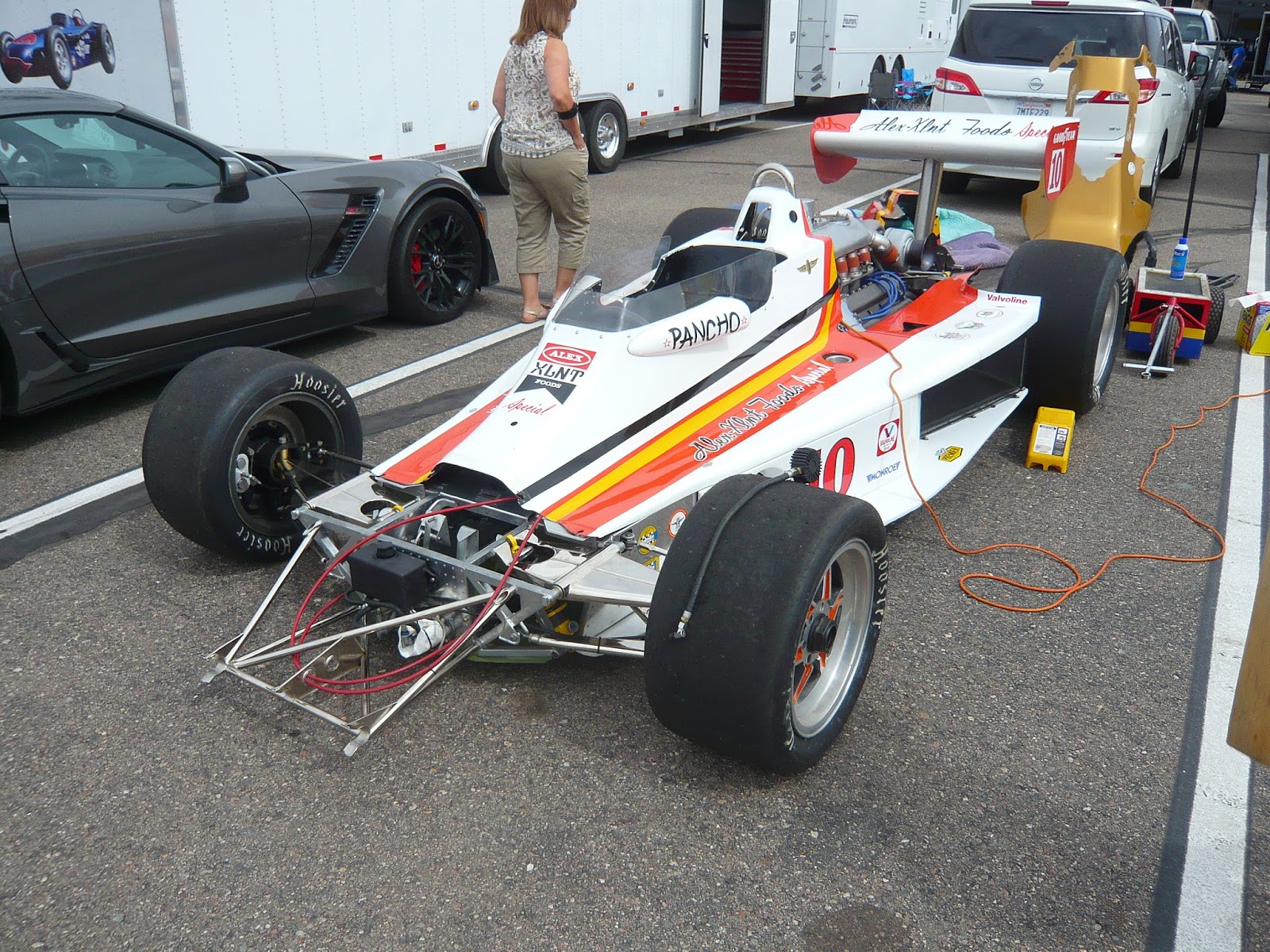
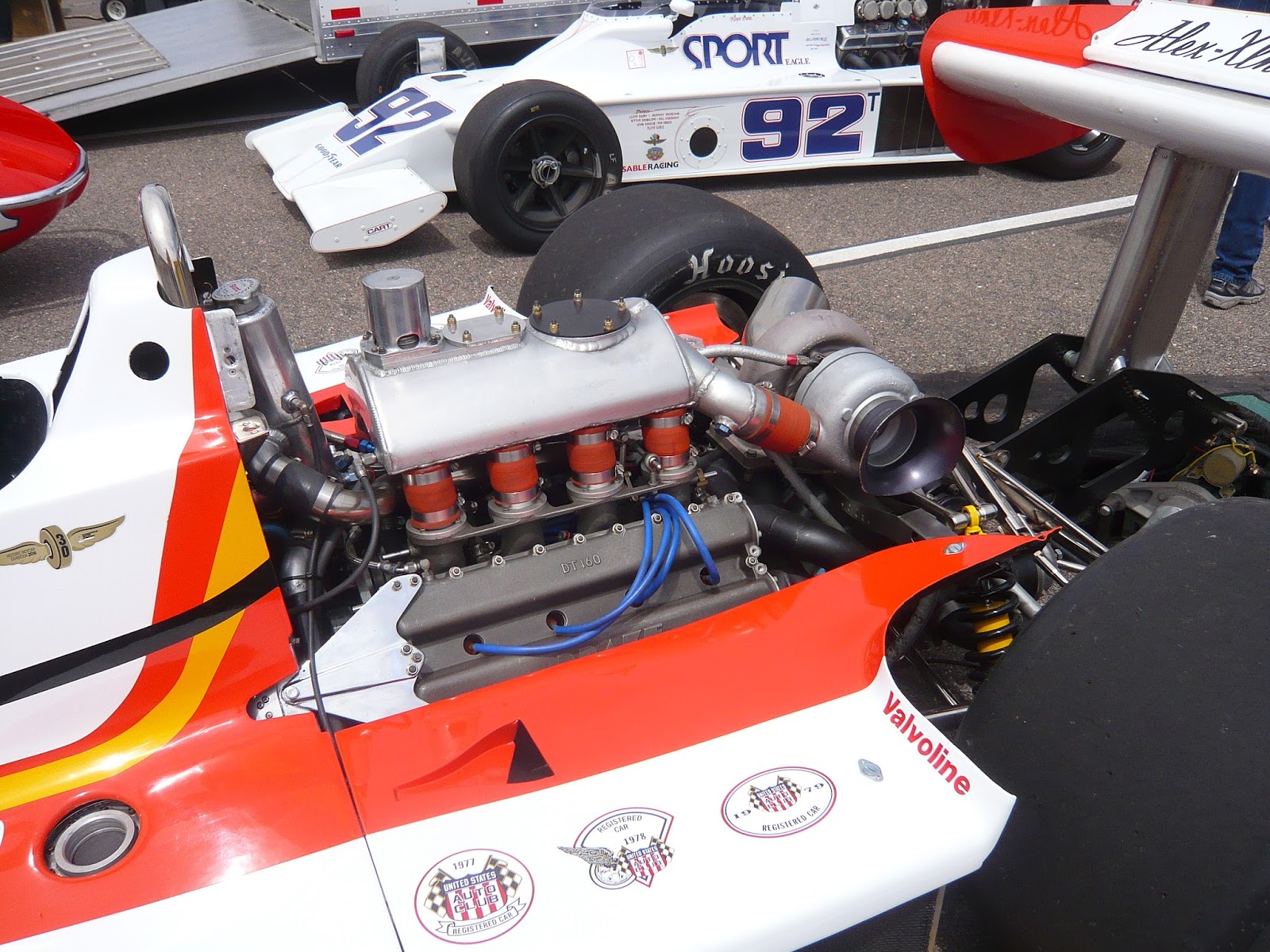
Alex Foods Lightning as driven by Pancho Carter powered with a Drake V-8

1972 Antares driven by Roger McCluskey


A prototype Coyote never raced


Gary Mondschein's pair of RE cars
 
The famous lightweight John Buttera 1982 Eagle - dressed and undressed


1961 Cooper-Climax


1972 AAR Eagle

ENGINES


A pair of Ford 4-cam engines

Drake V-8


ALL PHOTOGRAPHS BY THE AUTHOR