Showing posts with label Andy Granatelli. Show all posts

Wednesday, December 28, 2016


Fred Agabashian
from the Bay Area to Indianapolis glory
Part one 1947 to 1952  


All photographs appear courtesy of the IUPUI University Library Center for Digital Studies from the Indianapolis Motor Speedway Collection

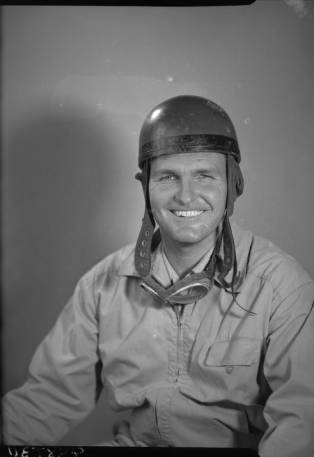
San Francisco Bay Area midget driver Levan “Fred” Agabashian achieved great success in local midget racing before he made it to the Indianapolis Motor Speedway. In his years at the Speedway which coincided with the early part of the roadster era, "Doctor" Agabashian was highly regarded for his ability to diagnose and solve the problems with ill-handling race cars.

Born in Modesto California in 1913 to Armenian immigrants Levan and Nevart Agabashian, legend has it that Fred drove his father’s car at age five and tinkered with cars as a youngster. Fred participated in his first race with a jalopy at age 17 in 1931 while still a student at Berkeley High School. One of Fred’s three younger sisters, Alice Elcano, became a famed Bay Area radio Big Band singer. 

During his career, Fred drove stock cars and ‘big cars’ but he made his name in midgets and won his first midget racing championship in 1937 with the short-lived Northern California Racing Association. Fred raced with such midget legends as Herk Edwards, “Lucky” Lloyd Logan, Ted Ayers, 3-time STAR midget champion Al Stein, and Tony Dutro on long-lost tracks such as the 1/5-mile dirt ‘Motordromes’ in San Francisco and San Jose and the 1/6-mile dirt Neptune Beach Speedway which was next to the amusement park of the same name in Alameda.   

In 1946, Agabashian won his first Bay Cities Racing Association (BCRA) championship for car owner Jack London and the following year Agabashian made his first visit to the Indianapolis Motor Speedway as the rookie driver of the “Ross Page Special” a supercharged Miller-Offenhauser powered Kurtis chassis owned by one the promoters of the San Jose Speedway.


Fred and the Ross Page Special shown in 1947.
Note the clear Plexiglas fairing behind Fred's head 
 

Though many observers were drawn to the clear Plexiglas fairing behind driver Agabashian’s head, the maroon and white Ross Page car with gold trim is considered to be the forerunner of Frank Kurtis’ later roadster designs as it featured an offset engine and driveline. After he finished ninth in the 1947 ‘500,’ he returned to the Bay Area, and Agabashian won the BCRA title again in  1947, this time for car owner George Bignotti.      

Agabashian was one of 25 drivers who took part in the February 1948 “Aztec Championship” a series of 15 races that the BCRA club staged in Mexico City. The tour organized by Damon Miller and Art Driefer led by BCRA starter Hank Madeiros and Floyd Busby who filled in for “Boots” Archer the BCRA business manager.

The venue was the new Ciudad de los Deportes stadium which reportedly held up to 65,000 fans. The Mexican promoters guaranteed the club $18,000 for six nights of racing, with three nights of racing each of the planned two weeks with an option to extend the contract for up to two months.

A group of nearly 100 people (wives and mechanics) left the Bay Area aboard a Southern Pacific train on January 20 1948. The rail line promised to arrive at the stadium in Mexico City in five days for a cost of $205 per car but five teams elected to tow their cars and equipment to Mexico.

Once there the teams learned that their cars did not run well at Mexico City’s altitude even with the use of high octane gasoline. Agabashian won the opening night race before 20,000 fans over Andy Guthrie. Johnnie Parsons won the trophy dash and finished third in the feature ahead of Jerry Piper.

The author could not find any more race results in period newspapers, but thanks to Bay Area racing historians, the author pieced together a few more details. BCRA historian Jimmy Montgomery provided his copies of the results of the seven non-points races in Mexico City. The first race was held on Thursday February 5 with 26 cars entered.

Woody Brown set quick time of 13.58 seconds in the Jack O’Brien owned Ford V8-60 powered midget which stood as the track record for three days until Johnnie Parsons reset the track record of 12.92 seconds three nights later. The Mexico City racing programs featured time trials each night followed by a trophy dash, four 5-lap heat races, and two 6-lap “finals” for the top finishers in the heat races. After a break the BCRA racers ran a 15-lap semi-feature and a 25-lap feature.

The second night in Mexico City, February 7th, Parsons won the Trophy Dash and the feature, and Woody Brown captured the third night 25-lap feature on February 8. After a night off, racing resumed on the tenth and Parsons won his third trophy dash and Agabashian his second Mexico City feature race. Marvin Burke won the fifth feature over Agabashian on February 12 over Agabashian and the racers took a few days off before their next race.

On February 15 in the penultimate Mexico race the car count dropped to 24 midgets, and fast qualifier Jerry Piper won the Trophy Dash, while Vic Gotelli won the feature over Parsons. The last Aztec race was run on February 19 as Woody Brown won his second feature over Marvin Burke and Agabashian.

The tour was not extended beyond the original contract and Al Slonaker in his February 24 “Speedway Sparks” column in the Oakland Tribune reported that “midgeteers are drifting home from Mexico City” and that   Agabashian won the Aztec Championship.   The tour ended after the contracted two weeks because according to the recollections of Floyd Busby, Sr. the size of the crowds steadily declined over the six nights.

Slonaker later reported in March that “Mexican publicity billed our boys as ‘suicide pilots’ and ‘death defying drivers.’ Somehow our sensible speedway sportsmen began to believe this nonsense, and overnight they became madmen. Mexico City saw two weeks of the craziest and downright wildest driving ever witnessed.” There seems to be a measure of exaggeration in Slonaker’s article as Floyd Busby, Jr. remembers that his father told him that despite the local press hype, none of the ‘death defying drivers’ even turned a midget over while they raced in Mexico. This second-hand recollection was confirmed by historian and writer Tom Motter.  

Agabashian returned to Indianapolis in May 1948 to reprise his roles as the driver of the ‘Ross Page Special’ and bumped his way into starting field but the 183-cubic inch Leon Duray-designed supercharged engine broke an oil line with just 58 of the 200 laps completed.  In October Agabashian was crowned the BCRA champion for the third consecutive year, after his chief competitor Jerry Piper broke his arm in a crash during a BCRA midget race in Santa Rosa late in the season which ended Piper’s season early.   

For 1949, Piper and Agabashian started the BCRA season as teammates for George Bignotti, with Piper taking the wheel of the 1948 championship car while Fred drove the brand-new Kurtis-Kraft #154 “Burgermeister Special.” Fred set the quick time in the first race in the BCRA winter indoor championship held January 8 on the 1/10-mile oval laid out on the concrete floor of the Oakland Exposition building.

Agabashian set quick time on three occasions during the 8-race series and eventually lowered the track record to an amazing 8.22 seconds. Fred won the penultimate feature race, but Hayward’s Bob Sweikert won the inaugural BCRA indoor championship.

In May 1949 at Indianapolis, Fred was again nominated as the driver of the ‘Ross Page Special,’ but the Miller-Offenhauser supercharged engine broke its crankshaft during a practice run on Friday May 27. The next day, Fred jumped into the Indianapolis Race Cars Inc. (IRC) Maserati 8CL chassis number 3035 and posted a four-lap qualifying average speed of 127.007 miles per hour (MPH) which bumped Henry Banks from the field.

IRC was a group of three Indianapolis businessmen led by investment banker Roger Gould Wolcott that purchased the assets of the Boyle Racing Team after the 1948 death of Boyle chief mechanic Harry “Cotton” Henning. Evidently the IRC team mechanics lacked the understanding of the complexities of Italian engineering that Henning had possessed as both of the IRC team’s Maserati entries retired from the 1949 ‘500’ early.

Agabashian’s car dropped out first, with terminal overheating on lap 38 and teammate Leland “Lee” Wallard retired the 1939 and 1940 winning Maserati 8CTF 17 laps later with gearbox troubles.  Near the end of the 1949 AAA season, Agabashian substituted for injured driver Johnny Mantz in JC Agajanian’s Kurtis 2000 in the 100-mile race at the old California State Fairgrounds in Sacramento. Fred started from the pole position and led 99 of the 100 laps to post his first (an only) AAA championship victory. 

Fred’s entry for the 1950 Indianapolis ‘500’ was announced very early, in mid-January with Fred as the teammate to Johnnie Parsons, the defending American Automobile Association AAA National Champion in the Kurtis-Kraft “house cars.”

Fred in his #28 car to the left of his teammate in #1 Johnnie Parsons
 

Parsons drove the same Kurtis-Kraft Offenhauser that he drove in 1949 for St. Louis car owner Ed Walsh, Frank Kurtis’ partner and the President of Kurtis-Kraft Inc. while Fred was assigned the team’s “new” Kurtis 3000, one of five built for the 1950 ‘500.’ What made Agabashian’s “Wynn’s Friction Proofing Special” different was that it was powered by an experimental 179-cubic inch supercharged Offenhauser engine.

“I always liked research and development, new stuff," Agabashian said in an interview at the Indianapolis Motor Speedway in 1987. "I could've probably had better luck if I drove something conventional." Never was that statement truer than in 1950.

During May Fred turned some of the fastest laps in practice, and he coached rookie driver Walt Faulkner, a fellow midget driver who struggled with JC Agajanian’s #98 Kurtis 2000 upright chassis. On “Pole Day” May 13 Agabashian’s #28 “Wynn’s Friction Proofing Special” was the first car out and posted a 10-mile qualifying average speed of 132.792 MPH much to the delight of the more than 50,000 fans which held up through the day as the fastest average speed. 

Just before time trials closed at 6 PM local time, Faulkner in the #98 ‘Agajanian Special’ took to the track. After a “slow” first lap of 132 MPH, Faulkner’s best lap was his second, recorded at 136.013 MPH before laps of 134.8 and 133.8 MPH for a four-lap average of 134.343 MPH. Faulkner’s last second run not only knocked Agabashian off the pole, but set new track records and nudged Fred to start from the middle of the front row for the ‘500.’

On Memorial Day, Fred ran in third place at 40 laps, but the yellow #28 Kurtis 3000 fell out on the 64th lap with a broken oil line while his teammate’s conventional Offenhauser-powered Kurtis chassis won the rain-shortened race. Fred drove the supercharged ‘Wynn’s Friction Proofing Special’ for Ed Walsh for the rest of the AAA season and appeared in nine of the twelve 1950 AAA championship races and wound up 14th in points.  

In October, Fred received special permission from AAA’s West Coast Supervisor Gordon Betz to participate in the BCRA midget portion of the Bert Moreland Benefit race held on the ¼-mile oval at Oakland Stadium. Moreland who had driven Agabashian’s midget in BCRA competition had been paralyzed in a crash at Contra Costa Speedway earlier in the season and would be confined to a wheelchair for the rest of his life until he passed away in 2001. 

In January 1951 it was announced that Fred had assumed the responsibilities of the manager of the BCRA club but his reign was a short one, as he resigned on April 8 under pressure from the AAA following Bill Holland’s suspension for “outlaw (non-AAA) activities.” 

At the Indianapolis Motor Speedway Fred in the “Granatelli Bardahl Special” was the fastest of only three drivers to complete a qualifying run on the second day of time trials and his 135.029 MPH four-lap average earned him the 11th starting position. The clutch on the Granatelli Kurtis 3000 failed as Fred left the pits on his 109th lap and he was placed 17th in the final standings.

Fred’s 1951 AAA racing season was a difficult one, as Agabashian failed to qualify for two other AAA races with Andy Granatelli and he drove for three other car owners – Ray Brady, Pat Clancy, and JC Agajanian for a total of six AAA race appearances with a best finish of sixth recorded twice during the season. After the 1951 AAA season, Fred now 38 years old, cut back on his racing appearances and focused his energies on success in just one race a year- the Indianapolis 500-mile race.

In our next installment we’ll continue to tell the story of Fred Agabashian’s Indianapolis ‘500’ career.

Wednesday, June 8, 2016


The controversial 1948 Milwaukee 100

In recent years, there has been a lot of criticism of INDYCAR’s officiating of races but some recent research has found that head-scratching decisions are nothing new, witness the bizarre events that surrounded the 100-mile American Automobile Association (AAA) championship race held on August 15 1948 at the Milwaukee Mile.


In 1948, the Wisconsin Centennial Exposition held at the State Fair Park in Milwaukee from August 7 to August 29 celebrated Wisconsin’s leadership roles in agriculture, food production, manufacturing, and transportation. Racing of all types was an important part of the Wisconsin Centennial Exposition with a “twenty day program of speed” on the slightly banked one-mile fairground dirt track. .

The racing schedule opened with midget heat races on August 7 with the midget 100-lap feature on Sunday the 8th, followed by ‘hot rod’ races on August 9, with races for the AAA ‘big cars’ scheduled for August 10 and 11.  Motorcycle racing was on tap on August 12, and then on Friday the 13th the track hosted the “Jimmy Lynch and the Death Dodgers” auto thrill show and antique automobile races.  

The 100-lap AAA championship car race was on tap for Sunday August 15. The schedule then called for four days of harness horse racing before Frank R Winkley’s “All- American Thrill Circus” auto thrill show returned the track action to four wheels instead of four legs.

Something new was on the card for August 21 and 22, with stock car races that climaxed in a 100-lap feature before four more days of “Grand Circuit” horse racing. Motorcycle racing returned to the schedule on August 27th and 28th before the grand finale on the 29th, the track’s inaugural 200-mile AAA championship race.

At 2 PM on Friday August 7, the midgets kicked off the racing action with qualifying, followed by a five-lap dash for the fastest qualifiers, and then three-ten-lap heat races to set the 33-car field. Admission into the grandstand for the first weekend of races was 30 cents for children and 60 cents for adults in addition to the 40 cents adults paid to attend the Exposition.
 
 
Paul Russo won the 100-lap midget feature August 8 1948
 

Saturday afternoon, the midget starting field set off for 100 laps around the mile dirt track racing for a total purse of $7500. Ray Neuman’s midget flipped three times after his car flew a front tire and crashed into the outer wall on the 93rd lap. Paul Russo of Kenosha Wisconsin won the feature in a record time of one hour, ten minutes and 11.33 seconds, which bested Ray Richards’ two-year old record by over eight minutes. Neil Carter of Toledo Ohio finished in second place with Henry Banks in third position.     
 
Dick Fraizer won the 'hot rod' races on August 9 1948
 

On Monday afternoon August 9th, the Wisconsin Auto Racing Association Inc. ‘hot rods’ took to the track and Dick Fraizer from the tiny town of Messick Indiana (then as now so small it didn't have a mailing address)  set quick time in qualifying with a lap of 43.72 seconds. Ticket prices for the grandstand were much higher than for the midgets, at $1.00 and $1.50.  Tony Martinek of Chicago won the 10-lap semi-main in 7 minutes and 47 ½ seconds then Fraizer won the 20-mile feature race in 14 minutes and 1.43 seconds over future Indianapolis ‘500’ winner Pat Flaherty and Ray Erickson.

Sadly, the semi-man winner Tony Martinek, a 23-year old three-year veteran of ‘hot rod’ racing would perish in an accident September 25 at the ¼-mile asphalt surface Rockford (Illinois) Speedway. Martinek’s machine ran over the rear of Ronald “Luckless” Kaplan’s car, overturned and slid upside down for approximately 50 feet.  Martinek’s death from a basal skull fracture marked the third fatality at Rockford Speedway during the 1948 season which led to Hugh Deery taking over the track’s operation.        
 
Rex Mays came within one lap of sweeping
both the AAA 'big car' races
 

Unlike the earlier midget races, the AAA Midwest series ‘big car’ races set for August 10 and 11 were run as two stand-alone programs and each offered a $5000 purse. Rex Mays was the fast qualifier on Tuesday the 10th, as he posted a time of 38.72 seconds, then went on to capture the first 5-mile heat race. Leland “Lee” Wallard won the second heat race and Tony Bettenhausen the third heat race while Charles Van Acker won the consolation race. Mays led all 25 laps in the feature race and finished in sixteen minutes and 36 seconds ahead of Dick Fraizer and eventual 1948 AAA Midwest ‘big car’ champion Travis “Spider” Webb. 

On Wednesday afternoon, Mays was again the quick qualifier and he set a new track record of 37.31 seconds on a wet track with Dick Fraizer the second fastest qualifier.   Because of the misting rain, AAA officials elected not to run any heat races, but extended the feature race to 30 laps to give the 12,000 fans a good show. Once again Mays led away from the pole until the race was stopped on the 12th lap after an accident in the third turn.


Paul Russo’s car, formerly driven by Cavino “Kelly” Petillo, had blown a tire and rolled over twice with Russo thrown out of the car but he escaped with minor cuts. For twenty minutes the track crew cleaned up the track then the race resumed with May still in the lead. Mays held the lead until the final lap when his car ran out of fuel which handed the win to fellow AAA Eastern ‘big car’ racer Tommy Mattson in the Culp Offenhauser.  Mays’ #1 Bowes Seal Fast Special coasted across the finish line in fourth place behind Tommy Hinnerhsitz and Lee Wallard.  

Mattson had finished the 1947 AAA Eastern big car season in second place behind Mays, and he would finish third in both the Midwest and Eastern AAA ‘big car’ championships. Tommy, from Wilmington Delaware got a shot at the Indianapolis ‘500’ in 1949, but crashed his car into the pit wall during practice on May 21 in a crash that was described as “driver hit wall in pits as he attempted to go into garage area too fast.”

At the time, there were doubts whether the crew could repair Bill Sheffler’s Offenhauser in time for the final weekend of time trials, but the work was completed on Sunday, May 28. Unfortunately, Mattson spun into the infield during practice and he was replaced by fellow “rookie” Manuel “Manny” Ayulo who bumped Ralph Pratt from the starting field at the last possible moment.

Mattson would become one of the victims of the high-banked Salem Speedway the following year. At the start of their AAA ‘big car’ heat race on July 24 1949 the front-row cars of Erling “Chick” Barbo and Mattson locked wheels then both machines then flew off the banking in turn one and landed on top of several passenger cars parked below.  Barbo died instantly while Mattson was transported to the Memorial Hospital in Bedford, Indiana passed away less than two hours after the crash.

After two days of motorcycle races and the auto thrill show at the end of the second week of August 1948, the AAA contingent reassembled on Sunday the 15th for the championship car race. The day’s first controversy erupted when the AAA race Chief Steward Llewellyn "Ike" Welch rejected car owner Andy Granatelli’s entry of Dick Fraizer as the driver of the Grancor (Granatelli Corporation) Special Kurtis-Kraft 2000-Offenhauser. 


Milwaukee 100 AAA Chief Steward "Ike" Welch
 

“Ike” Welch from Maywood Illinois reportedly attended his first ``500`` automobile race at the Indianapolis Speedway as a ten year old boy in 1911. After college Welch began working as an AAA at the Speedway in 1922 and was elevated to the role of Chief Observer in 1931. The Chief Observer at the Indianapolis Motor Speedway was responsible for administering “rookie” driving tests and insuring on-track safety during practice. Welch never told a driver whether he had passed the rookie test; instead Welch walked over to the successful driver and gave him a shiny penny.   

To support Fraizer’s rejection, Welch told Milwaukee Sentinel sportswriter Tony Ingrassia that “as a matter of precedent only drivers that have been competing regularly for the last year on the AAA circuit are allowed to compete.” When pressed, Welch reiterated that the AAA had a rule that said that “championship races are for drivers competing regularly on the circuit.”

For his part, Rex Mays told Ingrassia that he was sure there was no AAA precedent to keep Fraizer from competing and was quoted:  “why, Red Hodges drove at Dallas this year and he is a newcomer.” Historical records show that Mays was correct; Texas “outlaw” driver William “Red” Hodges had driven the “Gabby Hall Special” in the Arlington Downs 100 in his first and only AAA championship appearance.

Ingrassia’s editorial in the following day’s Milwaukee Sentinel questioned whether AAA officials and racers were afraid of the “Hoosier Hotshot,” as Ingrassia heard no legitimate reason to bar Fraizer from racing Sunday.  The editorial refuted Welch’s claim of precedence, as “Johnny Mantz made his first start in a big car championship race at Indianapolis this year, and Mack Hellings (who took over the Grancor #59) had only one championship race on his record according to Mays.” Mays’ memory was correct about Mantz’ record, but faulty concerning Hellings’ record as he had three previous AAA starts, all in 1948.

For his part, Fraizer told Ingrassia that a small clique led by Duke Nalon had led to his ban but that Rex Mays, Tony Bettenhausen, and Mel Hanson were on his side. Ike Welch said “I hate to ban Fraizer since he is a good driver and has done a commendable job, but I had to follow precedent.” Fraizer was certainly skilled and experienced enough as he had won 10 hot rod races in a row during the 1948 season and had finished second to Rex Mays in Tuesday’s AAA ‘big car’ feature. Whatever the reason for the rejection, Fraizer’s name does not appear in the AAA records for this event.

The 23,913 race fans that filled the State Fair Park grandstand watched as hometown driver Myron Fohr qualified the hometown Marchese Offenhauser for the pole position with a lap of 40.11 seconds, followed by Spider Webb and Johnny Mantz. Mel Hanson qualified Paul Weirick’s supercharged Offenhauser powered car fourth fastest, while Hellings, Fraizer’s replacement would start from eight position.  

Five drivers failed to make the 18-car starting field; George Connor, Johnny McDowell, local midget racer Johnny Dietz, Bill Holland and George Lynch.  After qualifying, George Lynch, who resume listed a couple of previous AAA ‘big car’ starts, replaced Charlie Rogers as the driver of the “Jewell Special.” The participation of Dietz and Lynch both seem to have been in direct conflict with “Ike” Welch’s stated reason used to disallow Dick Fraizer. Looking back a historian must ask the question - what did the AAA have against Dick Fraizer?

 At the drop of the green flag, pole sitter Myron Fohr led the first 27 laps before he pitted for tires which handed the lead to Emil Andres in Carmine Tuffanelli's  Kurtis Kraft 2000 entered by mechanic Charlie Pritchard. On the 35th lap, “Mutt” Anderson’s car driven by Ken Fowler from Dayton Ohio broke an axle and the loose wheel jumped the inner retainer wall and rolled into a crowd of 200 fans in the infield. 

Two members of that crowd, 40-year old Alma Hogdson and her 10-year son, Gaylord were struck by the loose wheel but were given first aid and released.  Andres continued to hold the lead until lap 85 despite having problems with his Offenhauser engine. With four laps to go, Ted Horn passed Andres on the backstretch then was first under the checkered flag followed by Mantz, Andres, Rex Mays, and Tony Bettenhausen.
 
Johnny Mantz was declared the Milwaukee 100 winner
 

After the race as Horn celebrated in victory lane, other drivers complained about the results and the AAA scorers rechecked the pair of mechanical scoring tapes. After their check, AAA officials revised the order of finish and moved Ted Horn to third place with Johnny Mantz declared the winner followed by Andres, Mays, and Wallard in fifth. Promoter Tom Marchese of Wisconsin Racing Associates offered reporters no explanation why Horn received the checkered flag, but in retrospect, scorers apparently became confused during the race by the large number of pit stops, which was unusual for a 100-mile race.

With the revised results were posted, Tony Bettenhausen protested his demotion to a sixth place finish while Andres also protested, claiming that the race ended a lap early but both protests were denied by the AAA stewards.  Although Horn was awarded the winner’s trophy in victory lane, Mantz and car owner J C Agajanian received Marchese’s check for $4,053, the winner’s share of the race’s $16,850 purse. Years later, the records vary on this event; some records credit Mantz with leading only the last lap, while other sources credit him with leading 20 laps.  
 
Myron Fohr won the pole for the Milwaukee 100
 then won  the Milwaukee 200 mile race two weeks later
 

Two weeks later, when the AAA championship cars returned to the Milwaukee Mille for the first-ever 200-mile race, Myron Fohr was triumphant, but not without help. At lap 111, third-place starter Fohr pitted and was relieved by Tony Bettenhausen, as his Sparks “Big Six” powered Thorne Engineering entry had retired. Race leader Mantz crashed his Agajanian entry on the 135th lap, and Bettenhausen proceeded to build up a large lead, and then turned the Marchese entry back over to Fohr on lap 178.  Fohr beat Johnnie Parsons to the checkered flag by 16 seconds, with Ted Horn in third a lap behind.

Attrition was high as only nine of the original 22 cars finished, with ninth place finisher Paul Russo was 33 laps behind the winner. Nevertheless, the precedent had been set and the August date for the AAA championship cars at Milwaukee became a 200-mile affair.   

Despite his loss of the disputed victory at Milwaukee two weeks earlier, by finishing in third place in the 200-mile race,  Ted Horn collected enough points to clinch the 1948 AAA National Driving championship, his second of three consecutive titles. On October 10, in the final race of the 1948 AAA season, at the Illinois State Fairgrounds one-mile track at DuQuoin, Ted Horn crashed fatally after a wheel spindle broke on his car during the second lap of the race.  The great champion was just 38 years old.
 
 
The wreckage of Byron Horne's Granatelli FD
car that led to the 1949 AAA "no dentures" rule
 

On May 25 1949, following the violent May 2 near-fatal crash by Byron Horne during his rookie test in which he received severe cuts from his dentures, the  AAA Contest Board issued an order that all drivers with false teeth had to remove their dentures before going out on the Speedway’s racing surface.
To enforce the new AAA rule, “Ike” Welch, as the Chief Observer, was given the unpleasant task to peer in the mouth of each driver before they went out onto the track. Welch continued to work at the Indianapolis Motor Speedway as the Chief Observer until his retirement in 1963, and he passed away in 1986.

Aside from a few local newspaper articles there was little publicity about “Ike” Welch and the AAA’s mishandling of the August 15 1948 race at Milwaukee. One can only imagine the reaction in today’s social media environment if INDYCAR banned a driver without a clearly stated reason, or fouled up the scoring of a race and awarded the victory to the wrong racer in modern times.
 
All the black and white photographs that accompany this article appear courtesy of the Indianapolis Motor Speedway Collection in the IUPUI University Library Center for Digital Studies.